Plant Overview
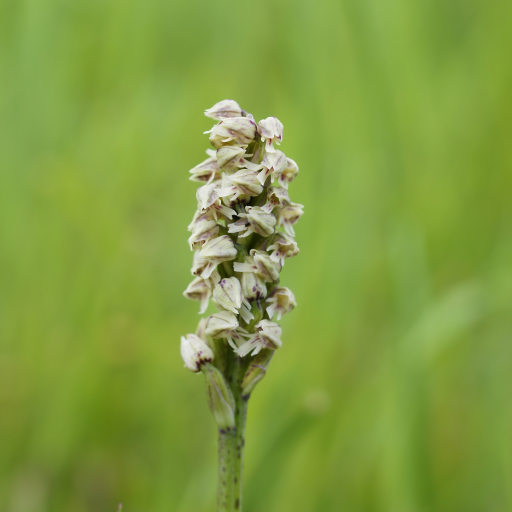
Known as the Dense-flowered Orchid, Neotinea maculata is a subtle, charming gem of the orchid world. While many of its relatives flaunt bright colors to attract pollinators, this Mediterranean native is a master of understated elegance. Often found hiding in limestone grasslands or rocky crevices, it tells a story of survival in harsh, mineral-rich environments across Southern and Western Europe.
🔍 How to Identify
- 🍃 Spotted Foliage: True to its name (maculata means "spotted"), the base of the plant features a rosette of leaves often decorated with distinct, dark purple splotches.
- 🌸 Miniature Blooms: The flowers are tiny—some of the smallest of any European orchid—and vary in color from a pale, ghostly cream to a soft, dusty pink.
- 📏 Dense Spike: The flowers are packed tightly together on a short, sturdy stem, giving the inflorescence a cylindrical, "dense" appearance that sets it apart from more airy orchid species.
🏡 In Your Garden
- 🪨 The Limestone Lover: This orchid is a "calcicole," meaning it strictly requires alkaline, lime-rich soil to survive. In a garden context, it is extremely difficult to cultivate and is best enjoyed in its natural wild habitat.
- 🍄 Fungal Friendships: Like most wild orchids, it lives in a complex symbiotic relationship with underground mycorrhizal fungi. Because it relies on these specific fungi for nutrients, it rarely survives being transplanted to a pot or a standard flower bed.
⚠️ Safety & Toxicity
- ✅ Non-Toxic: Neotinea maculata is not known to be poisonous to humans, cats, or dogs.
- 🚫 Conservation Warning: While not toxic, it is highly sensitive. In many regions, it is a protected species. Picking the flowers or digging up the tubers is often illegal and can lead to the local extinction of the colony. It is always best to "take only pictures."
✨ Fun Fact
Despite being an orchid—a family famous for complex pollination traps—the Dense-flowered Orchid is largely cleistogamous. This means it often self-pollinates before the flower even opens, ensuring it can produce seeds even if no insects are around to help!

Detailed Care Instructions

Place in a bright room that is sun drenched almost all day. Or directly in a south-facing window.

Some plants require more regular watering than others, which should be done every few days. It's critical to maintain the soil moist all of the time. The water requirements of the same plant placed in pots with varying sizes will differ. Because the water in the smaller pot evaporates faster than the water in the larger pot, it will require more watering. Regardless of pot size, the surface should constantly be maintained moist.








