Plant Overview
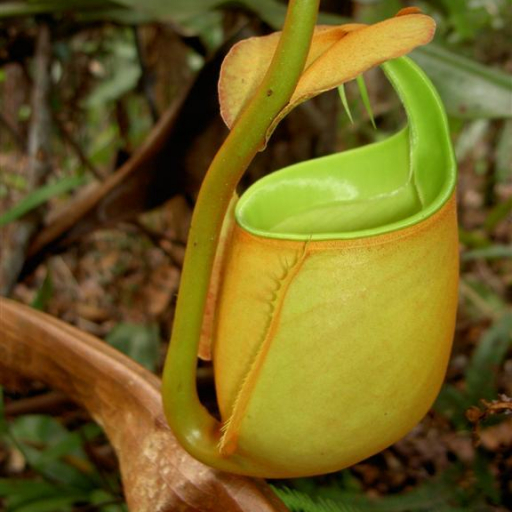
Often called the Fanged Pitcher Plant, Nepenthes bicalcarata is a true titan of the carnivorous world. Hailing from the peat swamp forests of Borneo, this prehistoric-looking plant is famous for the two sharp, thorn-like "fangs" that dangle over its digestive traps. While it looks like a botanical vampire, it actually forms a peaceful, legendary alliance with a specific species of ant that lives nowhere else on Earth.
🔍 How to Identify
- 🧛 The "Fangs": The most distinct feature is two downward-pointing thorns located on the underside of the pitcher lid. Contrary to myth, they don't inject venom; they likely lure insects into a precarious position.
- 🍯 Robust Pitchers: The traps are unusually sturdy and can grow to the size of a grapefruit. They are typically orange, red, or apple-green with a wide, ribbed "mouth" (peristome).
- 🌿 Leathery Foliage: The leaves are thick, strap-shaped, and can grow quite large, with tendrils that swell significantly where they meet the pitcher.
🏡 In Your Garden
- ☁️ The Humidity Requirement: Unlike some hardier pitcher plants, this is a "Lowland" species. It craves intense humidity (above 70%) and warm temperatures year-round. If the air is too dry, it will simply refuse to grow its iconic fangs.
- 💧 Pure Hydration: Its roots are sensitive to minerals. Always use rainwater, distilled water, or reverse osmosis water. Because it evolved in swamps, it prefers its soil to stay consistently damp, unlike other Nepenthes that prefer a "dry-back" period.
- 🐜 A Unique Partnership: In the wild, it hosts Camponotus schmitzi ants. These ants live inside the plant's hollow tendrils and help "clean" the pitcher by removing large prey that might rot, in exchange for nectar. In a home setting, you don't need the ants, but the plant will appreciate an occasional dried cricket!
⚠️ Safety & Toxicity
- 🟢 Non-Toxic: Nepenthes bicalcarata is generally considered non-toxic to cats, dogs, and humans.
- 🩸 Physical Hazard: While not poisonous, the "fangs" are genuinely sharp and can prick curious fingers or paws. The digestive fluid inside the pitchers is acidic and may cause mild skin irritation if spilled.
✨ Fun Fact
The relationship between this plant and its resident ants is so deep that the ants will actually "dive" into the digestive fluid to pull out drowning insects, acting like tiny lifeguards to ensure the plant doesn't get "indigestion" from too much food at once!

Detailed Care Instructions

Place in a bright room that is sun drenched almost all day. Or directly in a south-facing window.

Some plants require more regular watering than others, which should be done every few days. It's critical to maintain the soil moist all of the time. The water requirements of the same plant placed in pots with varying sizes will differ. Because the water in the smaller pot evaporates faster than the water in the larger pot, it will require more watering. Regardless of pot size, the surface should constantly be maintained moist.
These humidity-loving plants thrive in extreme humidity, but they also require lots of sunlight. Keep the plant and the soil surface moist at all times. Low or dry humidity distorts the leaf shape as well as browns the leaf tip. During the winters, it is recommended to shift these plants to a bathroom or use a humidifier to regulate the humidity levels needed by these plants.
Unfortunately, fanged pitcher plant are susceptible to a host of common pests and diseases. Common fanged pitcher plant diseases include Yellow leaves, black or brown spots on leaves, grey/black spots. Prompt pruning of any dead or diseased branches should keep these common diseases under control.
Common pests of the fanged pitcher plant include Mealybugs, spider mites, fungus gnats, thrips. Make a habit of checking your fanged pitcher plant frequently for pests so that any infestations can be caught and managed early.
Common pests of the fanged pitcher plant include Mealybugs, spider mites, fungus gnats, thrips. Make a habit of checking your fanged pitcher plant frequently for pests so that any infestations can be caught and managed early.








