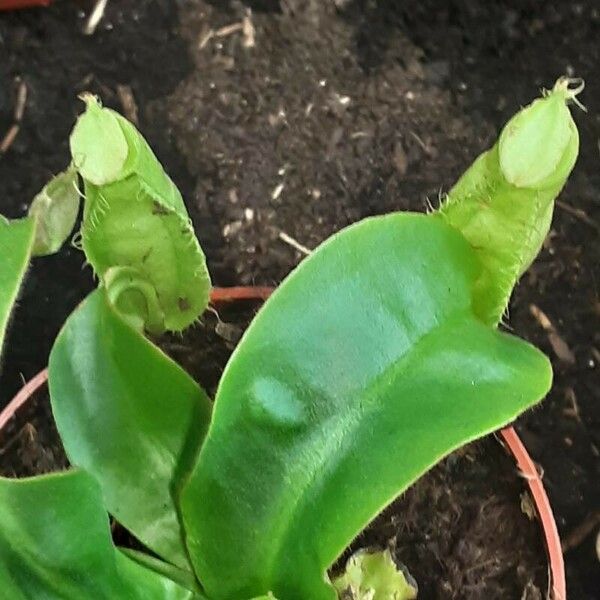
Plant Overview
Known as the "Hooker’s Pitcher Plant," this botanical masterpiece is a celebrity in the world of carnivorous greenery. It is a naturally occurring hybrid found in the steaming jungles of Southeast Asia, born from a wild cross between Nepenthes ampullaria and Nepenthes rafflesiana. Combining the "pot-bellied" charm of one parent with the intricate patterns of the other, it creates a stunning display of living, breathing insect traps that look like hand-painted porcelain jars.
🔍 How to Identify
- 🏺 The Pitchers: Unlike the long, slender tubes of other species, these pitchers are squat, rounded, and bulbous. They typically feature a pale green base heavily mottled with dark red or purple "leopard" spots.
- 👄 The Peristome: The rim (or mouth) of the pitcher is wide and flattened with distinct ribs. It often displays a striking "candy-cane" striped pattern that lures insects to the slippery edge.
- 🍃 The Growth Habit: It is a scrambling vine. The leaves are thick and leathery, with a sturdy tendril extending from the tip of each leaf to support the heavy, fluid-filled traps.
🏡 In Your Garden
- ☁️ The Humidity Factor: Because it originates from lowland tropical swamps, this plant is a humidity hog. If your home air is too dry, the plant may grow leaves but will "refuse" to inflate new pitchers. Frequent misting or a terrarium setup is usually necessary.
- 🚰 Mineral Sensitivity: This plant evolved in nutrient-poor soils and is "allergic" to the minerals in tap water. Using anything other than rainwater, distilled water, or reverse osmosis water will slowly damage the delicate root system.
- ☀️ Light Balance: It enjoys bright, dappled light. Too much direct afternoon sun can scorch the traps, while too little light results in dull colors and a lack of those iconic spots.
⚠️ Safety & Toxicity
- ✅ Non-Toxic: Nepenthes × Hookeriana is generally considered non-toxic to cats, dogs, and humans. It is a much safer alternative for curious pets than lilies or philodendrons.
- 🧪 Digestive Enzymes: While the fluid inside the pitchers isn't "poisonous," it contains digestive enzymes meant to break down chitin (insect shells). It’s best to discourage children from playing with the liquid to avoid mild skin or stomach irritation.
✨ Fun Fact
- 🎩 A Botanical Legacy: This plant was named in honor of Sir Joseph Dalton Hooker, a legendary 19th-century botanist and the Director of the Royal Botanic Gardens, Kew. He was one of Charles Darwin’s closest friends and helped provide the evidence Darwin needed for his theories on plant evolution!

Detailed Care Instructions
Growing Nepenthes × hookeriana, a hybrid of Nepenthes rafflesiana and Nepenthes ampullaria, can be a rewarding endeavor if you provide the right conditions. Here are some steps and tips to help you successfully grow this tropical pitcher plant:
1. Light
- Indirect Sunlight: They thrive in bright, indirect sunlight. Direct sunlight can be too harsh and cause leaf burn.
- Artificial Lighting: If you're growing them indoors, use fluorescent or LED grow lights that mimic natural sunlight, providing around 12-14 hours of light daily.
2. Temperature and Humidity
- Temperature: Nepenthes × hookeriana prefers warm temperatures, generally between 75-85°F (24-29°C). Avoid temperatures below 50°F (10°C).
- Humidity: High humidity is crucial. Aim for 60-80% humidity. You can achieve this by misting the plant regularly, using a humidity tray, or keeping it in a greenhouse.
3. Watering
- Type of Water: Use distilled, rainwater, or reverse osmosis water. Tap water can contain minerals and chemicals harmful to the plant.
- Watering Frequency: Keep the soil consistently moist but not waterlogged. Water the plant thoroughly when the top layer of the medium begins to dry out.
- Misting: Misting the plant can also help maintain humidity and keep the leaves vibrant.
4. Soil and Potting
- Soil Mix: Use a well-draining, airy mix. A common mix includes sphagnum moss, perlite, and orchid bark. Avoid regular potting soil as it retains too much moisture and may contain nutrients that can harm the plant.
- Pot: Use a plastic or glazed ceramic pot with drainage holes. Nepenthes prefer slightly acidic to neutral pH, so avoid terra cotta pots which can alter pH levels.
5. Feeding
- Natural Feeding: Nepenthes × hookeriana captures and digests insects to get nutrients. If kept outdoors, they typically catch enough on their own.
- Supplemental Feeding: If indoors, you can occasionally feed the pitcher small insects like fruit flies or crickets. Do this sparingly (once a month) and avoid overfeeding.
6. Pruning and Maintenance
- Pruning: Remove dead or blackened pitchers and leaves to keep the plant healthy and encourage new growth.
- Repotting: Repotting may be necessary every 1-2 years or when the plant outgrows its container. This will ensure fresh growing medium and adequate space for root development.
7. Pest Management
- Common Pests: Keep an eye out for common pests like aphids, spider mites, and mealybugs. Use insecticidal soap or neem oil as needed, but ensure it doesn’t build up inside the pitchers.
8. Dormancy
- Nepenthes × hookeriana does not have a true dormancy period but might grow slower in cooler months. Maintain consistent care to prevent decline.
By paying attention to these conditions and regularly monitoring your plant, you'll be able to grow a healthy and vigorous Nepenthes × hookeriana. Enjoy your journey with this fascinating carnivorous plant!

Place in a bright room that is sun drenched almost all day. Or directly in a south-facing window.

Watering Nepenthes × Hookeriana, a hybrid tropical pitcher plant, requires some attention to detail to mimic its natural habitat. Here are the steps to ensure it thrives:
1. Water Quality:
- Use purified water such as rainwater, distilled water, or reverse osmosis water. Tap water often contains minerals and chemicals that can harm the plant over time.
2. Watering Schedule:
- Keep the soil consistently moist but not waterlogged. The potting medium should never dry out completely. Water the plant thoroughly when the top layer of the medium feels slightly dry to the touch.
3. Watering Technique:
- Water the plant from the top, ensuring even distribution. It’s beneficial to allow excess water to drain out from the bottom of the pot to avoid standing water at the roots, which can lead to root rot. Generally, avoid letting the plant stand in water for extended periods.
- Alternatively, you can use a tray method by placing the pot in a shallow tray of water. Ensure the tray has no more than an inch of water and let the plant soak it up for about 30 minutes. Drain any remaining water afterward.
4. Humidity:
- Maintain high humidity (around 60-80%) to prevent the plant from drying out. Mist the plant regularly or use a humidity tray to help keep the air around it moist.
5. Environmental Conditions:
- These plants prefer a warm, humid environment with good air circulation. Ensure that the ambient temperature is suitable, usually between 70-85°F (21-29°C) during the day and slightly cooler at night.
By adhering to these guidelines, you can effectively water your Nepenthes × Hookeriana and provide it with the right conditions for healthy growth.
Caring for Nepenthes × Hookeriana involves understanding its needs for nutrition and environmental conditions. Here are detailed fertilizing instructions for this plant:
Fertilizing Instructions:
- Type of Fertilizer:
- Use a balanced, water-soluble orchid fertilizer or a specialized carnivorous plant fertilizer. Avoid high-nitrogen fertilizers as they can burn the plant's roots.
- Use a balanced, water-soluble orchid fertilizer or a specialized carnivorous plant fertilizer. Avoid high-nitrogen fertilizers as they can burn the plant's roots.
- Dilution:
- Dilute the fertilizer to one-quarter or one-half of the recommended strength. Carnivorous plants are sensitive to nutrients, and too strong a solution can harm them.
- Dilute the fertilizer to one-quarter or one-half of the recommended strength. Carnivorous plants are sensitive to nutrients, and too strong a solution can harm them.
- Application Frequency:
- Fertilize sparingly, about once a month during the growing season (spring and summer). You can reduce fertilization to every 6-8 weeks during the dormant season (fall and winter).
- Fertilize sparingly, about once a month during the growing season (spring and summer). You can reduce fertilization to every 6-8 weeks during the dormant season (fall and winter).
- Method of Application:
- Foliar Feeding: Spray the diluted fertilizer onto the leaves and pitchers of the plant. This method allows the plant to absorb nutrients directly through its tissues.
- Soil Application: Pour the diluted solution over the soil. Ensure the soil is well-drained to avoid nutrient buildup, which can damage the roots.
- Foliar Feeding: Spray the diluted fertilizer onto the leaves and pitchers of the plant. This method allows the plant to absorb nutrients directly through its tissues.
- Natural Feeding:
- Nepenthes × Hookeriana naturally traps insects for nutrition. You can augment this with occasional feedings of live or freeze-dried insects (e.g., crickets or mealworms) placed into the pitchers. This practice can supplement the plant's nutritional needs.
Additional Recommendations:
- Nepenthes × Hookeriana naturally traps insects for nutrition. You can augment this with occasional feedings of live or freeze-dried insects (e.g., crickets or mealworms) placed into the pitchers. This practice can supplement the plant's nutritional needs.
- Water Quality: Use only distilled water, rainwater, or reverse osmosis water to avoid mineral buildup that can harm the plant.
- Humidity: Maintain high humidity levels (60-80%) to mimic their natural tropical habitat.
- Light: Provide bright, indirect sunlight. Too much direct sunlight can scorch the leaves, while too little can hinder growth.
Following these fertilization guidelines will help ensure your Nepenthes × Hookeriana remains healthy and thriving.
Nepenthes × hookeriana, a hybrid between two tropical pitcher plants, requires specific soil conditions to thrive. When preparing a suitable growing medium, consider the following attributes to replicate its natural environment:
- Acidity: These plants prefer a slightly acidic to neutral pH. Ensuring the right acidity helps them absorb nutrients effectively.
- Aeration: Good air circulation around the roots is crucial. The soil should be loose and well-draining to prevent waterlogging, which can lead to root rot.
- Nutrient Content: Since these plants typically grow in nutrient-poor conditions, the soil mix should be low in nutrients. Nutrient-rich soil can damage the plant.
- Organic Matter: Incorporate organic components that hold moisture yet still drain well. Common choices include sphagnum moss or long-fibered sphagnum moss, which retain moisture without becoming compacted.
- Inorganic Materials: Adding inorganic materials like perlite or orchid bark can improve drainage and aeration. These materials help maintain soil structure and prevent it from becoming too dense.
A balanced mix might include:
- 50% sphagnum moss for moisture retention and acidity
- 30% perlite to enhance drainage and aeration
- 20% orchid bark to provide additional structure and aeration
By carefully blending these components, you can create an ideal growing medium that supports the unique needs of Nepenthes × hookeriana. Regularly monitor the soil to ensure it remains well-drained and slightly acidic, adjusting the mix if necessary to maintain optimal growing conditions.
Nepenthes × Hookeriana, a hybrid carnivorous plant, can be propagated through several methods: seed propagation, stem cuttings, and tissue culture.
- Seed Propagation:
- Pollination: Hand pollinate flowers to produce viable seeds. Both male and female plants are required.
- Harvesting Seeds: Collect seeds once the seed pods mature and start to dry out. Seeds need to be sown fresh as they lose viability quickly.
- Sowing: Use a well-draining, acidic medium such as a mix of sphagnum moss and perlite. Surface-sow the seeds and do not cover them, as they need light to germinate.
- Environment: Maintain a warm, humid environment (25-30°C, 77-86°F) with bright, indirect light. Mist regularly to keep the medium moist.
- Germination: Seeds may take several weeks to months to germinate. Be patient and maintain consistent conditions.
- Pollination: Hand pollinate flowers to produce viable seeds. Both male and female plants are required.
- Stem Cuttings:
- Selecting the Cutting: Choose a healthy, vigorous stem with at least 2-3 leaves. Lower leaves can be trimmed to reduce moisture loss.
- Cutting: Make a clean cut just below a node using sterilized scissors or a knife.
- Rooting Medium: Use a mix of sphagnum moss and perlite or sphagnum moss alone. The medium should retain moisture but drain well.
- Planting: Insert the cutting into the medium, ensuring at least one node is buried in the moss. Keep the medium moist but not waterlogged.
- Environment: Provide high humidity (around 70-90%) and bright, indirect light. A mini greenhouse or plastic bag can help maintain humidity.
- Rooting: It may take several weeks for roots to develop. Check for root growth gently and repot the cutting once a robust root system has formed.
- Selecting the Cutting: Choose a healthy, vigorous stem with at least 2-3 leaves. Lower leaves can be trimmed to reduce moisture loss.
- Tissue Culture (Advanced Propagation Method):
- Sterilization: Sterilize seed or plant tissue using a bleach solution to eliminate contaminants.
- Culture Media: Use a sterile culture medium formulated for Nepenthes species, often containing nutrients, vitamins, and hormones.
- Inoculation: Under sterile conditions, place the sterile plant material onto the culture medium.
- Environment: Maintain cultures under controlled conditions with appropriate light (typically fluorescent lighting) and temperature.
- Growth and Multiplication: The process may involve stages of multiplication, root induction, and eventual acclimatization to non-sterile conditions.
General Care Tips Post-Propagation:
- Sterilization: Sterilize seed or plant tissue using a bleach solution to eliminate contaminants.
- Humidity: Maintain high humidity levels.
- Light: Provide bright, indirect light.
- Watering: Use distilled or rainwater to keep the soil consistently moist but not waterlogged.
- Feeding: Occasional feeding with appropriate insects can support growth, especially in young plants.
Propagation success requires patience and attention to environmental conditions to mirror the plant's natural habitat.
Common pests of the nepenthes × hookeriana include Mealybugs, spider mites, fungus gnats, thrips. Make a habit of checking your nepenthes × hookeriana frequently for pests so that any infestations can be caught and managed early.








