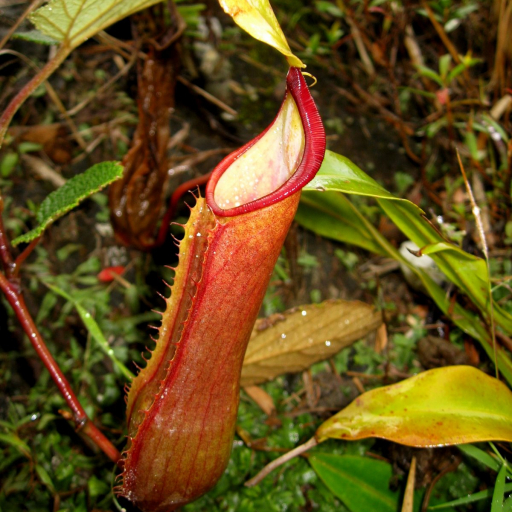
Plant Overview
Known as the "Toba Pitcher Plant," Nepenthes tobaica is a slender and elegant survivor named after its volcanic homeland—Lake Toba in Sumatra. This carnivorous climber is a favorite among hobbyists because it is notably more "forgiving" than many of its tropical cousins. In the wild, it creates a striking scene, draping its colorful, lantern-like traps across the misty slopes of Indonesia.
🔍 How to Identify
- 🏺 The Pitchers: These are remarkably slender and cylindrical, often appearing in shades of lime green, though they can turn a deep, dramatic "black-purple" when exposed to high light.
- 🍃 The Leaves: Long, narrow, strap-shaped foliage that stays relatively compact, making it a great choice for indoor terrariums.
- 🐾 The Peristome: The "lip" of the pitcher is very thin and finely ribbed, acting as a slippery landing strip that sends curious insects tumbling into the digestive soup below.
🏡 In Your Garden
- ⛰️ Highland Roots: Because it originates from higher altitudes, this plant loves a "cool down" at night. It is much more tolerant of fluctuating temperatures than other pitcher plants, provided the humidity remains high.
- 💧 The Purity Rule: It has a sensitive, primitive root system designed for nutrient-poor soil. It "hates" minerals in its water; always use distilled water or rainwater to prevent root burn, as tap water can be a slow death sentence for this species.
⚠️ Safety & Toxicity
- 🟢 Safe for Households: Nepenthes tobaica is non-toxic to cats, dogs, and humans. It doesn't have thorns or irritating sap, making it a "friendly" carnivore for home life.
- 🧪 The Digestive Liquid: The fluid inside the pitcher is a complex mix of enzymes. While not poisonous, it is full of dissolved insect remains and bacteria, so it’s best to keep curious pets or children from trying to "drink" the pitcher contents!
✨ Fun Fact
- In its native Sumatra, some species of Nepenthes are so integrated into the ecosystem that certain tiny "pitcher-dwelling" frogs actually live inside the traps, using the plant’s water to lay their eggs while avoiding being digested!

Detailed Care Instructions

Place in a bright room that is sun drenched almost all day. Or directly in a south-facing window.

Some plants require more regular watering than others, which should be done every few days. It's critical to maintain the soil moist all of the time. The water requirements of the same plant placed in pots with varying sizes will differ. Because the water in the smaller pot evaporates faster than the water in the larger pot, it will require more watering. Regardless of pot size, the surface should constantly be maintained moist.
These humidity-loving plants thrive in extreme humidity, but they also require lots of sunlight. Keep the plant and the soil surface moist at all times. Low or dry humidity distorts the leaf shape as well as browns the leaf tip. During the winters, it is recommended to shift these plants to a bathroom or use a humidifier to regulate the humidity levels needed by these plants.
Unfortunately, nepenthes tobaica are susceptible to a host of common pests and diseases. Common nepenthes tobaica diseases include Yellow leaves, black or brown spots on leaves, grey/black spots. Prompt pruning of any dead or diseased branches should keep these common diseases under control.
Common pests of the nepenthes tobaica include Mealybugs, spider mites, fungus gnats, thrips. Make a habit of checking your nepenthes tobaica frequently for pests so that any infestations can be caught and managed early.
Common pests of the nepenthes tobaica include Mealybugs, spider mites, fungus gnats, thrips. Make a habit of checking your nepenthes tobaica frequently for pests so that any infestations can be caught and managed early.








