Plant Overview
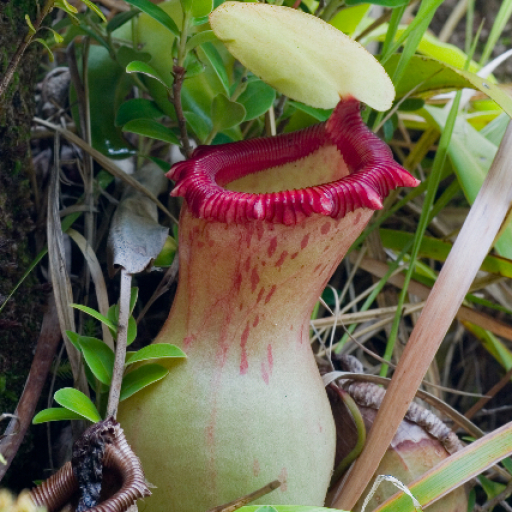
Known as the "Waxy Pitcher Plant," Nepenthes ventricosa is a charismatic carnivorous climber native to the misty highlands of the Philippines. Unlike some of its more finicky relatives, this species is famous among hobbyists for being incredibly sturdy and adaptable. Its elegant, waisted pitchers look like hand-blown porcelain art hanging gracefully from a green vine.
🔍 How to Identify
- ⏳ Hourglass Shape: The pitchers are uniquely constricted in the middle, giving them a distinct "waisted" or hourglass silhouette that sets them apart from other tube-shaped species.
- 🕯️ Waxy Texture: The pitchers have a thick, glossy, and almost plastic-like feel. This waxy coating helps the plant retain moisture and prevents it from drying out in breezy highland conditions.
- 👄 The Peristome: The "lip" around the mouth of the pitcher is ribbed and usually turns a brilliant shade of cherry red or porcelain white, acting as a colorful landing strip for insects.
🏡 In Your Garden
- 💧 Pure Water Only: Because these plants evolved in nutrient-poor soils, their roots are highly sensitive to minerals. Never use tap water; instead, provide distilled water, rainwater, or reverse osmosis water to avoid "burning" the delicate root system.
- 🧗 A Natural Scrambler: In the wild, this plant loves to climb. As it matures, it will produce long vines that look stunning when allowed to trail from a hanging basket or scale a small moss pole.
- ☁️ Humidity & Light: While it is more tolerant of lower humidity than other tropical pitchers, it needs bright, indirect light to produce its signature red color. If the plant stops producing pitchers, it is usually a sign that it needs more light or a boost in humidity.
⚠️ Safety & Toxicity
- 🐾 Pet Friendly: Great news for pet parents! Nepenthes ventricosa is generally considered non-toxic to cats and dogs, making it a safe alternative to more dangerous houseplants.
- 🧪 Digestive Fluid: While the liquid inside the pitchers is not "poisonous" to humans, it is a cocktail of digestive enzymes and rainwater. It’s best to keep curious children from playing with the pitchers to avoid skin irritation or accidental ingestion of the "bug soup" inside.
✨ Fun Fact
- ☂️ The Fixed Lid: Many people believe the lid of a pitcher plant snaps shut like a Venus Flytrap, but it’s actually a stationary "umbrella." Its main job is to prevent rain from flooding the pitcher and diluting the digestive acids, while secreting sweet nectar on the underside to lure insects to their slippery doom.

Detailed Care Instructions
Nepenthes ventricosa is a type of pitcher plant that can be grown both indoors and outdoors. Here are some tips on how to grow Nepenthes ventricosa:
- Light: Nepenthes ventricosa requires bright, indirect light. Place the plant in a location where it will receive filtered sunlight or artificial grow lights for at least 6-8 hours per day.
- Temperature: Nepenthes ventricosa thrives in temperatures between 65-85°F (18-29°C) during the day and 50-60°F (10-16°C) at night. Keep the plant away from drafts or extreme temperature fluctuations.
- Water: Nepenthes ventricosa requires consistently moist soil. Keep the soil evenly moist but not waterlogged. Use distilled water, rainwater, or purified water to prevent mineral buildup in the soil.
- Humidity: Nepenthes ventricosa prefers high humidity levels between 50-70%. You can increase humidity by misting the plant regularly, placing a humidifier nearby, or setting the plant on a tray filled with water and pebbles.
- Soil: Use a well-draining soil mix for Nepenthes ventricosa, such as a blend of sphagnum moss, perlite, and orchid bark. Avoid using regular potting soil, as it can retain too much moisture and lead to root rot.
- Fertilizer: Nepenthes ventricosa is a carnivorous plant that gets most of its nutrients from insects caught in its pitcher traps. However, you can supplement its diet by feeding it with diluted insectivorous plant fertilizer once a month during the growing season.
- Repotting: Repot Nepenthes ventricosa every 1-2 years to refresh the soil and improve root health. Use a slightly larger pot with adequate drainage holes to prevent waterlogging.
By following these care tips, you can successfully grow a healthy and thriving Nepenthes ventricosa plant.

Place in a window with dappled sun or a spot in the middle of a room. Or directly in a window facing west or east.

When caring for this particular plant, it is important to water it regularly to keep the soil consistently moist but not waterlogged. It is recommended to water the plant at the base of the plant, avoiding getting water on the leaves as this can promote fungal growth. Use room temperature water to avoid shocking the roots and causing undue stress to the plant. Additionally, it is important to ensure that the pot has proper drainage holes to allow excess water to escape and prevent water buildup at the roots. Ultimately, monitoring the soil moisture levels and adjusting your watering schedule as needed will help ensure the health and vitality of your plant.
To fertilize your Nepenthes Ventricosa plant, dilute a balanced liquid fertilizer with water to half the recommended strength. Gently water the plant with the diluted fertilizer solution every 2-4 weeks during the growing season. Avoid fertilizing during the winter months when growth slows down. Be sure to flush the soil with water after fertilizing to prevent salt buildup.
Nepenthes Ventricosa plants require a loose, well-draining soil mix that mimics their natural habitat in the rainforest. A suitable soil mix for these plants typically consists of a combination of sphagnum moss, perlite, and orchid bark to provide good aeration and moisture retention. It is important to avoid using regular potting soil or soils that are too compact, as they can lead to poor drainage and root rot. Additionally, adding a layer of sphagnum moss on top of the soil can help maintain humidity levels around the plant's roots. Overall, it is important to provide Nepenthes Ventricosa plants with the proper soil conditions to ensure their health and optimal growth.
Nepenthes ventricosa plants can be propagated through various methods, including by taking stem or leaf cuttings, dividing the plant at its roots, or by harvesting and sowing seeds.
To propagate through stem or leaf cuttings, select a healthy part of the plant and carefully cut it with a sterile blade. Place the cutting in a moist, well-draining potting mix and keep it in a warm, humid environment until roots begin to form.
Dividing the plant at its roots involves carefully separating the plant into smaller sections, each with its own root system. Replant these sections in new pots with fresh potting mix and ensure they receive adequate light and moisture.
Harvesting and sowing seeds is another method of propagation for Nepenthes ventricosa plants. Collect ripe seeds from the plant's pitchers and sow them in a moist, humid environment. Keep the soil consistently moist and provide ample light to help the seeds germinate and grow.
Propagation of Nepenthes ventricosa plants may require some patience and care, but with the right conditions and techniques, you can successfully grow new plants from existing ones.
Common pests of the nepenthes ventricosa include Mealybugs, fungus gnats. Make a habit of checking your nepenthes ventricosa frequently for pests so that any infestations can be caught and managed early.








