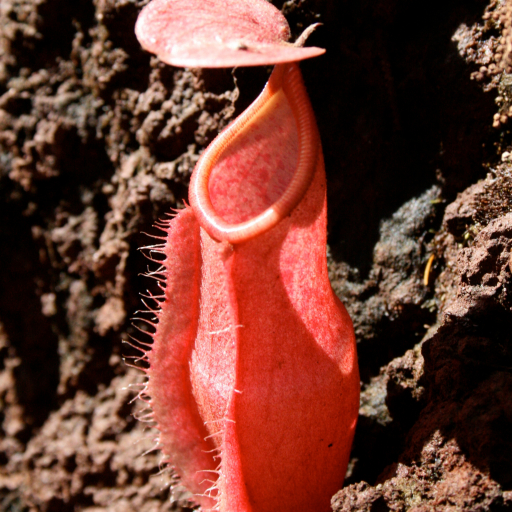
Plant Overview
Often called the New Caledonian Pitcher Plant, Nepenthes vieillardii is the rugged survivor of the carnivorous world. Found exclusively on the islands of New Caledonia, it thrives in dry, scrubby landscapes where other tropical pitcher plants would quickly wither. It is legendary among botanists for its ability to grow in "toxic" ultramafic soils, proving that beauty can indeed flourish in the harshest conditions.
🔍 How to Identify
- 🏺 Dimorphic Pitchers: This species produces two distinct trap styles; "lower" pitchers are squat and rest on the ground, while "upper" pitchers are more elongated, slender, and designed to catch flying insects.
- 🍃 Leathery Foliage: Unlike the thin, soft leaves of its rainforest cousins, its leaves are stiff, waxy, and lance-shaped to help the plant retain moisture in high-heat environments.
- 🎨 Mottled Patterns: The pitchers range from a pale yellowish-green to deep burgundy, often decorated with intricate red speckles and a finely ribbed rim (peristome) that leads insects to their doom.
🏡 In Your Garden
- ⛰️ The Mineral Exception: While most Nepenthes require nutrient-poor moss, vieillardii actually prefers a mineral-heavy substrate. It thrives in mixes containing perlite, pumice, or lava rock, mimicking the rocky New Caledonian scrubland.
- ☀️ Sun Worshiper: This plant craves high-intensity light. Without significant brightness, it will stop producing pitchers entirely. It is one of the few pitcher plants that can handle lower humidity levels once it is properly acclimated.
⚠️ Safety & Toxicity
- 🟢 Safe for Mammals: Nepenthes vieillardii is generally non-toxic to humans, cats, and dogs. It does not contain the dangerous alkaloids found in some other exotic plants.
- 🐜 Bacterial Warning: While the plant itself is safe, the fluid inside the pitchers is a "digestive soup" of enzymes and decaying insects. Keep small children from playing with the pitcher contents to avoid accidental ingestion of bacteria or skin irritation.
✨ Fun Fact
Nepenthes vieillardii is incredibly resilient to wildfires. While a fire might consume the pitchers and leaves, the plant's deep, woody root system often survives underground, allowing it to be one of the first species to sprout back after a blaze.

Detailed Care Instructions
To grow Nepenthes Vieillardii, also known as the Veitchii pitcher plant, you will need to provide the following conditions:
- Environment: Nepenthes Vieillardii is native to high-elevation rainforests, so it requires a humid and warm environment. Aim for a temperature range of 70-85°F (21-29°C) during the day and around 60-70°F (15-21°C) at night.
- Light: Provide bright, indirect light to the plant. A north or east-facing window is ideal. Avoid direct sunlight as it can burn the leaves.
- Soil: Use a well-draining soil mix specifically formulated for carnivorous plants. A typical mix can include sphagnum moss, perlite, and orchid bark. The soil should be moist but not waterlogged.
- Watering: Nepenthes Vieillardii prefers to be consistently moist. Keep the soil evenly moist, but avoid waterlogging. You can use distilled water, rainwater, or reverse osmosis water rather than tap water, which may contain minerals harmful to carnivorous plants.
- Humidity: Maintain a high level of humidity around the plant. You can achieve this by placing the pot on a tray filled with water and pebbles, misting the plant regularly, or using a humidifier.
- Feeding: Nepenthes Vieillardii is carnivorous and can catch its prey using its pitcher traps. However, insect feeding should not be relied upon solely to meet their nutritional needs. Using a diluted carnivorous plant fertilizer or applying a small amount of crushed freeze-dried insects can help supplement their diet.
- Pruning: Regularly remove any dead or dying leaves to maintain the plant's health and appearance.
- Dormancy: Some Nepenthes species, including Nepenthes Vieillardii, undergo a period of winter dormancy. During this time, lower the temperature and reduce watering to allow for a rest period.
By providing these growing conditions, your Nepenthes Vieillardii should thrive. Remember to do some research specific to this species, as care requirements may slightly vary among different Nepenthes varieties.

Place in a bright room that is sun drenched almost all day. Or directly in a south-facing window.
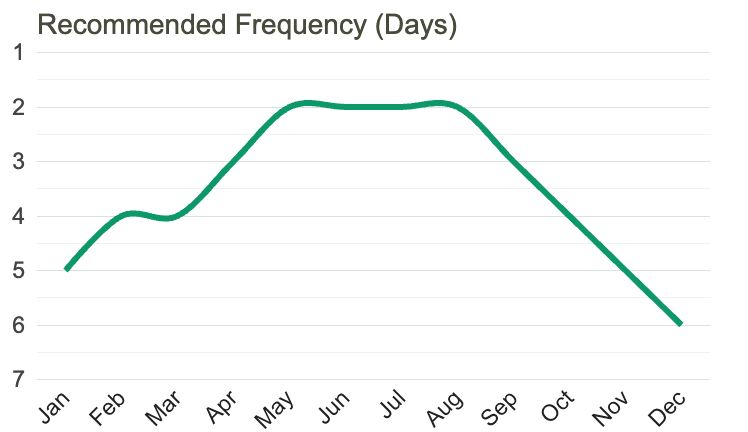
Nepenthes Vieillardii is a tropical plant that requires a consistent supply of water to thrive. It is best to use distilled or rainwater to water the plant, as it is sensitive to chemicals and minerals in tap water.
When watering, it is important to avoid getting water in the pitcher, as this can dilute the digestive enzymes and harm the plant. Instead, water the soil around the plant until it is moist but not soaking wet. It is recommended to water the plant every 5-7 days, depending on the humidity and temperature of the plant's environment.
During the growing season, the plant may require additional watering to keep up with its increased water needs. It is also important to monitor the soil moisture levels during the winter months, as the plant's water requirements may decrease due to lower temperatures and reduced light levels.
Overall, Nepenthes Vieillardii requires consistent and careful watering to ensure it remains healthy and vibrant.
To fertilize your Nepenthes Vieillardii plant, mix a high-quality, balanced fertilizer with water according to the manufacturer's instructions. Apply the fertilizer mixture to the soil every two to three weeks during the growing season. Avoid getting the fertilizer on the leaves or pitchers of the plant, as this can damage them. During the dormant season, reduce fertilization to once a month or stop altogether. Always make sure the soil is moist before fertilizing.
The soil that is suitable for Nepenthes Vieillardii plant is an organic, well-draining soil mix that is free from any type of fertilizer. It should have a pH level of 5.5-6.5, and ideally, it should be slightly acidic. A pre-made soil mix that has coarse perlite, peat moss, and sphagnum moss would be a good choice to use for this plant. It is important to avoid using soil that is too heavy or compact, as this can trap moisture and lead to root rot. Additionally, adding some orchid bark or charcoal to the soil mixture can help improve drainage and prevent the soil from becoming too compact. Overall, the goal should be to create a soil mix that is lightweight, porous, and drains well.
To propagate this plant, first select a healthy and mature specimen from which to take cuttings. Using a sharp, sterile pair of scissors or pruning shears, carefully cut off a stem or leaf with a node or bud (where new growth will emerge).
Next, prepare a well-draining potting mix of equal parts peat moss and perlite or a similar material. Fill a small pot or container with the mix and make a hole or depression in the center.
Dip the cut end of the stem or leaf into rooting hormone powder to encourage root growth, then place it into the prepared hole in the potting mix.
Water the cutting well and cover the pot with a clear plastic bag or dome to create a humid environment. Keep the soil moist and place the pot in a bright, indirect light location.
After a few weeks or months, depending on the species, new growth should emerge from the node or bud and the cutting will have developed roots. At this point, the plant can be carefully transplanted into a larger pot or into the desired location.








