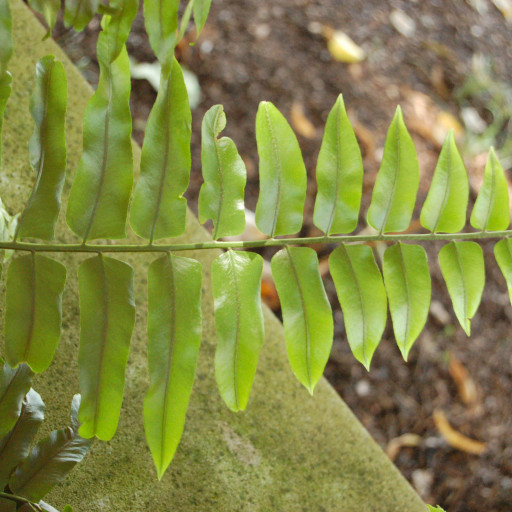
Plant Overview
Known as the Giant Sword Fern, Nephrolepis biserrata is the grand, oversized cousin of the classic Boston fern. This tropical titan can transform a simple patio or a humid room into a lush, prehistoric jungle with its massive, arching emerald fronds. It is a favorite for nature lovers who want a "statement plant" that feels both ancient and elegant.
🔍 How to Identify
- 🌿 Oversized Fronds: Unlike smaller household ferns, these fronds are exceptionally long, often reaching 4 to 5 feet in length in ideal conditions.
- 🗡️ Serrated Leaflets: Each individual leaflet (pinna) features a finely notched or "double-toothed" edge, which is exactly what its Latin name biserrata refers to.
- 🟤 Symmetrical Sori: On the underside of mature leaves, you will find two neat rows of round, reddish-brown spore cases used for reproduction.
🏡 In Your Garden
- ☁️ Humidity is Essential: This fern thrives on moisture in the air. If the leaf tips turn brown and crispy, it is likely protesting against dry indoor heating or a lack of misting.
- 💧 The "Damp Sponge" Rule: It prefers soil that stays consistently moist but never waterlogged. Because it grows from a central clump, ensure the "crown" isn't buried too deep, or it may succumb to rot.
- ⛅ Dappled Shade: Mimicking its natural home under the jungle canopy, it craves bright, filtered light. Direct afternoon sun is its enemy and will quickly bleach or scorch the delicate foliage.
⚠️ Safety & Toxicity
- ✅ Safe Status: This plant is generally considered non-toxic and "pet-safe."
- 🐾 Friendly to All: Unlike many other tropical plants (like Lilies or Cycads), the Giant Sword Fern poses no threat to cats, dogs, or curious children if accidentally nibbled.
✨ Fun Fact
In its native tropical habitats, this fern is a bit of an opportunist. While it usually grows in the ground, it is frequently found growing as an "epiphyte," high up in the crooks of palm trees where it catches falling organic debris for nutrients!

Detailed Care Instructions
| Soil Ph | Acidic |
| Humidity | High |
| Lighting | Part Sun |
| Soil Type | Moist But Well-Draining |
| Difficulty | Hard |
| Plant Type | Perennial |
| Mature Size | 3-4 Ft. Tall, 6 Ft. Wide |
| Native Area | North America |
| Temperature | 18°C - 24°C |
| Sun Exposure | Partial, Shade |
| Hardiness Zones | 9-10 |
To grow a Nephrolepis biserrata (Sword Fern) plant, you can follow these steps:
- Choose a suitable location: Sword ferns prefer indirect or filtered sunlight, as direct sunlight can scorch their delicate leaves. They also thrive in high humidity environments, so it's advisable to place them in a bathroom or kitchen if possible.
- Select the right container: Plant your sword fern in a pot with good drainage. Make sure the pot is large enough to accommodate the plant's root system, leaving some room for future growth.
- Use appropriate potting mix: Sword ferns prefer well-draining soil. Potting mixes that contain peat moss, perlite, and vermiculite work well for them. You can also add some organic matter, such as compost, to enrich the soil.
- Watering: Keep the soil evenly moist, but not waterlogged. Sword ferns prefer moist environments but can rot if sitting in water for too long. Water thoroughly when the top inch of soil feels dry, and empty any excess water from the drainage tray to prevent waterlogging.
- Humidity: Increasing humidity around the plant will help promote its growth. You can mist the leaves regularly or place a tray of water near the plant to provide extra humidity. Placing the plant on a pebble tray filled with water can also help increase humidity around it.
- Fertilization: Feed the fern with a balanced liquid fertilizer diluted to half the recommended strength every two weeks during the growing season (spring and summer). During the fall and winter, reduce fertilization to once a month.
- Pruning: Trimming off yellow or brown fronds regularly helps to maintain the plant's health and appearance. You can prune back any dead or damaged leaves at the base of the plant.
- Repotting: Sword ferns may require repotting every couple of years or when the plant seems to have outgrown its pot. Look for signs such as roots growing out of the drainage holes or the plant becoming root-bound.
- Pest control: Keep an eye out for pests such as scale insects, mealybugs, or aphids. If you notice any infestations, gently wipe the leaves with a damp cloth or use an appropriate insecticide to control them.
By following these steps, you should be able to successfully grow and care for your Nephrolepis biserrata plant.

Place in a window with dappled sun or a spot in the middle of a room. Or directly in a window facing west or east.

The watering method for this plant should take into account factors such as the size of the pot, the humidity of the room, and the amount of sunlight it is receiving. It is important to avoid overwatering, as this can lead to root rot, while underwatering can lead to the plant drying out and wilting. The best approach is to water the plant deeply an hour or two after the soil surface has become dry to the touch. This helps to ensure that the water penetrates deep into the roots. It is also a good idea to use lukewarm or room temperature water, rather than cold or hot water, to avoid shocking the plant's system. Finally, misting the plant periodically can help to increase humidity and prevent the leaves from becoming too dry.
- Choose a balanced fertilizer with equal amounts of nitrogen, phosphorus, and potassium.
- Dilute the fertilizer according to the package instructions or to half strength.
- Water the plant thoroughly before fertilizing.
- Apply the fertilizer evenly to the soil surface around the plant.
- Avoid getting fertilizer on the plant's foliage.
- Repeat fertilization every 4-6 weeks during the growing season (spring and summer).
- Reduce or stop fertilization during the dormant period (fall and winter).
- Monitor the plant for signs of over-fertilization such as yellowing or burning of foliage and adjust fertilization accordingly.
The ideal soil for Nephrolepis Biserrata should be well-draining and rich in organic matter. It should have a pH level between 5.5 and 6.5. A mixture of high-quality potting soil, peat moss, and perlite or vermiculite can be used to create the perfect growing medium for this plant. It is important to avoid soils that are heavy and compacted, as they can lead to root rot and other issues. Adding some sand or gravel to the soil mixture can also improve drainage and prevent water from pooling around the roots. Additionally, it is recommended to fertilize the plant with a balanced fertilizer every few months to support healthy growth.
To propagate this plant, you will need to locate healthy and mature fronds from an existing plant. Carefully cut these fronds near the base using sharp, sterilized scissors or pruning shears. Avoid damaging the parent plant while doing so.
Prepare the propagation medium by mixing equal parts of peat moss and coarse sand. Moisten the mixture and fill a pot or container with drainage holes.
Dip the cut end of the frond in rooting hormone powder and tap off any excess. Make a small hole in the propagation medium with a pencil or your finger and insert the frond at least an inch deep. Firmly press the medium around the frond to secure it in place.
Cover the pot with a plastic bag or dome to create a humid environment. Place the pot in a bright but indirect light location with temperatures between 60-75°F (15-24°C). Keep the medium moist but not soaking wet, and avoid direct sunlight or drafts.
Check on the cuttings weekly and remove any dead or yellowing leaves. After 4-6 weeks, you should see new growth emerging from the base of the frond. At this point, you can remove the plastic cover and gradually acclimate the new plant to normal growing conditions.
Once the plant has established roots and new growth, you can transplant it into a larger pot with well-draining soil and continue to care for it as you would for a mature plant.
Common pests of the giant sword fern include Scale insect, mealybugs, spider mites, fungus gnats. Make a habit of checking your giant sword fern frequently for pests so that any infestations can be caught and managed early.








