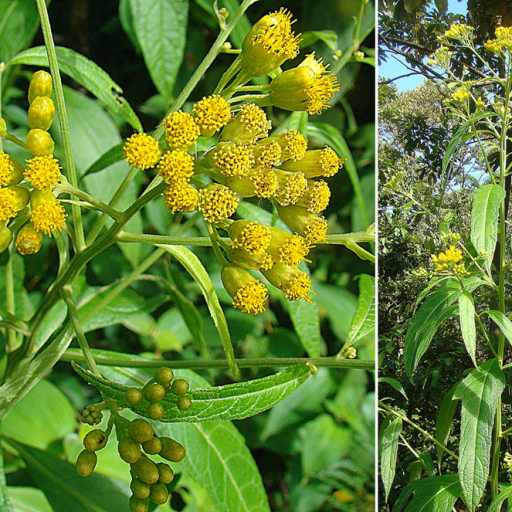
Plant Overview
Commonly known as Jackass Bitters, Neurolaena lobata is a legendary medicinal shrub native to Mexico, Central America, and the Caribbean. Often called "Tres Puntas" (Three Points) due to its unique leaf shape, it is famous throughout the tropics for its incredibly bitter taste, which locals swear can cure almost anything from a common cold to a stubborn fever.
🔍 How to Identify
- 🌿 The Leaves: The most distinct feature is the bright green, rough-textured leaves that often split into three distinct lobes at the tip, looking somewhat like a bird's foot or a "Lizard’s Hand" (Mano de Lagarto).
- 🌼 Golden Clusters: It produces small, yellow, button-like flowers that lack the long petals of a typical daisy. They grow in dense clusters at the ends of the branches.
- 📏 Growth Habit: This is a hardy, upright shrub that can reach heights of 6 to 10 feet. It often looks a bit "weedy" or wild, thriving in sunny clearings and along roadsides.
🏡 In Your Garden
- ☀️ Sun-Loving Survivor: In a garden setting, this plant is exceptionally low-maintenance. It thrives in full sun and isn't picky about soil quality, often colonizing "disturbed" areas where other plants struggle.
- 🛡️ Natural Repellent: Because the plant is so chemically bitter, it is rarely bothered by pests. Many organic gardeners grow it specifically to create a natural "bitter tea" spray to deter insects from more delicate vegetables.
- 💧 Watering Nuance: While it is drought-tolerant once established, it prefers consistent moisture. If the soil stays bone-dry for too long, the lower leaves will yellow and drop quickly to conserve energy.
⚠️ Safety & Toxicity
- 👅 Status: Non-toxic but extremely unpalatable.
- 👶 Details: While not considered poisonous to humans or pets, the flavor is so intensely bitter it can cause immediate gagging or nausea if chewed. It is used in traditional medicine, but home users should avoid internal consumption without professional guidance, as high doses can be hard on the stomach.
✨ Fun Fact
The name "Jackass Bitters" reportedly comes from the observation that the plant is so overwhelmingly bitter that not even a hungry donkey will eat it! In Belize, it is a primary ingredient in "traveler’s tonics" used to prevent parasites.

Detailed Care Instructions
To grow a Neurolaena Lobata plant, also known as the Jack-in-the-Bush or Yerba de Golondrina, you can follow these steps:
- Propagation: Obtain seeds or cuttings from a reputable nursery or online source. If using seeds, soak them in warm water for 24 hours before planting to enhance germination.
- Soil: Choose well-draining soil rich in organic matter. A mix of peat moss, compost, and perlite or sand works well. Make sure the soil pH is around 5.5 to 6.5, slightly acidic.
- Planting: Fill small pots or seed trays with the prepared soil and lightly press the seeds about 1/4 inch deep into the soil. If using cuttings, dip the base of the stem in a rooting hormone before planting them.
- Light: Neurolaena Lobata thrives in full sun to partial shade. Place the pots or trays in a location that receives at least 6 hours of direct sunlight per day.
- Watering: Keep the soil moist but not soggy. Water whenever the top inch of soil feels dry, but avoid overwatering as it can lead to root rot.
- Temperature and humidity: The plant prefers warm temperatures above 60°F (15°C). It grows best in regions with a humid subtropical or tropical climate, but it can also tolerate drier conditions once established.
- Transplanting: Once the seedlings or cuttings develop a strong root system, they can be transplanted into larger pots or directly into the garden. Transplant them carefully, ensuring the new location has similar light and soil conditions as before.
- Fertilizer: Apply a balanced, water-soluble fertilizer monthly during the growing season to promote healthy growth. Follow the package instructions for dosage and application.
- Pruning: Prune the plant to control its height and shape if necessary. This can also encourage branching and bushier growth.
- Pests and diseases: Neurolaena Lobata is generally resistant to pests and diseases. However, watch out for aphids, mealybugs, or spider mites. If noticed, treat them with an appropriate insecticidal soap or horticultural oil.
Remember, gardening practices can vary depending on your geographical location and climate. It's always helpful to research specific regional requirements for growing this plant.

To water this plant, first check the soil to see if it is dry. Next, fill a watering can with room temperature water and slowly pour it onto the soil, avoiding getting any water on the leaves or stem. Make sure to water the plant enough so that the soil is moist but not waterlogged. Repeat this process once a week or as needed, depending on the humidity and temperature levels of the plant's environment.
To fertilize Neurolaena lobata, apply a balanced, slow-release fertilizer with equal amounts of nitrogen, phosphorus, and potassium, in a ratio of 10-10-10 or 15-15-15. Apply the fertilizer once a month during the growing season, from spring to early fall. Dilute the fertilizer to half-strength and apply it to the soil around the plant, avoiding contact with the leaves. Water the plant thoroughly after fertilizing. Do not fertilize during the dormant season.
Neurolaena Lobata plant prefers a well-draining soil rich in nutrients. It thrives in soils that are slightly acidic with a pH range of 5.5 to 7.5. The best soil for this plant is a balanced blend of peat moss, perlite, and vermiculite. This creates a soil that is airy and allows water and nutrients to flow freely to the roots. Additionally, adding organic matter like compost or well-rotted manure improves soil structure, increases microbial activity and provides nutrients that are essential for plant growth. It is recommended to avoid heavy clay soils that retain too much water because this can lead to root rot and other fungal diseases. Overall, Neurolaena Lobata plant requires fertile, well-draining soil that is slightly acidic and remains consistently moist.
Neurolaena Lobata can be propagated through stem cuttings. Cut a healthy stem from the parent plant just below the node and remove the leaves from the lower half of the stem. Dip the cut end of the stem into rooting hormone and plant it in a well-draining potting mix.
Keep the soil evenly moist and place the cutting in indirect light. After a few weeks, the cutting should develop roots and new growth. Once the cutting has established roots, it can be transferred to a larger pot or planted in the ground in a well-draining location with filtered sunlight.
Another method of propagation is through seeds. Mature seed heads can be harvested and dried indoors. Once the seeds are dry, they can be sown into a mixture of soil and sand. Keep the soil evenly moist and place the container in filtered sunlight. The seeds should germinate within a few weeks and can be transplanted once they have established roots.
It is important to note that Neurolaena Lobata prefers warm temperatures and humid environments. Make sure to keep the newly propagated plant in a warm and humid location to ensure successful growth.








