Plant Overview
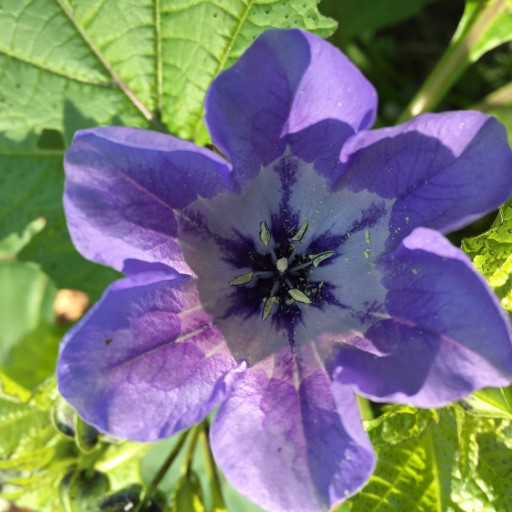
Often called the "Apple of Peru" or the "Shoo-fly Plant," Nicandra physalodes is a striking South American native that looks like a wild, blue-flowered cousin of the tomato. It arrived in gardens across the globe in the 18th century as a curiosity, prized for its unique lantern-shaped fruit pods and rapid growth. While beautiful, it has a rebellious spirit, often popping up in unexpected corners of the garden as a "volunteer" guest.
🔍 How to Identify
- 🌸 Bell-Shaped Blooms: Features delicate, five-lobed flowers that are typically a soft sky-blue or lavender, fading to a creamy white center often marked with dark purple spots.
- 🍃 Jagged Foliage: The leaves are large, oval, and distinctly "toothed" or wavy along the edges, resembling a more rugged version of a pepper plant leaf.
- 🏮 Winged Lanterns: After the flowers fade, they develop into green, five-sided papery husks that protect a small berry inside. As they mature, these "lanterns" turn brown and parchment-like.
🏡 In Your Garden
- 🌱 The Great Wanderer: This plant is a prolific self-seeder. If you allow the papery lanterns to dry on the stem, they will scatter hundreds of seeds, ensuring the plant returns year after year. It’s perfect for "wild" gardens but may require weeding in manicured borders.
- ☀️ Resilient Nature: It loves full sun and can handle poor soil better than most ornamental flowers. Because it grows so fast, it is often used as a "filler" to hide unsightly fences or bare patches during the height of summer.
⚠️ Safety & Toxicity
- 🚫 Toxic Nightshade: As a member of the Solanaceae (Nightshade) family, all parts of this plant—especially the seeds and berries—are toxic if ingested.
- 🐾 Keep Away from Pets: The alkaloids present in the plant can cause vomiting, diarrhea, and heart palpitations in dogs, cats, and horses. It is best kept out of reach of curious nibblers and small children.
✨ Fun Fact
- 📜 Old School Insecticide: The nickname "Shoo-fly Plant" comes from an old folk remedy where the plant's juice was crushed and mixed with milk; the mixture was set out in bowls to attract and poison houseflies. While it isn't a very effective repellent just by growing in the soil, its chemistry is historically rooted in pest control!

Detailed Care Instructions
To grow Nicandra Physalodes plants, follow these steps:
- Choose a planting location: Nicandra Physalodes prefers full sun to partial shade. Choose a spot in your garden with well-draining soil.
- Prepare the soil: Loosen the soil using a garden fork or tiller and remove any weeds or debris. Add organic matter like compost or well-rotted manure to enrich the soil.
- Sow the seeds: Nicandra Physalodes can be grown from seeds. Sow the seeds directly into the prepared soil in early spring or start them indoors 6-8 weeks before the last frost date. Sow the seeds about 1/4 inch deep and keep them spaced about 12 inches apart.
- Watering: Keep the soil consistently moist but not waterlogged. Water regularly, especially during dry periods. Avoid overhead watering as it can cause fungal diseases.
- Fertilize: Nicandra Physalodes doesn't require heavy fertilization. A balanced, slow-release fertilizer applied during planting is sufficient. Avoid over-fertilization, as it may result in excessive foliage growth.
- Mulching: Apply a layer of organic mulch around the base of the plants. Mulching helps retain moisture, suppresses weed growth, and regulates soil temperature.
- Pruning: Nicandra Physalodes may become leggy, so it's a good idea to pinch them back when they reach about 8-10 inches tall. This encourages bushier growth and more flowers.
- Pests and diseases: Nicandra Physalodes is generally resistant to pests and diseases. However, keep an eye out for common garden pests like aphids or snails and treat accordingly.
- Harvesting: Nicandra Physalodes produces delicate, bell-shaped flowers and papery seed pods. You can harvest the flowers for floral arrangements or allow the seed pods to mature and collect the seeds for future plantings.
Remember to check your local climate and growing conditions to ensure the best results for Nicandra Physalodes plants in your specific area.

Place in a bright room that is sun drenched almost all day. Or directly in a south-facing window.

Nicandra Physalodes is a plant that requires regular watering to thrive. The amount of water it needs depends on several factors, such as the season, humidity levels, and soil type. To ensure the plant gets the right amount of water, you should check the soil moisture frequently.
One way to check the moisture level is to insert a finger into the soil up to the first knuckle. If the soil feels dry, it's time to water the plant. If it feels moist, you can wait a bit longer before watering.
When watering the Nicandra Physalodes plant, you should aim to provide enough water to moisten the soil fully. Avoid overwatering as this can lead to waterlogging and root rot.
You can water the plant using a watering can, hose, or drip irrigation system. You should water at the base of the plant, avoiding getting the leaves wet, which can promote fungal growth.
In hot weather, you may need to water the Nicandra Physalodes plant more frequently, as the soil dries out quickly. If the plant is in a container, you should check the soil moisture daily.
In summary, to water the Nicandra Physalodes plant correctly, you should regularly check the soil moisture, water at the base of the plant, avoid overwatering and getting the leaves wet, and adjust the frequency of watering depending on the weather conditions.
To fertilize this plant, choose a balanced fertilizer with equal parts of nitrogen, phosphorus, and potassium that is water-soluble. Mix a small amount of the fertilizer with water according to the package instructions. Fertilize the plant once every two weeks during the growing season, which is typically from spring to fall. Be sure to water the plant thoroughly after fertilizing. As the plant matures, reduce the frequency of fertilization.
Nicandra Physalodes plant grows best in well-draining soil that is rich in organic matter. The soil should be slightly acidic with a pH between 6.0 and 7.0. It is important to avoid using heavy or compacted soil that can lead to poor drainage and root rot. Adding sand or perlite to the soil can help improve drainage. Additionally, the soil should be kept consistently moist but not waterlogged. Fertilization can also be beneficial for promoting healthy growth, with a balanced fertilizer applied every few weeks during the growing season.
To propagate this plant, you will need to harvest ripe fruits that contain seeds. The seeds should be separated from the fruit and allowed to dry completely before planting. Once the seeds have dried, plant them in a well-draining soil mix and cover them with a thin layer of soil. Keep the soil moist but not overly wet, and place the container in a warm area with indirect sunlight. The seeds will germinate within one to two weeks, and as soon as the seedlings emerge, you can transplant them into their permanent location. Ensure that the soil is well-draining and that the plant receives adequate light. Once established, Nicandra Physalodes is a hardy plant that requires little maintenance other than occasional watering and fertilizing.
Common pests of the apple of peru include Spider mites, aphids, thrips, whiteflies. Make a habit of checking your apple of peru frequently for pests so that any infestations can be caught and managed early.








