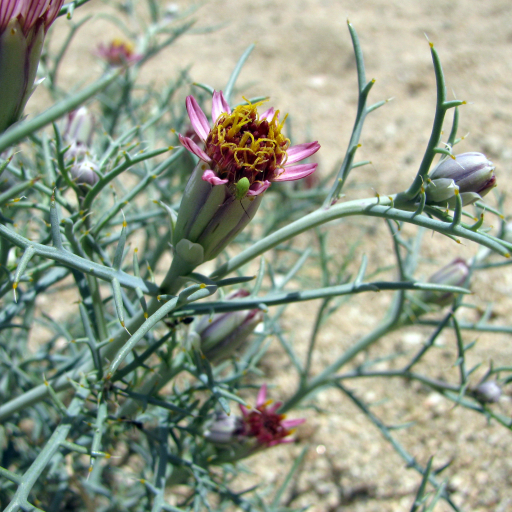
Plant Overview
Known as the Mojave Hole-in-the-Sand, this rare and peculiar desert dweller is a master of the arid American Southwest. A member of the sunflower family, it has traded traditional garden-variety charm for rugged, desert-tough survival skills. It is most famous among desert hikers not just for its dainty flowers, but for its surprisingly pungent, almost "meaty" aroma that lingers in the hot desert air.
🔍 How to Identify
- 🌸 The Blooms: Features charming daisy-like flower heads with pale pink to white outer "petals" (ray florets) surrounding a bright golden-yellow center.
- 🌿 The Foliage: The leaves are fleshy, narrow, and deeply lobed, often appearing a dusty or glaucous blue-green to reflect the harsh desert sun.
- 👃 The Scent: One of its most distinct features is a heavy, musky, or onion-like fragrance that it emits when brushed against or under high heat.
🏡 In Your Garden
- 🏜️ The Desert Specialist: This plant is rarely found in traditional nurseries because it is a "specialist." It requires extremely well-draining, sandy soil and thrives in the open, alkaline flats of the Mojave and Sonoran deserts.
- 🧱 Taproot Sensitivity: Like many desert perennials, it develops a long, sensitive taproot to find deep water pockets. This makes it notoriously difficult to transplant; if you find one in the wild, it’s best to leave it exactly where it "chose" to grow.
⚠️ Safety & Toxicity
- 🟢 Status: Generally considered non-toxic.
- 🐶 Details: While not known to be poisonous to pets or humans, the intense, pungent oils in the foliage act as a natural deterrent. Most animals will avoid eating it simply because it smells and tastes quite unpleasant.
✨ Fun Fact
The nickname "Hole-in-the-Sand" comes from the plant's unique growth habit; as desert winds blow, sand often accumulates around the base of the plant or scours the area away, making the plant look as though it is emerging from a small, dedicated pit or "hole" in the dunes.

Detailed Care Instructions
To grow Nicolletia Occidentalis (Western Wallflower), you can follow these steps:
- Purchase seeds: Buy Nicolletia Occidentalis seeds from a reputable seed supplier or native plant nursery.
- Determine the suitable growing conditions: Nicolletia Occidentalis prefers full sun to partial shade. It is native to dry, open areas, so it requires well-drained soil. Ensure that the chosen spot receives at least 6-8 hours of direct sunlight per day.
- Prepare the soil: Prepare the planting area by removing any weeds or grass. Loosen the soil and add organic matter to improve drainage if necessary.
- Sow the seeds: Scatter the Nicolletia Occidentalis seeds directly on the soil surface, as this plant requires light to germinate. Avoid burying the seeds.
- Water the seeds: After sowing the seeds, gently water the area to settle the soil. Keep the soil consistently moist until germination occurs, which usually takes around 2-4 weeks.
- Thin the seedlings: Once the seedlings emerge and grow to a few inches tall, thin them out to allow proper spacing between plants. Leave at least 12-18 inches of space between each seedling.
- Provide regular care: Continue watering the plants regularly, especially during dry spells, making sure not to overwater. Weed the area around the plants to reduce competition. Fertilization is typically not necessary for native plants.
- Monitor for pests and diseases: Watch for any signs of pests or diseases. Nicolletia Occidentalis is generally resistant to most problems, but occasional aphids or caterpillars might require treatment.
- Enjoy the blossoms: Nicolletia Occidentalis typically blooms in spring or early summer, producing beautiful yellow or orange flowers. Allow the plants to flower and set seed, which will help in naturalizing the area.
Remember, Nicolletia Occidentalis is native to specific regions, so ensure that it is suitable for your climate and growing conditions. It may be a good idea to consult local gardening resources or native plant experts to ensure success.

Place in a bright room that is sun drenched almost all day. Or directly in a south-facing window.

To ensure proper hydration of Nicolletia Occidentalis, follow these guidelines:
1. Evaluate the soil: Before watering, check the moisture level of the soil. Insert your finger about 1-2 inches into the soil. If it feels dry at this depth, it's an indication that the plant needs watering.
2. Watering frequency: Nicolletia Occidentalis prefers moderately moist soil, so water it regularly. On average, aim to water the plant once every 7-10 days. Adjust the frequency based on the environmental conditions and the moisture retention of the soil.
3. Watering technique: When watering, ensure that water reaches the root zone of the plant effectively. Apply water evenly around the base of the plant until the soil is damp, but avoid creating waterlogged conditions.
4. Water quantity: Provide enough water to penetrate the root zone, but avoid overwatering. Use a sufficient quantity of water to moisten the soil to a depth of approximately 6-8 inches. This will encourage the roots to grow deeper, promoting a stronger and healthier plant.
5. Water quality: Ensure to use water that is preferably at room temperature or slightly lukewarm for watering Nicolletia Occidentalis. Avoid using cold water, as it can shock the roots and hinder their growth.
6. Drainage: Good drainage is crucial to prevent excess water from accumulating around the roots. Choose a well-draining potting mix for container-grown plants or ensure that the planting area has adequate drainage in the case of garden plants.
7. Climate considerations: Adjust the watering frequency based on the climate and weather conditions. During hot and dry periods, the plant may require more frequent watering, while in cooler or rainy seasons, reduce the frequency to avoid waterlogging or rotting of the roots.
Remember, it is always essential to observe the plant's response to watering. Over time, you will become familiar with Nicolletia Occidentalis's specific watering needs based on its growth patterns and overall health.
- Start by preparing a well-draining potting mix that is rich in organic matter. A combination of peat moss, perlite, and compost works well.
- Choose a suitable container for your plant that has drainage holes at the bottom. Ensure that it is large enough to accommodate the growth of the Nicolletia occidentalis plant.
- Fill the container with the prepared potting mix, leaving some space at the top for watering.
- When the plant is actively growing, begin fertilizing it. Use a balanced liquid fertilizer with equal amounts of nitrogen (N), phosphorus (P), and potassium (K). Dilute the fertilizer according to the instructions provided on the packaging.
- Apply the diluted fertilizer to the soil around the base of the plant, avoiding direct contact with the leaves. Overfertilizing can harm the plant, so always follow the recommended dosage.
- Fertilize the Nicolletia occidentalis plant every two to four weeks during the growing season, which typically occurs in spring and summer. Reduce or stop fertilizing in fall and winter when the plant goes into dormancy.
- Regularly monitor the plant for any signs of nutrient deficiencies or excesses. Adjust your fertilizing schedule accordingly to address any issues that may arise.
- In addition to regular fertilizer application, it is beneficial to incorporate organic matter into the soil every year. This can be achieved by adding compost or well-rotted manure to the top layer of the potting mix.
- Water the plant well after fertilizing to help the nutrients reach the roots and prevent potential fertilizer burn.
- Finally, pay attention to the overall health and growth of the Nicolletia occidentalis plant. Adjust the fertilizing routine as needed based on the plant's response and guidance from a plant care professional, if necessary.
The ideal soil for Nicolletia occidentalis should be well-draining and loamy in texture. Loamy soil is a balanced combination of sand, silt, and clay, which allows for proper water drainage while retaining enough moisture for the plant's roots.
The pH level of the soil should be slightly acidic to neutral, ideally ranging from 6.0 to 7.0. This will provide the plant with optimal conditions for nutrient absorption and overall growth.
Additionally, the soil should be rich in organic matter, such as compost or well-rotted manure. This enhances the soil's fertility and promotes healthy root development.
Prior to planting Nicolletia occidentalis, it is advisable to prepare the soil by removing any weeds or unwanted vegetation. This will minimize competition for nutrients and ensure the plant receives the necessary nourishment. Adding organic matter during soil preparation can also provide long-term benefits for the plant's health and vitality.
Regular soil moisture checks should be performed to ensure proper hydration for Nicolletia occidentalis. Watering the plant deeply but infrequently, allowing the soil to dry out between watering intervals, is generally recommended. However, the specific watering requirements may vary depending on several factors, such as climate, season, and individual plant needs.
Overall, selecting a well-draining, loamy soil enriched with organic matter and maintaining appropriate soil moisture levels are key factors for successful cultivation of Nicolletia occidentalis.
Propagation of Nicolletia occidentalis plant can be achieved through several methods. One common method is through seed propagation. Here are detailed steps on how to propagate the plant without mentioning its common names:
- Seed collection: Wait for the plant to produce mature seeds. Harvest the seeds by gently plucking them from the plant or collecting fallen seeds from the ground.
- Seed preparation: Clean the seeds by removing any debris and pulp. Soak the seeds in tepid water for a few hours to enhance germination.
- Seed treatment: Some gardeners recommend scarification to break the seed coat and improve germination rates. This can be done by gently filing the seed coat or soaking it in a weak acidic solution for a short period.
- Germination medium: Prepare a well-draining germination medium, such as a mixture of perlite and peat moss or seed-starting mix. Ensure the medium is moist but not saturated.
- Sowing the seeds: Place the prepared seeds on top of the germination medium. Lightly press them into the surface without burying them. Maintain a proper spacing between the seeds to allow adequate air circulation.
- Germination conditions: Nicolletia occidentalis prefers warmth and a humid environment for germination. Place a clear plastic cover or plastic wrap over the container to create a mini greenhouse effect. Position the container in a warm spot with indirect sunlight.
- Germination period: Depending on the species, Nicolletia occidentalis can take several weeks to months to germinate. It is essential to regularly check the seeds for any signs of germination or mold.
- Seedling care: Once the seeds germinate, remove the plastic cover gradually to acclimatize the seedlings to the surrounding conditions. Provide bright but indirect light. Keep the seedlings consistently moist but avoid overwatering, as this can lead to root rot.
- Transplanting: When the seedlings have developed a couple of sets of true leaves, they can be transplanted into individual pots or a suitable growing area. Carefully loosen the seedling's roots and plant it at the same depth as it was growing initially.
- Care and maintenance: Provide the young plants with optimal growing conditions, including partial shade, regular watering, and a well-draining soil. Protect them from extreme temperatures and provide occasional fertilization to promote healthy growth.
By following these steps, you should be able to successfully propagate Nicolletia occidentalis from seeds, allowing you to cultivate this unique plant.








