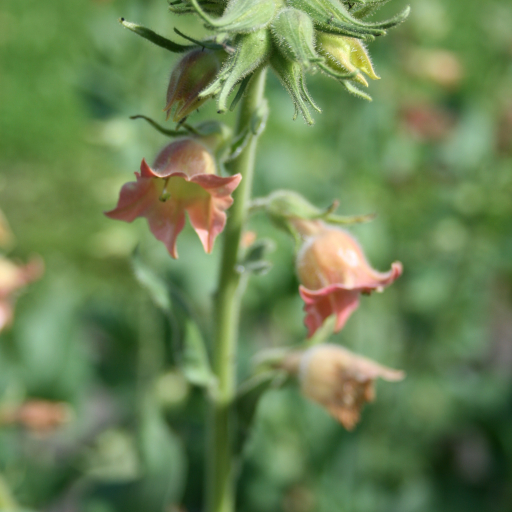
Plant Overview
Often called "Sticky Tobacco," Nicotiana glutinosa is a wild relative of the common tobacco plant hailing from the rugged landscapes of the Andes mountains. While it isn't used for commercial smoking, it has earned a legendary status in the world of science as a "guinea pig" for plant pathology. Its velvet-like, resinous leaves tell a story of survival in high-altitude environments where it uses its unique texture to ward off unwanted visitors.
🔍 How to Identify
- 🧪 The "Glue" Factor: Its most striking feature is the dense covering of glandular hairs. If you touch the leaves or stems, your fingers will immediately feel tacky, as the plant secretes a sticky resin.
- 🌸 Trumpet Blooms: The flowers are elegant, dangling bells that range from a dusty rose to a soft peachy-yellow. They are narrower than common garden petunias and often have a slightly fuzzy exterior.
- 🍃 Heart-Shaped Foliage: The leaves are large, broad, and somewhat heart-shaped at the base, tapering to a sharp point. They have a deep, vibrant green color that looks lush but feels surprisingly heavy.
🏡 In Your Garden
- 🧴 Natural Pest Trap: Because of its resinous nature, it acts as a "protocarnivorous" plant. It often traps tiny gnats or aphids on its stems, preventing them from reaching your other flowers. However, this means the plant can sometimes look "speckled" with trapped debris.
- ☀️ The Sun's Embrace: This species is quite hardy and thrives in full sun. It prefers well-drained soil and can be quite drought-tolerant once established, thanks to its sturdy root system.
- ✂️ Handling with Care: When pruning or deadheading, it is best to wear gloves. The resin is difficult to wash off with just water and can pick up dirt and hair easily.
⚠️ Safety & Toxicity
- 🚫 High Toxicity: Like its cousins, Nicotiana glutinosa contains significant amounts of nicotine and other toxic alkaloids. It is strictly ornamental and should never be consumed.
- 🐾 Pets & Kids: Ingestion can cause vomiting, drooling, or more severe neurological symptoms in cats, dogs, and small children. Even the sticky sap can cause mild skin irritation in sensitive individuals.
✨ Fun Fact
This plant was a hero in the discovery of viruses! Because it reacts to the Tobacco Mosaic Virus (TMV) by creating small, dead spots on its leaves to "quarantine" the infection, it helped scientists understand how plants develop immunity and how viruses replicate.

Detailed Care Instructions
To grow Nicotiana glutinosa, also known as sticky tobacco or ledede, follow these steps:
- Choose a suitable location: Select a sunny spot in your garden with well-draining soil. Nicotiana glutinosa can tolerate partial shade, but it grows best in full sun.
- Prepare the soil: Nicotiana glutinosa prefers rich, fertile soil with a pH level between 6.0 and 7.0. Amend the soil with compost or well-rotted manure before planting to improve drainage and soil fertility.
- Plant seeds or seedlings: Nicotiana glutinosa can be grown from seeds or seedlings. If planting from seeds, sow them directly into the ground after the last frost date in your area. If using seedlings, transplant them into the prepared soil, spacing them about 12 inches apart.
- Water regularly: Keep the soil evenly moist but not waterlogged. Water the plants deeply once or twice a week, depending on the weather and soil conditions.
- Fertilize: Feed Nicotiana glutinosa with a balanced fertilizer every 4-6 weeks during the growing season to promote healthy growth and blooming.
- Provide support: Nicotiana glutinosa can grow tall and may require support to prevent them from flopping over. Install stakes or cages around the plants to help them stay upright.
- Deadhead flowers: Remove faded flowers regularly to encourage continuous blooming and prevent the plant from going to seed.
- Monitor for pests and diseases: Keep an eye out for common pests such as aphids, spider mites, and tobacco hornworms. Treat any infestations promptly with organic or chemical insecticides. Watch for signs of fungal or bacterial diseases and take appropriate measures to prevent their spread.
- Harvest seeds: Allow some flowers to go to seed if you want to collect them for planting the following year. Simply collect the dried seeds from the plant and store them in a cool, dry place until the next growing season.
By following these steps, you can successfully grow Nicotiana glutinosa and enjoy its beautiful flowers in your garden.
Nicotiana Glutinosa plants require regular watering to thrive. The soil should be kept consistently moist, but not waterlogged. It is important to water the plant at the base to avoid getting the leaves wet, as this can promote disease. Watering in the morning is ideal, as it allows the excess moisture to evaporate throughout the day. Additionally, it is important to adjust the watering schedule based on the weather conditions, as the plant may require more water during hot and dry periods. Using a watering can or a hose with a gentle spray attachment is recommended to ensure the water is distributed evenly and does not damage the plant.
To fertilize the Nicotiana Glutinosa plant, apply a balanced fertilizer with an N-P-K ratio of 10-10-10 or similar. Dilute the fertilizer according to the manufacturer's instructions and apply it around the base of the plant, avoiding direct contact with the leaves. Fertilize the plant every 4-6 weeks during the growing season, typically from spring to fall. Water the plant thoroughly after fertilizing to help the nutrients penetrate the soil and reach the roots. Be careful not to over-fertilize, as this can lead to nutrient imbalances and harm the plant.
Nicotiana glutinosa plants thrive in well-draining soil that is rich in organic matter. A loamy soil mixture that is slightly acidic to neutral in pH is ideal for these plants. It is important to avoid using heavy, clay-like soils that retain too much moisture, as this can lead to root rot and other issues. Additionally, incorporating compost or aged manure into the soil before planting can help to provide essential nutrients and promote healthy growth. Overall, a well-balanced and fertile soil blend will create an optimal growing environment for Nicotiana glutinosa plants.
Nicotiana glutinosa can be propagated through both seeds and cuttings. To propagate through seeds, collect ripe seed pods and scatter the small seeds on top of a seed-starting mix. Keep the soil consistently moist and maintain a warm temperature of around 70 degrees Fahrenheit.
To propagate through cuttings, take stem cuttings from healthy, established plants in the spring or early summer. Strip off the lower leaves and dip the cut end in rooting hormone before planting in a pot filled with a well-draining potting mix. Keep the soil consistently moist and place the cutting in a warm, humid environment.
Regardless of the method used, it is important to provide the newly propagated plants with adequate sunlight, water, and nutrients to encourage healthy growth. Transplant the seedlings or rooted cuttings into larger pots or into the garden once they have established strong roots.








