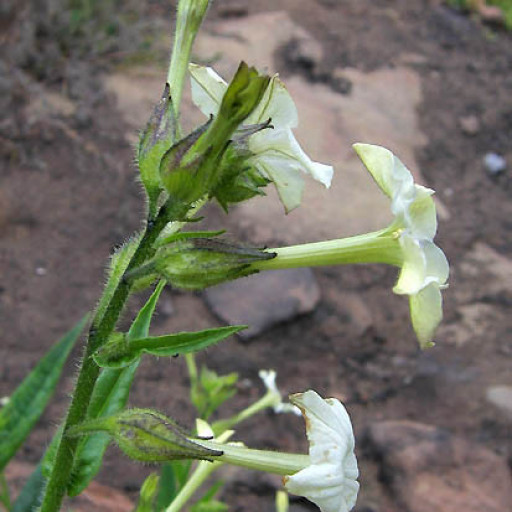
Plant Overview
Known as "Indian Tobacco," Nicotiana quadrivalvis is a resilient wildflower native to the sun-drenched landscapes of Western North America. For centuries, it held a place of high honor among Indigenous tribes, from the Great Plains to the Pacific Coast, who cultivated it for ceremonial and medicinal purposes. Its ghostly, trumpet-shaped flowers lend a wild, ethereal beauty to rocky slopes and dry garden borders.
🔍 How to Identify
- 🌸 Starry Blooms: The plant produces delicate, five-lobed flowers that range from creamy white to pale green, often opening widest in the cool of the evening.
- 🌿 Sticky Foliage: The lance-shaped leaves are covered in fine, glandular hairs that give the plant a distinctively tacky or "sticky" texture when touched.
- 📦 Four-Valved Pods: Its namesake feature is the seed capsule, which is unique among wild tobaccos for being divided into four distinct chambers (valves).
🏡 In Your Garden
- ☀️ Pioneer Spirit: This plant thrives in "disturbed" soil—think rocky edges or areas where other plants struggle. It loves full sun and requires very little intervention once it finds its footing.
- 🌱 Taproot Sensitivity: Like many in the tobacco family, it develops a deep taproot quickly. It hates being moved, so it is best to sow seeds directly into their permanent home rather than transplanting seedlings.
⚠️ Safety & Toxicity
- 🚫 Status: Toxic if ingested.
- 🐾 Details: All parts of the plant contain nicotine and other potent alkaloids. It is dangerous for pets, livestock, and children if consumed. Gardeners with sensitive skin should wear gloves, as the sticky resins can sometimes cause mild irritation or "green tobacco sickness" through skin absorption if handled extensively.
✨ Fun Fact
While most wild tobacco species were gathered from the wild, Nicotiana quadrivalvis was one of the few plants specifically "farmed" by non-agricultural tribes; the Crow and Mandan peoples would even trade specialized seeds as high-value items between distant communities.

Detailed Care Instructions
To grow Nicotiana Quadrivalvis, or Indian tobacco, you can follow these steps:
- Obtain seeds: Look for reliable seed suppliers or specialized garden centers that sell Nicotiana Quadrivalvis seeds. Choose fresh and high-quality seeds for better germination rates.
- Prepare the soil: Nicotiana Quadrivalvis prefers well-draining soil with a slightly acidic pH between 5.5 and 7.0. Amend the soil with compost or organic matter to improve its fertility and drainage.
- Sow the seeds: Sow the seeds directly into the prepared soil after the risk of frost has passed. Sprinkle the seeds lightly on top of the soil and then cover them with a thin layer of soil or vermiculite. Press gently to ensure good seed-to-soil contact.
- Watering: Keep the soil evenly moist but not waterlogged. Water the seeds gently, as a heavy stream of water can displace or damage the seeds.
- Provide sunlight: Nicotiana Quadrivalvis thrives in full sun to partial shade. Ensure that the plants receive at least 6-8 hours of bright sunlight per day.
- Thin and space the seedlings: Once the seedlings emerge and establish a set of true leaves, thin them out to provide adequate spacing and airflow. Leave about 12-18 inches between each plant to allow for healthy growth.
- Fertilize: Apply a balanced slow-release fertilizer or a water-soluble fertilizer formulated for flowering plants according to manufacturer instructions. This will supply the necessary nutrients to support healthy growth and blooming.
- Mulch: Apply a layer of organic mulch around the plants to help retain moisture, suppress weed growth, and regulate soil temperature.
- Regular maintenance: Remove weeds and monitor for pests or diseases. Indian tobacco is generally resistant to common pests, but occasional pests like aphids or whiteflies may infest them. Use organic or natural pest control methods if necessary.
- Harvesting: Nicotiana Quadrivalvis can be harvested when the flowers have fully bloomed but are still vibrant and fresh-looking. Cut the flowers in the early morning, just as the dew dries, and remove any unwanted leaves or stems.
Following these steps should help you successfully grow Nicotiana Quadrivalvis plants. Enjoy their beautiful flowers and the fragrance they emit in your garden!

Place in a bright room that is sun drenched almost all day. Or directly in a south-facing window.

To water this plant, fill a watering can with room temperature water and gently pour it over the soil at the base of the plant until the soil is moist but not waterlogged. Avoid getting water on the leaves or flowers, as this can cause damage or encourage disease. Water this plant regularly, especially during hot and dry weather, but be careful not to overwater it as this can also cause damage. Ensure that the soil is well-draining, and consider adding a layer of mulch to help retain moisture and regulate temperature.
To fertilize this plant, use a balanced fertilizer with equal amounts of nitrogen, phosphorus, and potassium. Apply the fertilizer once every two weeks during the growing season. Be careful not to over-fertilize as this can lead to weak and spindly growth. Water the plant well before and after fertilizing. Additionally, consider supplementing with organic matter such as compost or aged manure to improve soil fertility.
The ideal soil for Nicotiana Quadrivalvis plant has a neutral to slightly acidic pH range, preferably between 6.0 and 7.0. The soil should be well-draining, porous and rich in organic matter such as compost, peat moss or leaf mold. It should provide a healthy balance of nutrients including nitrogen, phosphorus, and potassium, but not be too high in any one element as this can lead to excessive growth or disease. Additionally, the soil should be moist but not waterlogged, and should receive adequate sunlight and air circulation for the plant to thrive. It is important to select a high-quality soil that provides the necessary nutrients and support for this plant to grow and develop properly.
To propagate this plant, take stem cuttings measuring at least 10cm long from a mature specimen. Remove the lower leaves, then dip the cut end in rooting hormone powder. Plant the cutting in a well-draining soil mix, keeping it moist but not waterlogged. Place the pot in a bright, indirect light and maintain a temperature between 20-25°C. After a few weeks, the cutting should begin to develop new roots and leaves. Gradually acclimate the new plant to direct sunlight, and once established it can be transplanted to a larger container or in the garden.








