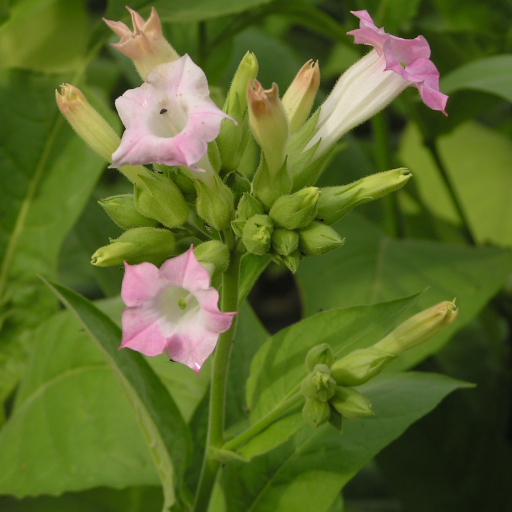
Plant Overview
Commonly known as Cultivated Tobacco, Nicotiana tabacum is a plant that has shaped world history more than almost any other. While it is primarily known for industrial production, many gardeners grow it for its striking, architectural foliage and its delicate, trumpet-shaped blossoms that offer a surprisingly sweet fragrance in the evening.
🔍 How to Identify
- 🍃 The Leaves: Massive, vibrant green leaves that can grow up to 20 inches long. They are ovate or lance-shaped and feel distinctly sticky to the touch due to tiny glandular hairs.
- 🌸 The Blooms: Clusters of elegant, tubular flowers that flare out into a five-pointed star. They are typically soft pink, white, or cream-colored and bloom at the very top of the plant.
- 📏 The Stature: A towering presence in the garden, this plant can easily reach 4 to 6 feet in height, featuring a thick, sturdy central stem that is also covered in fine, sticky hairs.
🏡 In Your Garden
- 🍴 Heavy Feeders: Tobacco plants are "hungry" and require soil rich in organic matter. Because they grow so rapidly, they pull a lot of nutrients from the earth, so regular composting is key to their success.
- ☀️ Sun Seekers: To see those beautiful pink trumpets, place it in the sunniest spot available. While it loves the heat, it does require consistent moisture to prevent its large leaves from wilting under the midday sun.
- 🦟 Natural Guardian: Interestingly, some gardeners use it as a "trap crop." Its sticky leaves can act like natural flypaper, catching small pests like gnats and whiteflies before they reach your vegetable patch.
⚠️ Safety & Toxicity
- 🚫 High Toxicity: Every part of the Nicotiana tabacum plant contains nicotine, which is a potent neurotoxin. It should never be ingested by humans or animals.
- 🐾 Pet & Child Safety: Keep this plant away from curious pets and toddlers. Ingesting even a small amount of the leaf can cause vomiting, tremors, or more severe heart issues.
- 🧤 Skin Sensitivity: Handling the wet leaves with bare hands can lead to "Green Tobacco Sickness"—a mild form of nicotine poisoning absorbed through the skin. It is best to wear gloves when pruning.
✨ Fun Fact
While we often think of tobacco only in a human context, it is a favorite for specialized pollinators. Its long, tubular flowers are perfectly designed for the long tongues of Sphinx moths and hummingbirds, who visit the plant at dusk when the scent is most potent!

Detailed Care Instructions
| Lighting | Full Sun |
To grow Nicotiana Tabacum, also known as tobacco plant, follow these steps:
- Choose a suitable location: Tobacco plants prefer full sun exposure and well-drained soil. Select a spot in your garden or a large container with at least 6-8 hours of direct sunlight per day.
- Prepare the soil: Prior to planting, loosen the soil to a depth of about 8-10 inches. Remove any rocks, weeds, or other debris, and enrich the soil with compost or well-rotted manure to improve its fertility.
- Start seeds indoors (optional): You can start tobacco seeds indoors 6-8 weeks before the last frost date in your area. Sow the seeds in seed-starting trays or small pots filled with moist seed-starting mix. Keep them in a warm and well-lit area until they germinate.
- Transplant seedlings: Once the threat of frost has passed and seedlings have grown a few inches tall, carefully transplant them into your prepared garden soil or a larger container. Space them about 18-24 inches apart to allow enough room for growth.
- Watering: Nicotiana Tabacum requires regular watering to keep the soil evenly moist. Avoid overwatering, as it can lead to root rot, but don't let the soil dry out completely either. Check the moisture level regularly and adjust watering accordingly.
- Fertilization: Apply a balanced fertilizer with equal or slightly higher levels of nitrogen, phosphorus, and potassium to promote healthy growth. Follow the fertilizer manufacturer's instructions for application rates and timing.
- Pruning: Trim off any yellow or damaged leaves, but avoid excessive pruning. Removing the top of the plant can reduce the crop yield.
- Protect from pests: Monitor for common pests like aphids, caterpillars, or tobacco budworms. Use organic pest control methods or insecticides formulated for edible plants if necessary.
- Harvesting: As the plant matures, the lower leaves start to yellow. Harvest the leaves individually by cutting them from the stalk when they have turned yellow to brown along the edges. Cure the harvested leaves by hanging them in a dark, well-ventilated area.
Note: Growing tobacco may be subject to legal restrictions or require permits in some regions. Ensure you comply with local regulations before growing Nicotiana Tabacum.

Place in a bright room that is sun drenched almost all day. Or directly in a south-facing window.

The plant in question requires regular watering to maintain healthy growth and optimal health, especially during the warm months. Watering should be done deeply and infrequently to allow the roots to absorb adequate moisture while avoiding waterlogging or decaying of the roots.
To determine the right time to water the plant, it is essential to check the moisture level of the soil. This can be done by inserting the finger into the soil to about an inch deep. If the soil feels dry, it is time to water the plant.
When watering, it is advisable to water the plant at the base rather than from above to avoid wetting the foliage, which can lead to the development of fungal diseases. Using a watering can or a drip irrigation system is recommended for more precise watering.
It is essential to ensure that the plant is not overwatered as this can lead to yellowing of the leaves, stunted growth, or even death of the plant. Moreover, reducing the frequency of watering during the colder months is recommended to prevent waterlogging and root rot.
To fertilize this plant, it is important to use a balanced fertilizer with equal parts nitrogen, phosphorus, and potassium. Begin fertilization when the plant is about six inches tall and continue throughout the growing season every two to three weeks. Be sure to water the plant thoroughly before applying the fertilizer to prevent root burn. Additionally, do not over-fertilize as it can cause excessive foliage growth and delay maturity. Finally, stop fertilization two weeks prior to harvest to allow for proper ripening.
The ideal soil for growing Nicotiana Tabacum should be well-draining, loose, and fertile. It should have a pH range of 6.0-7.5 and should be rich in organic matter.
The soil should be well-aerated and able to hold moisture without becoming waterlogged. Adding compost, peat moss, or aged manure to the soil can help improve its fertility and increase its ability to retain moisture.
It is important to avoid heavy clay soils or soils that are too sandy as these can negatively impact the growth and health of the plant. Additionally, the soil should be free of rocks, debris, and weeds.
Regular soil testing can help ensure that the soil is providing the nutrients and pH levels needed for optimal plant growth. If necessary, adjustments can be made by adding fertilizer or soil amendments.
Nicotiana Tabacum plant can be propagated through several methods. One method is by taking stem cuttings from the mother plant. Choose a healthy stem with several leaves, and make a clean diagonal cut just below a leaf node. Remove the leaves from the bottom of the stem, leaving only a few at the top. Dip the cut end in rooting hormone powder and plant it in a pot filled with moist potting soil. Keep the soil moist and the cutting in a warm, bright location. With time and proper care, the cutting will develop roots and new growth.
Another method of propagation is by collecting and planting the seeds produced by the plant. Wait until the plant produces seed capsules, which will turn brown and dry as they mature. Collect the seeds when they are fully matured and dry, and store them in a cool, dry place until ready to plant. Sow the seeds in a pot filled with moist, well-draining potting soil and keep them in a warm location with plenty of light. As the seedlings grow, transplant them into larger pots or into the garden, spacing them out to allow for proper growth and development.
Overall, the key to successfully propagating Nicotiana Tabacum plant is to provide the proper growing conditions and care, including warm temperatures, plenty of light, and consistent moisture. With time and patience, you can easily propagate this plant and enjoy its beauty in your garden or home.
Common pests of the tobacco include Aphids, larvae, snails. Make a habit of checking your tobacco frequently for pests so that any infestations can be caught and managed early.








