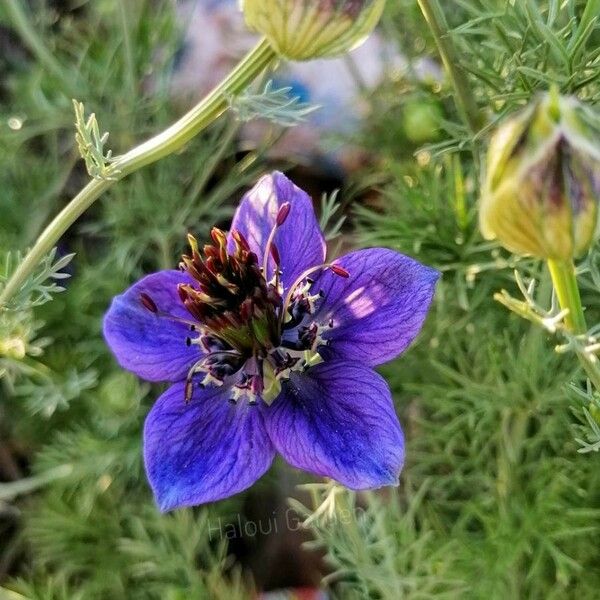
Plant Overview
Often called the Spanish Fennel Flower or the "Deep Blue Love-in-a-Mist," this Mediterranean native is the more dramatic, moody cousin of the common garden Nigella. While its relatives are often pale and ethereal, Nigella hispanica boasts striking, ink-colored centers that look like they were plucked from a gothic fairy tale. It is a favorite among florists for its ability to add architectural intrigue to both fresh and dried bouquets.
🔍 How to Identify
- 🌸 The Bloom: Large, saucer-shaped flowers featuring five deep violet-blue sepals (which look like petals) surrounding a prominent, dark crown.
- 🖤 The "Crown": A bold center of dark maroon or nearly black stamens and seed vessels that stand upright, giving the flower a royal, sophisticated appearance.
- 🌿 The Foliage: Delicate, bright green leaves that are finely divided into thread-like segments, closely resembling the wispy texture of fennel or dill.
- 🎈 The Seed Pod: As the flower fades, it transforms into a textured, horned seed capsule that remains decorative long after the color has vanished.
🏡 In Your Garden
- 🌱 The Taproot Rule: Like most Nigellas, the Spanish Fennel Flower develops a long taproot very quickly. This makes it "homesick"—it hates being moved once planted. It is best to sow seeds directly into the garden soil rather than starting them in pots.
- ☀️ Sun Seeker: This plant is a child of the Spanish sun; it needs a bright, open spot to prevent its thin stems from flopping over. It thrives in well-drained soil and is surprisingly drought-tolerant once it establishes its root system.
- ✂️ Everlasting Beauty: If you enjoy dried floral arrangements, harvest the seed pods when they are firm and turn slightly bronze. Hang them upside down in a dark room to preserve their "alien lantern" shape.
⚠️ Safety & Toxicity
- 🟢 Status: Generally non-toxic and safe for gardens.
- 🐾 Details: While not considered poisonous to cats, dogs, or horses, the seeds contain small amounts of melanthin. While this is what gives some Nigella species their spicy scent, it can cause mild stomach upset if ingested in very large quantities. It is always best to discourage curious pets from snacking on the seed pods.
✨ Fun Fact
The genus name Nigella is derived from the Latin word nigellus, meaning "blackish." This refers to the plant's tiny, jet-black seeds, which were historically tucked into linen cupboards to ward off insects with their faint, spicy aroma.

Detailed Care Instructions
To grow Nigella Hispanica, also known as Spanish Love-in-a-Mist or Devil-in-the-Bush, follow these steps:
- Choose a suitable location: Nigella Hispanica thrives in full sun to partial shade, so select a spot in your garden that receives at least 6 hours of direct sunlight per day.
- Prepare the soil: The plant prefers well-draining soil, so add compost or organic matter to improve drainage. Remove any weeds or debris from the area.
- Sow the seeds: Nigella Hispanica is typically grown from seeds. Begin by loosening the soil to a depth of about 1-2 inches. Sprinkle the seeds evenly over the area, then gently rake the soil over them to cover. Lightly firm the soil to ensure good seed-to-soil contact.
- Watering: While the seeds are germinating and the young plants are establishing roots, water the area regularly. Keep the soil consistently moist, but not waterlogged, until the plants are established.
- Thin out the seedlings: When the seedlings reach a height of 1-2 inches, thin them out to provide adequate space for each plant to grow. Space them about 6-8 inches apart to ensure proper airflow and minimize competition for nutrients.
- Maintain moisture: Although Nigella Hispanica is drought-tolerant once established, it still requires regular watering, especially during extended dry periods.
- Mulch: Applying a layer of organic mulch around the plants will help retain soil moisture, suppress weed growth, and regulate soil temperature.
- Fertilization: Nigella Hispanica generally doesn't require much fertilizer. However, if your soil is poor in nutrients, you can feed them with a balanced, slow-release fertilizer in early spring.
- Pest and disease control: This plant is relatively resistant to pests and diseases. However, you should regularly monitor for any signs of common garden pests like aphids, slugs, or snails. If necessary, use organic insecticides or other appropriate measures to control them.
- Harvesting seeds: Nigella Hispanica produces attractive seed pods once the flowers have finished blooming. To harvest the seeds, wait until the pods turn brown and begin to dry out. Cut the stems with pods attached and hang them upside down in a dry, well-ventilated area until the pods fully dry. Once dry, gently crush the pods to collect the numerous black seeds inside.
By following these steps, you can successfully grow Nigella Hispanica plants and enjoy their unique and delicate flowers in your garden.

Place in a bright room that is sun drenched almost all day. Or directly in a south-facing window.

To water this plant, gently pour water onto the soil around the base of the stem, making sure not to get any water on the leaves. Only water the plant when the top inch of soil feels dry to the touch. Avoid overwatering as it can lead to root rot. The plant prefers well-draining soil, so make sure there are drainage holes in the container or planting site to prevent water from sitting in the soil. During hot and dry weather, the plant may require more frequent watering.
To fertilize the plant, you can use a balanced fertilizer with equal parts nitrogen, phosphorus, and potassium. Apply the fertilizer in the soil near the root zone every four weeks during the growing season. It's essential to follow the instructions on the fertilizer packaging as over-fertilizing can damage the plant. Additionally, you can use organic fertilizers like compost, worm castings, or fish emulsion to feed the plant. These will provide nutrients in a slow-release manner and improve the soil's overall health.
The recommended type of soil to use for growing Nigella Hispanica plant is a well-draining, sandy loam soil that has a slightly acidic to neutral pH level. The soil should be moderately fertile and rich in organic matter that can contribute to the growth and development of the plant. It should be able to retain moisture but not waterlogged, as the plant may develop root rot in overly wet conditions. It is also important to ensure good drainage to avoid waterlogging and to regularly fertilize the soil with a balanced fertilizer to provide the plant with the necessary nutrients for optimal growth. The soil should be prepared before planting by removing debris, stones, and weeds and mixing in compost or aged manure to improve its quality.
Propagation of this plant can be achieved through various methods such as seed propagation, cutting propagation, or division. Seed propagation is the most common and easiest method. The seeds can be sown in a well-draining potting mix, about ¼ inch deep, and kept moist. They will germinate in 7-14 days at a temperature of 18-21°C.
Cutting propagation can also be done, but it is a bit more difficult. Take a stem cutting from the plant with a clean, sharp knife. Remove the lower leaves and dip the cut end in rooting hormone. Place the cutting in a pot filled with a well-draining potting mix and keep the soil moist. It may take several weeks for the cutting to root and start to grow.
Finally, division can be done if the plant has become too large for its container. Gently remove the plant from its container and separate the root ball into two or more sections using a clean, sharp knife. Replant the sections into their own containers with fresh soil. Be sure to water them thoroughly after transplantation to help them establish.








