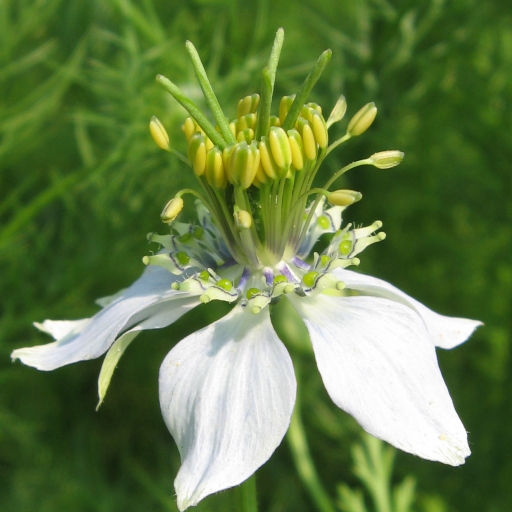
Plant Overview
Often referred to as the "Blessed Seed" or "Kalonji," Nigella sativa is an ancient botanical treasure that bridges the gap between a beautiful garden annual and a powerful medicinal herb. While its cousin, "Love-in-a-Mist," is prized for ornamental beauty, Nigella sativa is the true source of the pungent, charcoal-colored seeds found in spice cabinets and ancient remedies across the Mediterranean and Middle East.
🔍 How to Identify
- 🌿 The Foliage: Look for delicate, feathery leaves that look almost like dill or fennel fronds, creating a light, airy texture in the garden.
- 🌸 The Bloom: The flowers are simple and elegant, usually featuring five to ten petals in shades of pale blue or snowy white with prominent, crown-like stamens in the center.
- 🔮 The Seed Pod: After the flower fades, it transforms into a distinctive, upright "horn-shaped" capsule that swells as the spicy black seeds ripen inside.
🏡 In Your Garden
- 🌱 Root Sensitivity: This plant is famous for its "wanderlust" but hates being moved. Because it grows a deep, sensitive taproot, it is best to sow seeds directly into the garden soil rather than starting them in pots.
- ☀️ Sun Seeker: To produce the highest concentration of its signature oils, the plant needs plenty of direct sunlight and well-draining soil. It is quite drought-tolerant once established and thrives in the heat of mid-summer.
⚠️ Safety & Toxicity
- ✅ Status: Generally safe for human consumption and topical use.
- 🐾 Pets & Kids: While the seeds are a common kitchen spice (Kalonji), the concentrated essential oil can be irritating to sensitive skin or cause digestive upset in cats and dogs if ingested in large quantities.
- 🤰 Health Note: In traditional medicine, high doses of the concentrated oil are often avoided during pregnancy, though the seeds used as a culinary spice are considered safe.
✨ Fun Fact
Archeologists found a vial of Black Seed oil in the tomb of the Egyptian Pharaoh Tutankhamun. It was believed that the "Blessed Seed" was so essential for health that the King would need it to heal himself in the afterlife!

Detailed Care Instructions
To grow Nigella Sativa, also known as black seed or black cumin, follow these steps:
- Purchase seeds: Obtain Nigella Sativa seeds from a reputable source or online retailer. Ensure that the seeds are fresh and high quality.
- Choose the right location: Nigella Sativa prefers full sun, so select a spot in your garden that receives at least 6-8 hours of direct sunlight per day.
- Prepare the soil: Nigella Sativa can thrive in both well-drained and lightweight soils. Ensure that the soil is fertile and rich in organic matter. If the soil is heavy or clay-like, consider amending it with compost or sand to improve drainage.
- Sow the seeds: Sow the seeds directly into the soil in early spring or late summer. The seeds are tiny, so sprinkle them evenly and lightly cover them with a thin layer of soil. Leave enough space between the seeds, allowing them to grow to their full size.
- Watering: Keep the soil consistently moist but not waterlogged. Nigella Sativa prefers moderate watering rather than being constantly saturated. Water the seeds gently, using a watering can or low-pressure hose.
- Thin and transplant (optional): If the seeds germinate densely, thin the seedlings once they have grown to a reasonable size. This will help prevent overcrowding and promote healthy growth. You can transplant the seedlings to another location if desired.
- Provide support (optional): As Nigella Sativa grows, it may require support to prevent it from falling over. You can use stakes or cages to provide support as needed.
- Weed control: Regularly remove any weeds that compete with the Nigella Sativa plants for nutrients and space.
- Harvesting: Nigella Sativa typically blooms in late spring or early summer. Once the flowers fade and the seed pods turn brown, it's time to harvest. Cut the stems off just below the seed pods and collect them in a paper bag. Allow the seed pods to dry completely before gently crushing them to release the seeds.
- Seed saving: To save seeds for future planting, store them in a cool, dry place. Place the seeds in a properly labeled envelope or container to ensure you can easily identify them later.
Remember to consult local gardening guides or experts for specific tips tailored to your region, as growing conditions may vary.

Place in a bright room that is sun drenched almost all day. Or directly in a south-facing window.

To properly water this plant, you will need to provide it with sufficient amount of water without overwatering it. The amount of water needed varies depending on the environmental conditions and the size of the plant. When watering, make sure to avoid getting the leaves wet as this can encourage fungal growth. It is best to water the plant at the base of the plant, allowing the roots to absorb the water directly. Before watering again, allow the soil to dry out partially. It is important to note that this plant does not tolerate waterlogged soil, so be careful not to overwater or allow extended periods of standing water in the pot or bed.
To fertilize this plant, use a balanced fertilizer with an NPK ratio of 10-10-10. Apply the fertilizer every 4-6 weeks during the growing season, starting in early spring and ending in early fall. Follow the instructions on the fertilizer label for application rates and frequency. Be sure to water the plant thoroughly after fertilizing. Avoid over-fertilizing, as this can lead to excessive vegetative growth and reduced seed production.
Nigella Sativa plant requires well-draining soil with good aeration and fertility. The soil should be slightly acidic to neutral with a pH level of 6.0-7.0. Loamy or sandy soils are recommended as they allow for proper drainage and root development. The soil should be rich in organic matter to provide vital nutrients for the plant's growth. It is important to avoid heavy clay soils as they can cause poor drainage and limit root growth. Adding compost or aged manure to the soil before planting can help improve its structure and fertility. It is also recommended to avoid using soil that has been previously used to grow other members of the Nigella family as this can increase the risk of disease or pest problems.
The process of propagating this plant involves harvesting the seeds from the mature plant and planting them in a prepared soil mixture. The seeds should be slightly covered with soil and watered regularly, making sure to keep the soil moist. After a few weeks, the seedlings should germinate and emerge from the soil. Once the seedlings have grown to a viable size, they can be transplanted into a larger garden or container. It is important to ensure that the plant has adequate sunlight and water, and is protected from extreme temperatures. With proper care, this plant can thrive and produce seeds for future propagation.
Common pests of the roman coriander include Spider mites, aphids, thrips, whiteflies. Make a habit of checking your roman coriander frequently for pests so that any infestations can be caught and managed early.








