Plant Overview
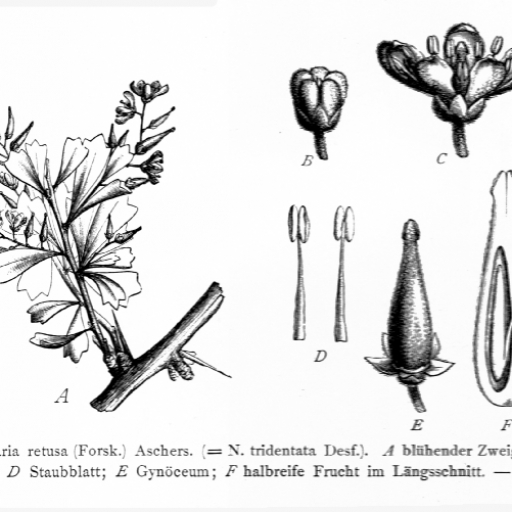
Often called the Salt Tree or Ghardaq, Nitraria retusa is a rugged survivor of the desert. Known for its ability to thrive where most plants wither, it forms hummocks in salty marshlands and arid dunes across North Africa and the Middle East. It has long been a vital resource for nomadic cultures, providing both fruit and protection for the soil against the encroaching sands.
🔍 How to Identify
- 🍃 The Leaves: Look for small, fleshy, wedge-shaped leaves that are "retuse"—meaning they have a shallow notch at the broad tip. They are often a dusty grey-green color.
- 🌵 The Thorns: This is a branched, spreading shrub where the older twigs often end in sharp, woody spines, making it a formidable barrier.
- 🍒 The Fruit: In late summer, it produces small, fleshy drupes (berries) that transition from green to a vibrant red or deep purple when ripe.
🏡 In Your Garden
- 🏜️ Salt Specialist: This plant is a "halophyte," meaning it actually enjoys salty conditions. If you live near the coast or have saline soil where nothing else grows, this is your champion.
- ☀️ Sun Worshipper: It requires full, intense sunlight to thrive. Because it develops a very deep and extensive root system to find water, it is extremely difficult to move once established—pick its "forever home" carefully.
- 🌬️ Erosion Expert: In its native habitat, it acts as a "sand binder." Its low, tangled growth habit catches blowing sand, eventually creating small hillocks that help stabilize the landscape.
⚠️ Safety & Toxicity
- 🟢 Status: Generally considered non-toxic and safe for humans and local wildlife.
- 🍢 Physical Risk: The primary danger is the sharp, stiff thorns. While not poisonous, they can cause painful punctures or scratches, so wear heavy gloves if pruning or clearing around the base.
- 🐾 Pet Note: The berries are traditionally eaten by camels and goats and are generally safe for domestic pets, though the thorns remain a hazard for curious paws.
✨ Fun Fact
The berries of the Nitraria retusa have a unique salty-sweet flavor. In some desert cultures, they are collected to create a traditional preserve or even a fermented beverage, proving that even the harshest landscapes can offer a sweet reward!

Detailed Care Instructions

Place in a bright room that is sun drenched almost all day. Or directly in a south-facing window.

Some plants require more regular watering than others, which should be done every few days. It's critical to maintain the soil moist all of the time. The water requirements of the same plant placed in pots with varying sizes will differ. Because the water in the smaller pot evaporates faster than the water in the larger pot, it will require more watering. Regardless of pot size, the surface should constantly be maintained moist.








