Plant Overview
Often called the "Warm Hand" or "Cochineal Nopal," this vibrant cactus is a historical powerhouse. While many cacti are known for their sharp, intimidating defenses, this species is famous for its nearly spine-free pads and its legendary role in creating the world’s most famous red dyes. It is a sculptural beauty that brings a touch of Mexican heritage and desert elegance to any sun-drenched space.
🔍 How to Identify
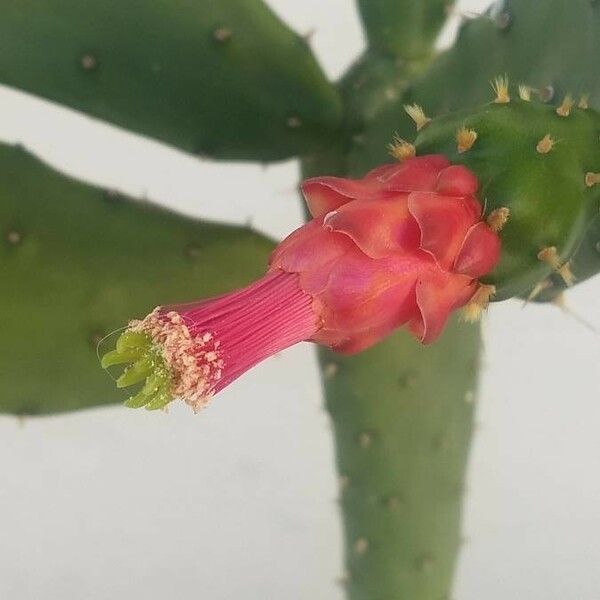
- 🌵 The Pads: Large, fleshy, oval-shaped segments that resemble elongated teardrops or paddles. They are a rich, matte green and lack the long, piercing needles typical of most Opuntia species.
- 🌺 The Blooms: Highly distinctive, upright flowers that range from neon pink to scarlet. Unlike other cacti, these blooms remain mostly closed in a tubular shape, with long, colorful stamens poking out from the top like a brush.
- ✨ The Surface: Though it appears smooth, the pads are dotted with small bumps called areoles. These contain tiny, almost invisible "glochids" rather than large spines.
🏡 In Your Garden
- ☀️ Sun Worshiper: This cactus thrives in intense, direct light. If kept indoors, it must sit in your brightest window; otherwise, the new pads will grow thin, pale, and "leggy" as they stretch for the sun.
- 💧 Dry Feet Only: Because it stores massive amounts of water in its pads, it is highly susceptible to root rot. It prefers a "soak and dry" method—only water when the soil feels completely parched and lightweight.
- 🌡️ Frost Sensitivity: True to its name, the Warm Hand hates the cold. It cannot survive a hard freeze, so if you live in a temperate climate, be sure to bring it indoors once autumn temperatures begin to dip.
⚠️ Safety & Toxicity
- ✅ Status: Generally non-toxic to humans and common household pets like cats and dogs.
- 🤏 Microscopic Hazards: While it lacks long spines, do not handle it with bare hands. The "glochids" (tiny barbed hairs) can easily lodge in the skin, causing persistent itching, redness, and irritation. Always use tongs or thick gloves when repotting.
✨ Fun Fact
This plant was the "factory" for the ancient world’s most valuable red dye! The Cochineal insect lives on these pads, and when harvested and crushed, they produce a brilliant carmine red. This dye was once so valuable it was traded like gold and used to color the robes of royalty and the British "Redcoats."

Detailed Care Instructions
To grow Nopalea Cochenillifera plants, also known as prickly pear cactus or nopal, you can follow these steps:
- Obtaining a healthy plant: Find a reputable nursery or garden center that sells Nopalea Cochenillifera plants. Choose a healthy plant with plump, green pads, without any signs of damage or disease.
- Choose the right soil: Nopalea Cochenillifera prefers well-draining soil. Mix cactus potting soil with sand or perlite to ensure good drainage.
- Select a suitable pot: Use a pot with drainage holes to prevent waterlogging. Make sure the pot is slightly larger than the plant's root ball to allow room for growth.
- Planting the cactus: Carefully remove the plant from its container and gently loosen its root ball. Place the plant in the center of the pot and fill in with the prepared cactus soil mix. Press the soil firmly around the base of the plant to stabilize it.
- Provide adequate sunlight: Nopalea Cochenillifera thrives in full sun. Place the pot in a sunny location, such as a south-facing window or a spot in your garden that receives at least six hours of direct sunlight per day.
- Watering requirements: Water the plant thoroughly after planting and allow the soil to dry out between waterings. Overwatering can lead to root rot. During hot months, you may need to water the plant once per week, but adjust frequency based on the humidity and temperature of your location.
- Fertilizing: You can feed your Nopalea Cochenillifera with a cactus-specific fertilizer once a month during the growing season (spring and summer). Follow the instructions on the fertilizer packaging for proper application.
- Pruning and maintenance: Regularly check the plant for any dead, damaged, or diseased pads and remove them using clean, sharp pruning shears. This helps promote healthy growth.
- Protect from frost: If you live in a region with cold winters, it's important to protect the plant from frost. Either bring it indoors or cover it with a frost cloth to prevent freezing.
With proper care and attention to its specific needs, your Nopalea Cochenillifera plant should thrive and grow well.

Place in a bright room that is sun drenched almost all day. Or directly in a south-facing window.

To water this plant, it is important to first determine the best watering schedule for the specific environment and growing conditions. This may involve monitoring the moisture level of the soil using a moisture meter or by feeling the soil with your fingertips. It is important not to overwater or allow the soil to become too dry, as this can be detrimental to the plant's health.
When watering, it is best to use room temperature or slightly warm water, as cold water can shock the plant. It is also important to avoid getting water on the plant's leaves, as this can cause damage or encourage the growth of harmful molds or fungus.
One method of watering this plant is to use a drip irrigation system, which can deliver water directly to the soil without getting the leaves wet. Alternatively, watering cans or a hose with a gentle spray nozzle can be used to deliver water to the soil around the base of the plant.
Overall, it is important to be mindful of the plant's water needs and to adjust the watering schedule as necessary to ensure optimal growth and health.
- Choose a balanced fertilizer with equal amounts of nitrogen, phosphorus, and potassium.
- Dilute the fertilizer to half strength according to the instructions on the package.
- Apply the fertilizer once every three months during the growing season (spring and summer).
- Water the soil well before and after fertilizing to help the nutrients reach the plant's roots.
- Avoid getting fertilizer on the plant's leaves or stem, as this can burn them.
- Monitor the plant's growth and adjust fertilization as needed based on its health and appearance.
- If the plant is showing signs of nutrient deficiency or over-fertilization, reduce or stop fertilizing until it recovers.
The recommended type of soil to use for the plant in question is a well-draining soil that is rich in organic matter. The soil should have a pH level between 6.0 and 7.0, as the plant prefers slightly acidic to neutral soils. It is important to avoid overwatering the plant, as it can lead to root rot and other diseases. In addition, a layer of mulch can help to retain moisture in the soil and regulate its temperature. The plant is also sensitive to cold temperatures, so it should be kept in a warm and sunny location.
To propagate this plant, you will need to take a cutting from a mature stem. First, find a stem that is at least 6 inches long and has at least 2 sets of leaves. Using a sharp, clean knife or pruning shears, cut the stem at a 45-degree angle just below the second set of leaves.
Next, set the cutting aside to dry for a few days. During this time, the cut end will callus over, which will help prevent disease and rot when it's planted.
After the cutting has callused over, prepare a container with a well-draining soil mix. Insert the cutting into the soil, burying it about halfway up the stem. Water the soil gently to settle it around the cutting.
Place the container in a bright, indirect light location. Keep the soil moist but not waterlogged, and avoid over-watering to prevent the cutting from rotting. Within a few weeks, the cutting should start to develop roots and new growth.
Common pests of the cochineal nopal cactus include Scale insect, mealybugs, spider mites. Make a habit of checking your cochineal nopal cactus frequently for pests so that any infestations can be caught and managed early.








