Plant Overview
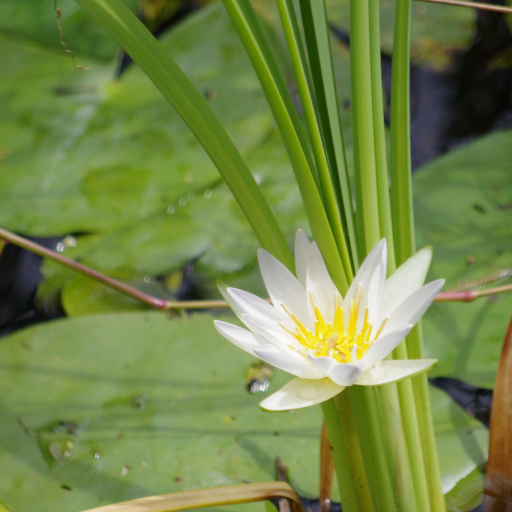
Known as the Tropical Blue Water Lily or the Blue Star, Nymphaea elegans is a breathtaking aquatic gem native to the wetlands of Texas, Mexico, and the Caribbean. Unlike its cousins that hug the water’s surface, this lily carries its ethereal, star-shaped blooms high above the water on sturdy stalks, looking like floating lanterns in a tranquil pond. It is a favorite for water gardeners looking to add a touch of celestial blue to their landscape.
🔍 How to Identify
- 🪷 The Bloom: Star-shaped flowers featuring slender, pointed petals that fade from a delicate pale blue or lavender at the tips to a creamy white near the vibrant yellow center.
- 🍃 Floating Foliage: Circular to heart-shaped green leaves (lily pads) with slightly wavy or "ruffled" edges. They often feature subtle purple speckles on the undersides.
- 📏 Growth Habit: This is an emergent plant; while the leaves float on the surface, the flowers typically rise 3 to 6 inches above the water line to catch the attention of pollinators.
🏡 In Your Garden
- ☀️ Sun Seeker: This lily is "diurnal," meaning it wakes up with the sun and tucks itself in at night. To see the best blooms, it requires at least 6 to 8 hours of direct sunlight; otherwise, the flowers may refuse to open.
- 🌡️ Tropical Temperament: Because it hails from warm climates, it lacks the "antifreeze" of hardy lilies. If you live in a region with frost, you must bring the tubers indoors for the winter or treat the plant as a beautiful summer annual.
- 🪴 Depth Nuance: It prefers being planted in heavy clay soil within a submerged container. Aim for a depth where there is about 6 to 18 inches of water above the soil line to allow the stems to reach the surface comfortably.
⚠️ Safety & Toxicity
- 🐾 Status: Generally non-toxic to touch, but should not be ingested.
- 🤢 Details: Like many water lilies, it contains alkaloids that can cause gastrointestinal upset if eaten in large quantities by curious dogs, cats, or horses. It is best kept as an ornamental feature rather than a snack.
✨ Fun Fact
In its native habitats in the Southern United States, Nymphaea elegans is a vital part of the ecosystem, providing "landing pads" for dragonflies and essential shade for fish and aquatic life, which helps keep pond water temperatures stable during scorching summers.

Detailed Care Instructions
To grow Nymphaea Elegans, also known as the water lily, you need to follow these steps:
- Find a suitable location: Water lilies thrive in full sun to partial shade, so select a spot in your garden pond or container that receives at least 6 hours of direct sunlight each day.
- Prepare the planting container: Use a wide and shallow container (around 12-18 inches wide) and fill it with a mixture of loam or clay soil and well-rotted compost. Ideally, the soil should be heavy and compact, as these plants prefer heavier soils.
- Plant the rhizome: A water lily grows from a rhizome, which is a thick underground stem. Place the rhizome horizontally on the soil surface, making sure the growing tip is facing upwards. Gently press it into the soil just enough so that it doesn't float away.
- Submerge the container: Lower the container into the pond or water feature, allowing the crown of the rhizome to be approximately 6-12 inches deep in the water. The leaves and flowers will float on the water surface while the roots remain anchored in the soil.
- Maintain water level: It is crucial to keep the water level constant, about 1-2 inches above the crown of the rhizome. Be sure to adjust water levels as needed to avoid drying out or overflooding.
- Fertilize: Use aquatic fertilizer tablets specifically designed for water lilies to boost growth and flowering. Follow the package instructions for appropriate dosage and frequency.
- Care for the plant: Water lilies are relatively low-maintenance plants that require little attention once established. Remove any dead leaves or spent flowers regularly to maintain a clean and healthy appearance. Additionally, if the plant becomes overcrowded, consider dividing and replanting the rhizome every couple of years.
Remember to check the specific requirements of your Nymphaea Elegans variety, as conditions may vary slightly based on the particular cultivar.

Place in a bright room that is sun drenched almost all day. Or directly in a south-facing window.

1. Determine the watering needs of the plant based on its natural habitat and growing conditions. Nymphaea Elegans plants are typically found in aquatic environments, so they require a consistently moist environment.
2. Water the plant regularly, ideally on a daily basis, to ensure that the soil or growing medium is always moist. This can be accomplished by using a watering can or hose, as well as through the use of a drip irrigation system or other watering device.
3. Avoid over-watering the plant, as this can lead to root rot and other problems. Monitor the soil or growing medium regularly to ensure that it is not too wet, and adjust your watering schedule as needed.
4. Provide the plant with access to plenty of sunlight, as this will help it to grow and thrive. In general, Nymphaea Elegans plants require full sun exposure to ensure healthy growth and development.
5. Make sure to also provide the plant with proper nutrients, including fertilizers and other supplements. This can help to ensure that it remains healthy and vibrant, and that it continues to grow and produce flowers over time.
To fertilize this aquatic plant, it is recommended to use a balanced fertilizer that contains all the necessary nutrients. Simply dissolve the fertilizer in water and apply it to the soil around the plant every two to three weeks during its growing season. Be careful not to over-fertilize, as this can lead to algae growth and harm the plant.
The recommended soil type for Nymphaea Elegans plant is a heavy, organic-rich loam or clay loam with a pH range of 6.0 to 7.5. The soil should be well-drained, but able to hold moisture to provide a constant supply of water to the plant's roots. It is also important to ensure that the soil is free of any contaminants or pollutants, as these can harm the plant's growth and development. Adding organic matter such as compost or leaf mold to the soil can provide additional nutrients and improve soil structure. Additionally, the plant should be placed in a sunny location to help it thrive.
- First, select a healthy mature plant that has multiple stems and leaves.
- Carefully cut the stems of the plant into sections, ensuring that each section has at least one leaf and one stem node.
- Fill a small container with water and place the cuttings in the water, making sure that the nodes are submerged.
- Place the container in a bright location with indirect sunlight, such as near a window.
- Change the water every few days to keep it fresh and prevent bacteria from forming.
- Once roots begin to grow from the nodes, typically within a week or two, you can transfer the cuttings to soil.
- Plant each cutting in a pot with well-draining soil and keep the soil consistently moist.
- Place the newly propagated plants in a location with indirect sunlight until roots are established, then move them to a bright location with a few hours of direct sunlight per day.
- Monitor the plants closely for the first few weeks to ensure they are adjusting well to their new environment and have enough water and nutrients.








