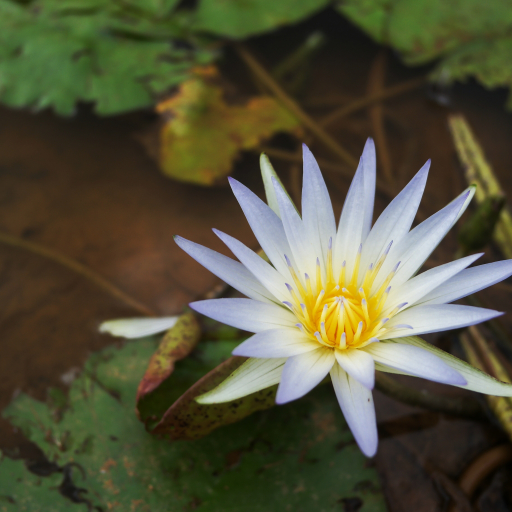
Plant Overview
Known as the Blue Water Lily or the Star Lotus, this aquatic gem is much more than just a pretty face in a pond. As the national flower of both Sri Lanka and Bangladesh, it carries deep spiritual significance, symbolizing purity and rebirth in various Eastern traditions. Its stunning, star-shaped blooms rise elegantly above the water’s surface, creating a serene, almost mystical atmosphere in any garden.
🔍 How to Identify
- 🌸 The Bloom: Distinctly star-shaped flowers with pointed petals, typically displaying vibrant shades of sky blue, violet, or deep pink with a bright yellow center.
- 🍃 The Foliage: Large, round green leaves (pads) that float on the surface, featuring a deep V-shaped notch and often slightly jagged or wavy edges.
- 📏 Growth Habit: Unlike the "True Lotus" which stands high above the water, this lily’s pads and flowers usually sit directly on or just a few inches above the water's surface.
🏡 In Your Garden
- 🏺 Heavy Feeders: These lilies are hungry! They require heavy clay-based soil or specialized aquatic compost to anchor their rhizomes and provide the nutrients needed for those iconic blooms.
- 🌊 Still Waters: They prefer calm, stagnant, or very slow-moving water. Constant splashing from a fountain or a heavy waterfall can actually drown the plant or prevent it from flowering.
- ☀️ Sun Seekers: To get the best color and most frequent blooms, they need at least 6 hours of direct sunlight. In shade, the plant will produce leaves but very few "stars."
⚠️ Safety & Toxicity
- 🐾 Pet Safety: While not considered "deadly," the plant contains alkaloids like nuciferine. If ingested by curious cats or dogs, it can cause gastrointestinal upset or sedation.
- 👶 Child Safety: Generally safe to touch, but the rhizomes (roots) should never be eaten raw. They contain tannins and mild toxins that are bitter and can cause stomach pain.
✨ Fun Fact
The Nymphaea nouchali acts like a solar clock! It is a day-blooming lily, meaning the flowers open wide to greet the morning sun and close tightly by late afternoon. In ancient Egypt, related species were seen as symbols of the sun and creation because of this daily "rebirth" from the water.

Detailed Care Instructions
| Humidity | High |
| Lighting | Full Sun |
| Difficulty | Medium |
| Hibernation | Cold Period |
| Hardiness Zones | 10A - 11B |
To grow a Nymphaea Nouchali plant, also known as the blue water lily or the star lotus, follow these steps:
- Climate and Location: Ensure that you live in a suitable climate for growing Nymphaea Nouchali. It thrives in tropical and subtropical climates with temperatures ranging from 65°F to 86°F (18°C to 30°C). It requires full sunlight exposure for at least six hours a day.
- Planting Method:
- Seeds: Soak the Nymphaea Nouchali seeds in water overnight. Then, fill a container with rich, loamy soil and place the seeds about half an inch deep. Keep the soil moist and warm (around 77°F or 25°C) until the seeds germinate.
- Tubers: Purchase Nymphaea Nouchali tubers from a reputable source. Fill a container or pond with loamy soil or aquatic planting media, leaving enough space for the tuber. Place the tuber on the surface with the shoots facing upwards.
- Seeds: Soak the Nymphaea Nouchali seeds in water overnight. Then, fill a container with rich, loamy soil and place the seeds about half an inch deep. Keep the soil moist and warm (around 77°F or 25°C) until the seeds germinate.
- Water & Soil Conditions:
- Floating Containers: If planting in a container, use a large-sized container or a non-perforated plastic pot. Fill it with aquatic planting media or loamy soil mixed with compost. Submerge it gradually in water until the rim is about 6 inches (15 cm) below the water level.
- Pond Planting: If planting in a pond, ensure the water depth is between 12 and 24 inches (30-60 cm) for optimum growth. The plant should be placed in a sunny area of the pond where the water is relatively calm.
- Floating Containers: If planting in a container, use a large-sized container or a non-perforated plastic pot. Fill it with aquatic planting media or loamy soil mixed with compost. Submerge it gradually in water until the rim is about 6 inches (15 cm) below the water level.
- Fertilizer:
- Use a slow-release aquatic fertilizer tablet or granules specially designed for water lilies. Follow the instructions on the fertilizer package and avoid over-fertilizing, as it can lead to excessive leaf growth and hinder flower production.
- Use a slow-release aquatic fertilizer tablet or granules specially designed for water lilies. Follow the instructions on the fertilizer package and avoid over-fertilizing, as it can lead to excessive leaf growth and hinder flower production.
- Maintenance:
- Water Depth: Maintain the water depth according to the plant's needs, ensuring it is submerged at the recommended depth.
- Pruning: Remove any dead or dying leaves and flowers regularly to promote new growth and prevent rotting.
- Pest Control: Monitor for common pests such as aphids or snails and treat accordingly with organic pest control options if necessary.
- Winter Care: In colder climates, where temperatures drop below freezing, protect the Nymphaea Nouchali tubers by moving them to a warmer location or insulating them with mulch.
With proper care and suitable conditions, your Nymphaea Nouchali plant should grow and flower beautifully.
- Water Depth: Maintain the water depth according to the plant's needs, ensuring it is submerged at the recommended depth.

Place in a bright room that is sun drenched almost all day. Or directly in a south-facing window.

To properly water this aquatic plant, it is important to know its natural habitat. As a water plant, Nymphaea Nouchali grows in ponds, marshes, and shallow waterways. When recreating these conditions in a container or pond, it is best to maintain a consistent water level that covers the plant's roots.
When watering, avoid overhead watering as this can cause damage to the delicate leaves and flowers. Instead, slowly add water to the container or pond until the water level reaches the appropriate height. It is important to use clean, non-chlorinated water as chemicals can harm the plant.
If the plant is in a container, ensure that it has proper drainage and that excess water can escape. Standing water can cause roots to rot and will ultimately kill the plant.
In warmer weather, the plant will require more water to maintain its hydration. Monitor the water level regularly and adjust as necessary. During colder months, the plant may require less water as it enters a dormant phase.
Overall, consistent water levels and clean, non-chlorinated water are key to keeping Nymphaea Nouchali healthy and thriving.
To fertilize the aquatic plant with blue petals, you should use aquatic plant fertilizer pellets. Start by placing one pellet at the base of the plant, and gently press it into the soil. Make sure to space the pellets out evenly, and do not over-fertilize as this can harm the plant. Fertilize the plant once a month during the growing season, and avoid fertilizing during the dormant period. Additionally, consider using a fertilizer that is specifically formulated for aquatic plants to ensure the best results.
The ideal soil to use with this plant is a well-draining soil that is rich in organic matter. It should have a pH of around 6 to 7, and should not be too heavy or clay-like. A mixture of topsoil, compost, and sand is recommended, with a ratio of about 2:1:1. The soil should be moist but not waterlogged, and should be kept consistently moist. Adding a layer of mulch on top of the soil can help retain moisture and provide some nutrients.
To propagate this plant, first, gather healthy stems or cuttings from the parent plant. Make sure they have at least one node and are about 8-10 cm long. Remove any leaves or flowers from the stem.
Next, fill a pot with a mixture of sand and soil. Make a hole in the soil about 5 cm deep and insert the cutting into it.
Cover the pot with a plastic bag to create a humid environment and place it in a bright but shaded area. Water lightly to keep the soil moist but not wet.
In about 3-4 weeks, roots should start to form from the nodes of the stem. Once the plant has established roots, remove the plastic bag and place the pot in a larger container filled with water.
Ensure the water is at a suitable depth for the plant, ideally about half a meter or so. Place the container in a sunny area.
As the plant grows, you can move it to a larger container or into a pond or water garden.








