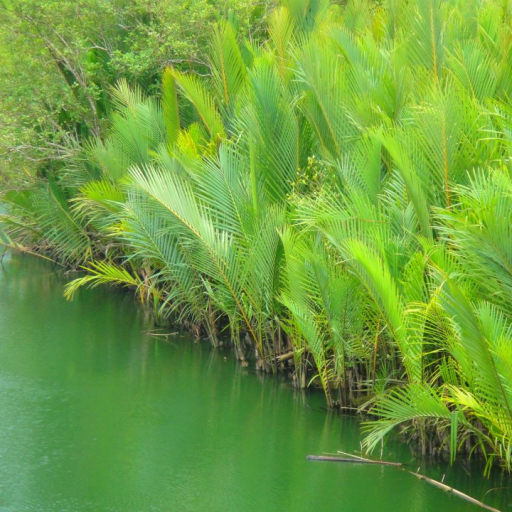
Plant Overview
Known as the "Nipa Palm" or "Attap Palm," Nypa fruticans is a prehistoric survivor that behaves more like a swamp creature than a traditional tree. Unlike almost any other palm, this species thrives with its trunk submerged in the brackish mud of tidal rivers and mangroves across Southeast Asia and Oceania. It is one of the oldest flowering plants on Earth, with a fossil record stretching back over 50 million years.
🔍 How to Identify
- 🌴 The "Invisible" Trunk: Unlike a coconut tree, the Nipa palm lacks an upright trunk. Its stem is a thick, horizontal rhizome that grows underground or underwater in the mud, with only the leaves and flowers emerging upward.
- 🌿 Colossal Fronds: The leaves are massive, feathery (pinnate), and can reach up to 30 feet in length. They emerge directly from the muddy ground in dense, arching clumps.
- ⚽ The Soccer-Ball Fruit: It produces a distinctive, woody, globe-shaped fruit cluster about the size of a soccer ball. Inside this cluster are edible, jelly-like seeds.
🏡 In Your Garden & Ecology
- 💧 The Brackish Specialist: This isn't a plant for a standard backyard. It requires a very specific "mucky" environment—specifically soft mud and a mix of fresh and salt water. It plays a vital role in preventing coastal erosion.
- 🛖 A Sustainable Resource: In its native regions, it is the ultimate "utility plant." The leaves are dried for long-lasting roof thatch (Attap), and the sap is tapped to create sugar, vinegar, or even "Tuak" (traditional palm wine).
⚠️ Safety & Toxicity
- ✅ Safe & Edible: Nypa fruticans is non-toxic to humans and animals. In fact, the translucent, gelatinous seeds are a popular delicacy in Southeast Asian desserts.
- 🩹 Physical Hazards: While not chemically toxic, the leaves have very sharp edges and tough fibers. If you are navigating a Nipa swamp, thick gloves are a must to avoid "paper cuts" from the massive fronds.
✨ Fun Fact
The Nipa palm is a living fossil! Scientists have found fossilized Nipa pollen in rocks dating back to the Eocene epoch, meaning this plant was swaying in the tides while early ancestors of whales were still walking on four legs.

Detailed Care Instructions
To grow Nypa Fruticans, also known as the Nipa Palm or Mangrove Palm, you will need to follow these steps:
- Climate and soil: Nypa Fruticans thrives in tropical and subtropical regions with consistently high humidity. It requires wet and marshy soil, preferably composed of silt or clay but can adapt to sandy soil as well.
- Water: The plant requires ample water to grow successfully. Ideally, plant it in an area that is continuously flooded or frequently soaked in water.
- Sunlight: Nypa Fruticans prefers full sun exposure throughout the day. Ensure it receives at least 6-8 hours of direct sunlight daily.
- Propagation: The most common method of propagation is through seed germination. Soak the seeds in water for a day to soften their outer shell before planting. Plant them in containers filled with wet soil or directly in the marshy ground. Seeds usually take 2-4 months to germinate, so be patient.
- Container planting: If planting in pots, choose a large container with holes for drainage. Fill the pot with a mixture of organic-rich soil and clay, and ensure that it remains moist. Maintain a high humidity level around the plant by placing a tray of water nearby or using a humidifier.
- Planting in the marsh: If you have access to a wetland or marshy area, you can plant Nypa Fruticans directly in the soil. Choose a spot with good water circulation, as stagnant water can harm the plant. Ensure the area remains consistently wet.
- Fertilizer: Apply a slow-release fertilizer or regular applications of liquid fertilizer to provide nutrients to the growing plant. Choose a balanced fertilizer with a NPK ratio of 10-10-10 or similar.
- Maintenance: Regularly water the plant, ensuring that the soil remains moist. Prune any damaged or dead fronds to maintain the overall health of the plant.
Remember to keep an eye out for pests and diseases, such as scale insects or leaf spots, and take appropriate measures if necessary.
Growing and maintaining Nypa Fruticans requires access to a suitable environment, such as a tropical wetland or a controlled growing area like a greenhouse.

Place in a bright room that is sun drenched almost all day. Or directly in a south-facing window.

The best way to water this plant is to ensure that the soil stays consistently moist, but not waterlogged. This can be achieved by regularly watering it and monitoring the soil moisture level. It is important not to let the soil dry out completely, as this can cause the plant to wilt and eventually die. Additionally, it is recommended to water this plant with warm, filtered or distilled water to avoid any potential harmful minerals and chemicals in tap water. Finally, this plant can also benefit from occasional misting to provide adequate humidity.
- Use a balanced fertilizer with equal parts nitrogen, phosphorus, and potassium.
- Apply fertilizer once a month during the growing season (typically from April to October).
- Dilute the fertilizer according to the instructions on the package.
- Apply the fertilizer evenly around the base of the plant, avoiding contact with the foliage, and water thoroughly.
- Prune off dead or yellowing fronds regularly to encourage healthy growth.
- If the plant is growing in a container, make sure it has good drainage and use a well-draining potting mix.
- Monitor the plant regularly for any signs of nutrient deficiencies or pest problems.
It is recommended to use a well-draining soil mixture for this particular plant, with a pH range of 5.5 to 7.5. The soil should be rich in organic matter and have good moisture retention, as this plant prefers moist conditions. It is also important to ensure that the soil is not compacted and has sufficient air space for root development. Additionally, adding mulch to the top layer of soil can help retain moisture and improve soil quality.
Nypa Fruticans plant can be propagated through its seeds or vegetatively through suckers or rhizome divisions. To propagate through seeds, the mature seeds should be collected from the fruit and soaked in warm water for a few days. Once the seeds start to sprout, they can be planted in nutrient-rich soil with plenty of moisture and warmth.
To propagate through vegetative means, the plant will naturally produce suckers or shoots that can be separated from the mother plant and potted in nutrient-rich soil. Additionally, the rhizomes can be divided and planted separately, which will produce new plants.
Regardless of the method used, it's important to keep the new plants in a warm and moist environment until they become established. Adequate lighting and nutrient-rich soil are also critical for successful propagation.








