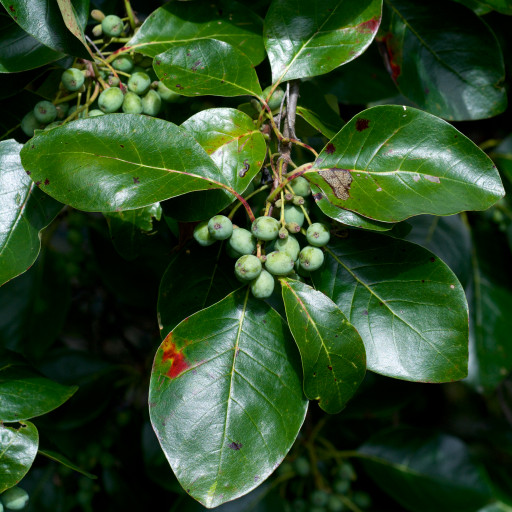
Plant Overview
Known as the Black Tupelo, Sour Gum, or the "Pepperidge" tree, Nyssa sylvatica is widely considered one of the most beautiful native trees in North America. Celebrated for its breathtaking autumnal display, it often transitions through a fiery palette of yellow, orange, and bright scarlet long before other trees begin their change. In the wild, it is a sturdy survivor, often living for several hundred years in damp, lowland forests.
🔍 How to Identify
- 🍃 The Leaves: Simple, glossy, and teardrop-shaped (ovate). They are a deep, waxy green during the summer but are famous for their brilliant, multi-colored transformation in the fall.
- 🐊 The Bark: On mature trees, the bark is dark grey and deeply furrowed into thick, blocky ridges that strongly resemble alligator hide.
- 📐 Branching Habit: The branches often grow at distinctive 90-degree angles from the trunk, giving the tree a structured, layered silhouette that stands out in a winter landscape.
🏡 In Your Garden
- ⚓ The Taproot Challenge: This tree develops a very deep, singular taproot early in its life. Because of this, it is notoriously difficult to transplant once established. If you bring one home, make sure you’ve chosen its "forever spot" carefully.
- 💧 Soil Preferences: While it is surprisingly drought-tolerant once mature, it thrives in acidic, moist soils. It is an excellent choice for "problem areas" in a yard that stay damp or experience occasional standing water.
- 🐦 Wildlife Magnet: It produces small, bluish-black ovoid fruits in late summer. While they are quite sour to humans, they are a high-energy "superfood" for migrating birds and local squirrels.
⚠️ Safety & Toxicity
- ✅ Status: Non-toxic and generally safe.
- 🐾 Details: Nyssa sylvatica is not known to be poisonous to dogs, cats, or horses. There are no significant skin irritants associated with its leaves or bark, making it a "friendly" tree for family backyards.
✨ Fun Fact
The wood of the Black Tupelo is famous for having a "cross-grained" texture, meaning the fibers are so tightly interwoven that the wood is nearly impossible to split with an axe. Historically, this made it the preferred material for making indestructible ox yokes and the hubs of wagon wheels!

Detailed Care Instructions
| Invasive | Weed |
To grow a Nyssa Sylvatica plant, also known as a black gum or tupelo tree, you can follow these steps:
- Location: Choose a suitable location for your Nyssa Sylvatica plant. It prefers full sun but can tolerate partial shade. Ensure that the soil is well-draining, as the tree does not tolerate waterlogged conditions.
- Planting: Dig a hole that is twice as wide and as deep as the root ball of the tree. Place the tree in the hole ensuring that the top of the root ball is level with or slightly above the surrounding soil. Backfill the hole with soil, gently firming it around the tree.
- Watering: Keep the soil consistently moist during the first year of planting. Water deeply and thoroughly to encourage root development. Once established, Nyssa Sylvatica is drought-tolerant, but it is still beneficial to provide regular watering during dry periods.
- Mulching: Apply a layer of organic mulch around the base of the tree to help conserve moisture and suppress weeds. Avoid placing the mulch directly against the trunk to prevent rot.
- Pruning: Minimal pruning is needed for a Nyssa Sylvatica. Remove any dead, damaged, or diseased branches as needed. Prune for shape or to maintain size if desired during late winter or early spring.
- Fertilizer: Nyssa Sylvatica is generally low-maintenance and does not require regular fertilization. However, you can apply a slow-release balanced fertilizer in early spring if desired.
- Protection: Protect young Nyssa Sylvatica trees from browsing animals by using tree guards or fences. Also, avoid excessive foot traffic around the root zone.
- Maintenance: Check for any signs of pests or diseases and take appropriate action to address the issue. Monitor the overall health of the tree and provide necessary care accordingly.
Follow these steps, and with proper care, your Nyssa Sylvatica plant should grow well and thrive.

Place in a bright room that is sun drenched almost all day. Or directly in a south-facing window.

To water this plant, you should first check the soil moisture level by inserting your finger about an inch deep into the soil. If the soil feels dry, it is time to water. Use a watering can or hose to slowly and evenly water the soil around the base of the plant until the soil is moist but not waterlogged. It is important not to overwater this plant as it prefers well-drained soil. The frequency of watering will depend on environmental factors such as temperature and humidity, as well as the soil type and container size. A good rule of thumb is to water when the top inch of soil feels dry to the touch.
To fertilize this plant, it's important to use a balanced fertilizer with equal amounts of nitrogen, phosphorus, and potassium. It's recommended to fertilize in the early spring before new growth appears and again in the summer after the first flush of growth. Apply the fertilizer at the base of the plant and water thoroughly. Avoid over-fertilizing, as it can lead to excessive growth and weaken the plant's overall health.
Nyssa Sylvatica plants thrive best when grown in a soil that is rich, moist and acidic. The soil should have a pH range of around 5.0 to 6.5, which means it is slightly acidic. The soil should also be well-draining, as the plant does not tolerate standing water and can easily develop root rot if left in excessively wet soil. When planting Nyssa Sylvatica, it is also important to ensure that the soil is loose and aerated to promote good root growth. Adding organic matter such as compost, leaf mold, or peat moss to the soil will help improve soil structure, fertility, and water retention, which are all important factors for growing healthy Nyssa Sylvatica plants. Overall, the soil should be nutrient-rich, acidic, well-draining, and loose for optimal growth of Nyssa Sylvatica.
To propagate this plant, you can first take a cutting from an established plant. Choose a healthy stem that is at least 6 inches long and has several pairs of leaves. Cut the stem at a 45-degree angle just below a set of leaves.
Remove the lowest set of leaves from the stem, leaving only the top few pairs of leaves.
Fill a small pot with moist potting soil and make a hole for the cutting. Dip the cut end of the stem in rooting hormone, then place it in the hole in the soil.
Water the potting soil thoroughly and cover the pot with plastic wrap or a plastic bag to create a greenhouse-like environment.
Place the pot in a bright, warm area, but not in direct sunlight. Check the soil regularly and water as needed to keep it moist.
After a few weeks, you should see new growth from the cutting, indicating that it has successfully rooted. At this point, you can remove the plastic cover and begin caring for the plant as you would normally.
Common pests of the black tupelo include Scale insect, larvae. Make a habit of checking your black tupelo frequently for pests so that any infestations can be caught and managed early.








