Plant Overview
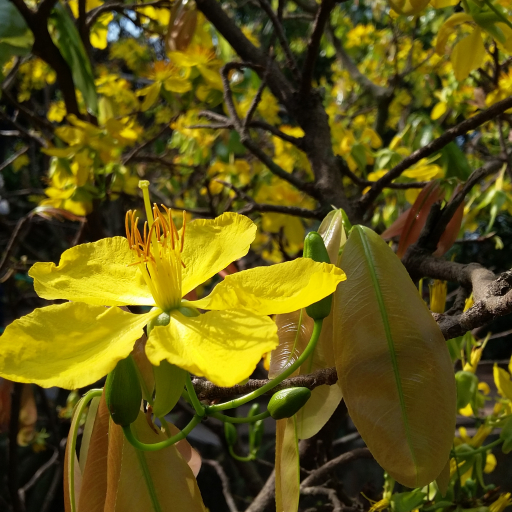
Often called the Vietnamese Mickey Mouse Plant or "Hoa Mai," Ochna integerrima is the celebrated herald of the Lunar New Year (Tết) in Vietnam. Its bright yellow blossoms are seen as symbols of prosperity and good fortune, often timed to bloom exactly as the new year begins. While it starts with delicate yellow petals, its most famous trick happens after the flowers fade, transforming into a striking display of red and black that bears a whimsical resemblance to a certain famous cartoon mouse.
🔍 How to Identify
- 🌼 The Golden Bloom: Features five-petaled, fragrant yellow flowers that appear in clusters, typically covering the branches before the new leaves fully emerge.
- 🐭 The "Mickey" Stage: Once the yellow petals fall, the sepals turn a vivid, fleshy red, surrounding jet-black seeds (drupes) that look like "ears" and a "nose."
- 🍃 Glossy Foliage: The leaves are elongated, elliptic, and have finely serrated edges with a glossy, bronze-tinted green hue when young, maturing to a deep forest green.
🏡 In Your Garden
- ✂️ The Art of Defoliation: To mimic the traditional Vietnamese New Year bloom, gardeners often strip all the leaves off the plant a few weeks before the desired flowering date. This "shocks" the plant into a massive, synchronized burst of yellow.
- ☀️ Sun and Drainage: This shrub thrives in full sun but appreciates a bit of afternoon shade in scorching climates. It is highly sensitive to "wet feet," so ensure your soil is loamy and drains rapidly to prevent root rot.
- 🪴 Container Friendly: Because it grows slowly and develops a woody, gnarled trunk over time, it is a favorite for bonsai enthusiasts and looks stunning in large ceramic pots on patios.
⚠️ Safety & Toxicity
- 🟢 Status: Low toxicity.
- 🐾 Details: Ochna integerrima is generally considered non-toxic to humans and common household pets. However, the black berries are not edible and may cause mild stomach upset if ingested by curious toddlers or pets. As with any ornamental plant, it is best admired with the eyes rather than the appetite.
✨ Fun Fact
In Vietnamese culture, if an Ochna integerrima tree produces flowers with six or more petals instead of the standard five, it is believed that the family will have an extraordinarily lucky and wealthy year ahead!

Detailed Care Instructions
To grow Ochna Integerrima, also known as the Vietnamese Mickey Mouse plant or the Yellow Mai Flower, you can follow these steps:
- Obtain seeds or cuttings: You can purchase Ochna Integerrima seeds or cuttings from a reputable nursery or online supplier. If collecting your own cuttings, look for healthy branches with leaves.
- Location and sunlight: Choose a suitable location with full sun exposure. Ochna Integerrima requires at least 6-8 hours of direct sunlight daily. Ensure that the planting area has well-draining soil.
- Planting in containers: If planting in a pot, use a well-draining potting mix. Fill the pot with the soil mix, leaving enough space for the roots. Plant the cutting or seed at a depth of 1-2 inches, and gently firm the soil around it.
- Planting in the ground: Dig a hole twice the size of the root ball of the cutting or seedling. Place the plant in the hole, making sure it is at the same depth as it was in the nursery pot. Backfill the hole with soil and firmly press it around the plant.
- Watering: Water the plant immediately after planting, ensuring the soil is evenly moist. Water the Ochna Integerrima regularly, aiming to keep the soil slightly moist but not waterlogged. In dry periods, increase the frequency of watering.
- Fertilizing: Use a balanced, slow-release fertilizer or organic compost during the growing season (spring to summer). Follow the manufacturer's instructions for application rates and frequency.
- Pruning: Prune Ochna Integerrima in late winter or early spring, before new growth starts. This will help shape the plant and promote bushier growth. Remove dead or weak branches and trim back any overly long or straggly ones.
- Pests and diseases: Keep an eye out for common pests such as aphids, mealybugs, or scale insects. Treat any infestations promptly with organic insecticides or insecticidal soap. Ensure good air circulation around the plant to prevent fungal diseases.
- Propagation: If you want to propagate additional Ochna Integerrima plants, you can collect and sow fresh seeds or take stem cuttings from mature plants. Plant the seeds or cuttings following the same guidelines mentioned earlier.
- Mulching: Apply a layer of organic mulch, such as wood chips or compost, around the base of the plant. Mulching helps retain moisture, suppresses weed growth, and protects the roots during extreme temperatures.
With proper care and maintenance, your Ochna Integerrima plant should grow well and reward you with its beautiful yellow flowers.

Place in a window with dappled sun or a spot in the middle of a room. Or directly in a window facing west or east.

Watering the Ochna Integerrima plant is a simple process, but it requires careful attention to detail. This plant needs to be watered regularly and consistently to thrive in its environment. The watering process involves several steps, including:
1. Soil moisture level check: Before watering, it is important to check the soil moisture level. This can be done by inserting a finger in the soil up to the second knuckle. If the soil feels moist, then watering can be delayed. If the soil is dry, then it is time to water the plant.
2. Water quantity: The quantity of water required by the Ochna Integerrima plant is dependent on various factors such as soil type, temperature, and humidity levels. Generally, the plant requires about one inch of water per week. When watering, ensure the water is distributed evenly around the plant.
3. Watering method: The ideal way to water the Ochna Integerrima plant is through drip irrigation or a soaker hose. This method will ensure that water is delivered to the roots of the plant directly and slowly.
4. Watering Schedule: The frequency of watering will depend on the environmental conditions and the rate of water loss from the soil. In hot and dry conditions, watering may need to occur every other day, while in cooler and less sunny conditions, watering may only need to take place once a week.
5. Time of watering: It is best to water the Ochna Integerrima plant in the early hours of the day when the sun is not high in the sky. This timing will reduce the likelihood of water evaporation.
Overall, caring for the Ochna Integerrima plant requires careful attention to water management. With the right watering technique, the plant can thrive and produce its delicate and beautiful flowers.
To fertilize this plant, use a balanced fertilizer with equal parts nitrogen, phosphorus, and potassium, such as a 10-10-10 formula. Apply the fertilizer every three months during the growing season, which is typically from spring to summer. Dissolve the fertilizer in water according to the package instructions and apply it directly to the soil around the plant. Be careful not to over-fertilize, as this can damage the roots.
Ochna Integerrima plant prefers a well-drained soil mixture that is rich in organic matter, slightly acidic in pH level, and has good water retention capacity. A mixture of sandy loam soil with a blend of peat moss and perlite or vermiculite is suitable for the plant's growth and development. The soil should have good drainage to prevent waterlogging, which can cause root rot. Adding compost or well-rotted manure to the soil before planting can improve soil fertility and texture. It's also important to ensure that the soil is moist but not waterlogged, as the plant is sensitive to both drought and overwatering. Regular fertilization with a balanced fertilizer can also help the plant thrive.
There are several methods to propagate the Ochna Integerrima plant, one of which is through stem cuttings.
To propagate the plant through stem cuttings, select a healthy stem that is not flowering or bearing fruits. Using a sharp and sterilized gardening shears, cut the stem at a 45-degree angle just below a leaf node. The cutting should be around 6 inches long and have at least 2-3 sets of leaves.
Next, remove the lower sets of leaves, leaving only the top two or three sets. This will reduce the amount of moisture loss and allow the cutting to focus its energy on creating roots.
Dip the cut end of the stem in rooting hormone powder and plant it in a small pot filled with well-draining soil. Cover the pot with a clear plastic bag to create a greenhouse effect and retain moisture.
Place the pot in a warm and bright location, but away from direct sunlight. Water the cutting regularly to keep the soil moist, but not soaking wet.
After a couple of weeks, check for new growth or signs of root development. Once roots have formed and the cutting has established itself, it can be transplanted to a larger pot or planted in the ground.
Overall, propagating the Ochna Integerrima plant through stem cuttings is a simple and effective way to increase your plant collection.








