Plant Overview
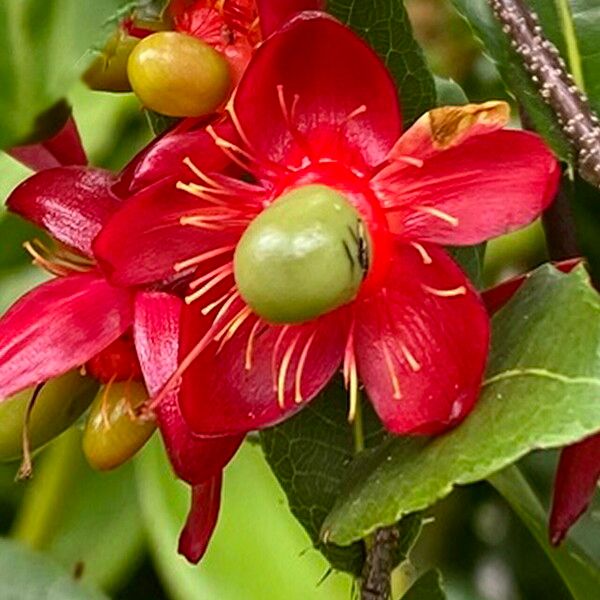
Often called the Mickey Mouse Plant, Ochna thomasiana is a whimsical East African native that brings a touch of animation to the garden. This woody shrub is famous for its dramatic costume change; it begins with delicate yellow blossoms and ends with a striking red-and-black display that bears an uncanny resemblance to a certain famous cartoon mouse. It is a resilient, sun-loving species that adds both architectural structure and a sense of playfulness to subtropical landscapes.
🔍 How to Identify
- 🌼 The Flowers: Features bright yellow, five-petaled blossoms that are short-lived but appear in prolific clusters, offering a light, sweet fragrance.
- 🔴 The Sepals: After the yellow petals drop, the sepals (the base of the flower) don’t wither. Instead, they enlarge and turn a vivid, waxy crimson red.
- 🖤 The "Ears": Shiny, berry-like fruits (drupes) grow against the red sepals. They start green and ripen to a glossy jet-black, completing the "Mickey Mouse" look.
- 🍃 The Foliage: Leaves are dark green, glossy, and elliptical with finely serrated (saw-toothed) edges that feel slightly leathery to the touch.
🏡 In Your Garden
- ✂️ Versatile Growth: Because it grows slowly and has a sturdy woody structure, it is a favorite for bonsai enthusiasts. In the garden, it can be pruned into a formal hedge or allowed to grow into a small, multi-trunked accent tree.
- 🌤️ Light & Drainage: It thrives in bright, indirect light or full sun. It is particularly sensitive to "wet feet," so ensure your soil is well-draining; it prefers a slightly acidic environment to mimic its native African scrublands.
- 🐦 Wildlife Value: While the "Mickey Mouse" display is for our entertainment, the red sepals are a biological "come hither" sign for birds, who eat the black seeds and help the plant spread.
⚠️ Safety & Toxicity
- 🟢 General Status: Ochna thomasiana is generally considered non-toxic to humans and common household pets.
- 🚫 Not for Consumption: Although not known to be poisonous, the berries are not edible for humans. Ingesting them may cause mild gastrointestinal discomfort in curious children or pets.
- 🧤 Skin Sensitivity: Some gardeners with sensitive skin may experience mild irritation from the serrated leaf edges when pruning, so gloves are recommended for heavy maintenance.
✨ Fun Fact
- 🐭 The Botanical Illusion: The "face" and "ears" of the Mickey Mouse plant are actually a clever evolutionary trick. Most plants have green sepals that protect the bud, but Ochna sepals turn bright red specifically to contrast with the black seeds, making them highly visible to birds from great distances!

Detailed Care Instructions

Place in a window with dappled sun or a spot in the middle of a room. Or directly in a window facing west or east.

Water-loving plants flourish in wet or sloppy soil and near ponds. The extensive root system enables these plants to absorb plenty of water. The surface of the soil should be kept moist at all times. Place your pot in a container filled with water to guarantee that plants get enough water. If the ground becomes dry, it is recommended that you water it well. Plants in smaller pots will need to be watered more frequently. Water the soil in which the plant is standing thoroughly using a watering can.







