Plant Overview
Known as the "Queen of Herbs" or "Tulsi," Ocimum tenuiflorum is far more than just a kitchen staple; it is a spiritual icon. In its native India, it is often found guarding the entrances of homes, believed to provide divine protection and purity. While it looks similar to the basil you might put on pizza, its complex, spicy aroma and deep cultural roots set it in a league of its own.
🔍 How to Identify
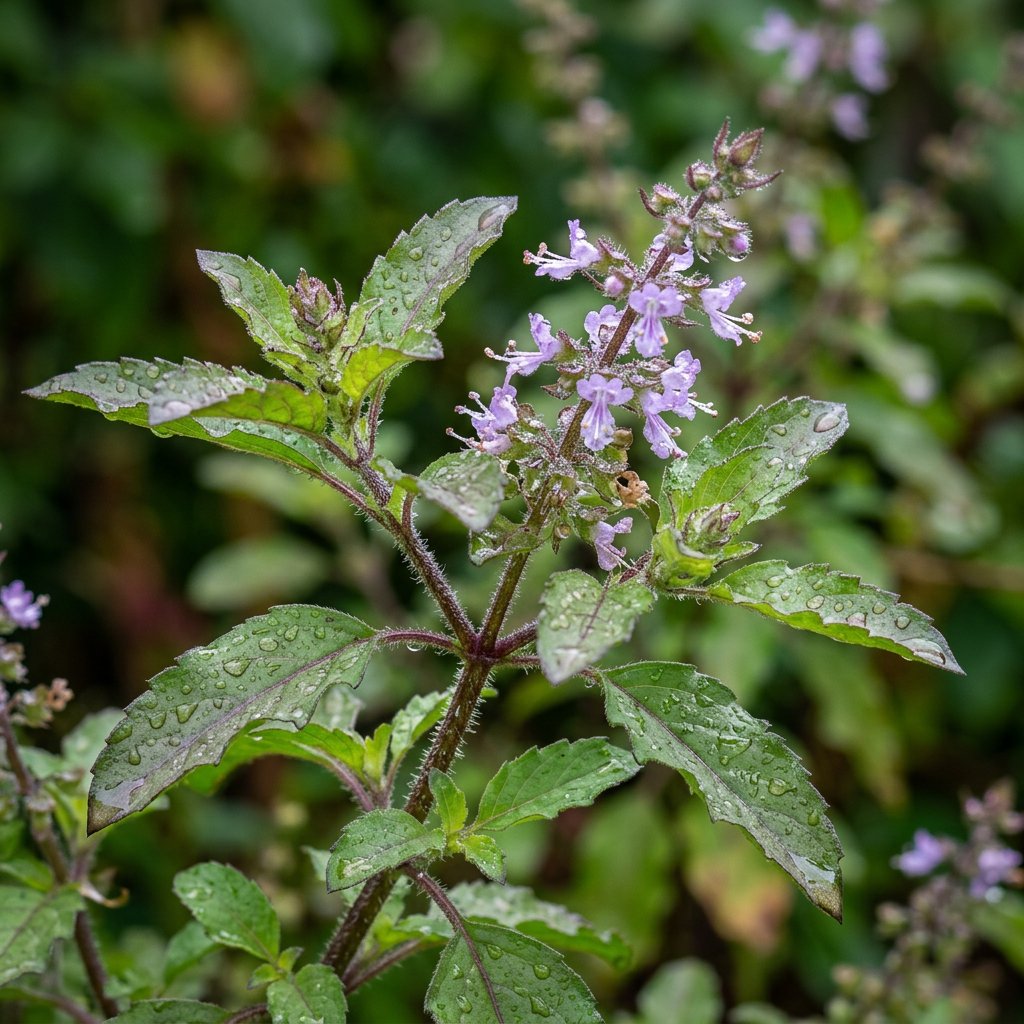
- 🌿 Fuzzy Foliage: Unlike the smooth, shiny leaves of Italian Basil, Holy Basil leaves are often slightly hairy and have distinctly serrated (toothed) edges.
- 🌸 Purple Spikes: The plant produces tall, slender spikes of tiny flowers that range from white to a soft, dusky purple.
- 👃 Clove-like Aroma: If you bruise a leaf, it won't smell like licorice; instead, you’ll get a powerful hit of cloves, peppermint, and a hint of citrus.
🏡 In Your Garden
- ☀️ Tropical Temperament: This plant is a true sun-worshiper. It hates the cold and will begin to wilt or drop leaves the moment temperatures dip below 50°F (10°C). If you live in a cooler climate, it thrives best as a pampered indoor container plant.
- ✂️ The Pinching Trick: Holy Basil has a tendency to get "leggy" or tall and thin. By regularly pinching off the top sets of leaves and flower buds, you force the plant to grow outward, resulting in a bushy, lush specimen.
⚠️ Safety & Toxicity
- ✅ Status: Safe and Edible. It is a cornerstone of Ayurvedic medicine and a star ingredient in Thai "Pad Krapow" (Holy Basil Stir-fry).
- 🐾 Pets & Kids: It is generally considered non-toxic to cats, dogs, and children. However, as with any aromatic herb, consuming large quantities might cause a mild stomach upset in curious pets.
✨ Fun Fact
In Sanskrit, the name "Tulsi" translates to "The Incomparable One." It is so highly regarded in Hindu tradition that it is often considered a threshold between heaven and earth, with many households tending to a "Tulsi Chaura"—a special masonry structure built specifically to house this single plant.

Detailed Care Instructions
To grow Ocimum Tenuiflorum, also known as Holy Basil or Tulsi, you can follow these steps:
- Choose the right location: Tulsi prefers full sun and well-draining soil. Select a spot in your garden or balcony that receives at least 6-8 hours of sunlight.
- Prepare the soil: Ensure the soil is loose, fertile, and well-draining. You can improve the soil quality by adding organic matter like compost or well-rotted manure.
- Sow the seeds: Holy Basil can be grown from seeds. Sow the seeds directly in the prepared soil or in seed trays filled with potting mix. Press the seeds lightly into the soil, cover them with a thin layer of compost, and water gently.
- Watering: Keep the soil moist, but not waterlogged. Tulsi prefers slightly moist conditions, so water regularly, especially during dry spells. Avoid overwatering, as it can lead to root rot.
- Temperature and humidity: Holy Basil enjoys warm temperatures between 60-90°F (15-32°C) and moderate humidity. Protect the plant from strong winds and frost, as it is sensitive to cold weather.
- Pruning and harvesting: Pinch off the top few inches of the plant regularly to encourage bushier growth. You can start harvesting the leaves once the plant reaches about 6-8 inches tall. Pick the leaves individually or prune entire stems.
- Fertilization: Holy Basil doesn't require heavy fertilization. However, you can apply a balanced organic fertilizer or compost once every few weeks to provide nutrients.
- Pests and diseases: Tulsi is generally resistant to pests and diseases. However, keep an eye out for aphids, caterpillars, or fungal diseases. Use organic pest control methods or natural remedies like neem oil if necessary.
- Propagation: Tulsi plants are known to readily produce side shoots, which can be used for propagation. Cut a healthy side shoot, dip it in rooting hormone, and plant it in a pot or directly in the soil.
Remember that Holy Basil is a perennial plant in tropical regions, but it can be grown as an annual in temperate climates.

Place in a window with dappled sun or a spot in the middle of a room. Or directly in a window facing west or east.

To water the plant, first check the soil to ensure that it is dry to the touch. Then, using a watering can or hose with a gentle stream, water at the base of the plant until the soil is moist but not soggy. Avoid watering the leaves or getting water on the foliage as this can promote fungal growth and disease. Watering should be done once a week or as needed depending on the plant's environment and climate. In general, it is better to under-water than over-water, as over-watering can lead to root rot and other issues.
- Use a balanced fertilizer with equal amounts of nitrogen, phosphorus, and potassium.
- Apply the fertilizer every two weeks during the plant's growing season.
- Mix the fertilizer with water according to the package instructions.
- Water the plant thoroughly and then apply the fertilizer directly to the soil.
- Avoid getting fertilizer on the plant's leaves to prevent burning.
- Consider using organic fertilizers like compost or fish emulsion for a more sustainable option.
- Monitor the plant's growth and adjust fertilizer application as needed.
The soil type that is suitable for the plant in question is one that is well-draining and has a good nutrient content. It should ideally be a loamy or sandy soil with a pH range of 6-7.5 and should not be too compact or heavy.
Organic matter in the soil is beneficial for the plant's growth and development, so incorporating compost or well-rotted manure into the soil can be helpful. The plant also prefers a slightly moist soil but can be prone to root rot if the soil is too wet.
It is recommended to plant the seedlings in pots or containers with drainage holes to ensure good drainage and to water the plant sparingly, allowing the soil to dry out a bit between waterings. Fertilizer can also be added once a month during the growing season to ensure healthy growth.
There are a few ways to propagate this plant, but one popular method is through stem cuttings. To do this, select a healthy stem, about 4-6 inches long, and remove the bottom leaves. Dip the cut end in rooting hormone powder and plant it in a moist potting mix, making sure to keep it well-watered and in a warm, humid environment. After a few weeks, roots should begin to form, and the plant can be gradually acclimated to brighter light as it grows. Another method is through seeds, which can be sown indoors or outdoors depending on the climate and timing. The seeds should be kept moist and warm until they germinate, and then thinned or transplanted as necessary. With proper care, these methods can be successful in propagating this plant.
Common pests of the tulasi include Spider mites, fungus gnats, aphids, thrips. Make a habit of checking your tulasi frequently for pests so that any infestations can be caught and managed early.








