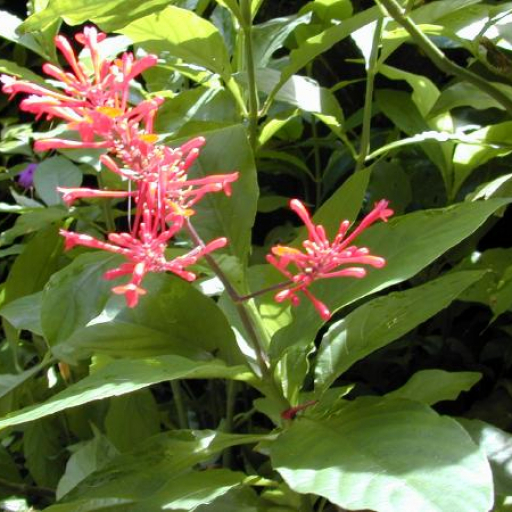
Plant Overview
Known as the Firespike or Cardinal’s Guard, this tropical beauty is a showstopper in any warm-climate garden. Native to Central America, it is prized for its architectural form and the brilliant "spikes" of scarlet flowers that erupt like fireworks in the late summer and fall. It’s a favorite among gardeners who want to transform their backyard into a bustling sanctuary for wildlife.
🔍 How to Identify
- 🔥 The Flowers: Produces upright, foot-long clusters (panicles) of waxy, tubular red flowers that stand high above the foliage.
- 🍃 The Foliage: Features large, glossy, dark green leaves with slightly wavy margins that can grow up to 6 inches long.
- 📏 The Growth: A fast-growing, herbaceous shrub with a distinct upright, somewhat "leggy" habit, often reaching 4 to 6 feet in height.
🏡 In Your Garden
- 🦋 The Pollinator Magnet: This plant is essentially a neon sign for hummingbirds and sulfur butterflies, providing a vital nectar source when other flowers begin to fade.
- ✂️ Pruning & Space: Because it grows so vigorously, it can become sparse at the bottom; pruning it back hard in early spring encourages a bushier, more flower-heavy shape.
- 💧 Thirsty Roots: While it is relatively hardy once established, it prefers consistently moist, well-draining soil and will wilt visibly (acting as its own "water meter") if it gets too dry.
⚠️ Safety & Toxicity
- ✅ Safe Status: Odontonema strictum is generally considered non-toxic to humans and common household pets.
- 👅 General Caution: While not poisonous, ingesting any non-edible garden plant can cause mild stomach upset in curious cats or dogs, so it’s always best to discourage nibbling.
✨ Fun Fact
The name Odontonema comes from the Greek words for "tooth" and "thread," referring to the unique, tooth-like filaments found inside its fiery tubular blossoms.

Detailed Care Instructions
To grow an Odontonema strictum plant, you can follow these steps:
- Choose the right location: Select a spot in your garden that receives partial shade to full sun. This plant thrives in tropical and subtropical climates but can tolerate cooler temperatures as well.
- Soil preparation: Odontonema strictum prefers well-draining soil. Prepare the soil by adding organic matter like compost or aged manure to improve its fertility and drainage.
- Planting: Dig a hole slightly larger than the plant's root ball. Gently place the plant in the hole and backfill with soil, patting it down lightly. Make sure the top of the root ball is level with the ground.
- Watering: Water the newly planted Odontonema strictum thoroughly to settle the soil and establish good root growth. Afterward, water regularly to keep the soil consistently moist but not waterlogged.
- Mulching: Apply a layer of organic mulch around the base of the plant, leaving a gap around the stem to prevent rot. Mulching helps retain moisture, deter weeds, and regulate soil temperature.
- Fertilizing: Fertilize your Odontonema strictum plant once a month during the growing season with a balanced slow-release fertilizer or organic compost.
- Pruning: To encourage bushier growth and maintain a compact shape, prune the plant after flowering or whenever it becomes leggy. Cut back about one-third of the plant's height, removing any dead or damaged branches.
- Pests and diseases: Odontonema strictum is generally resistant to most pests and diseases. However, keep an eye out for common issues like aphids, whiteflies, or mealybugs. Use organic insecticidal soap or neem oil to control infestations if necessary.
- Propagation: Odontonema strictum can be propagated through stem cuttings. Take a 4-6 inch cutting from a healthy, established plant. Remove the lower leaves and dip the cut end in rooting hormone. Plant the cutting in a pot filled with a well-draining potting mix. Place it in a warm, bright location and keep the soil consistently moist until the cutting establishes roots.
Remember to research and evaluate specific conditions in your area to ensure the best cultivation practices for Odontonema strictum.

Place in a window with dappled sun or a spot in the middle of a room. Or directly in a window facing west or east.

Odontonema Strictum plant requires regular watering to thrive. It's essential to keep the soil moist but not waterlogged, which can lead to root rot. The best way to water this plant is to check if the top inch of soil is dry before watering. When watering, slowly pour water at the base of the plant until the soil is soaked. It's essential to avoid wetting the leaves, as this can encourage fungal growth. During hot and dry weather, the plant may require more frequent watering. However, it's important not to overwater the plant as it can also cause damage. It's recommended to use room temperature water and to avoid using chlorinated water, as this can harm the plant's roots.
- Choose a balanced fertilizer that includes nitrogen, phosphorus, and potassium.
- Dilute the fertilizer according to the instructions on the packaging.
- Apply the fertilizer to the base of the plant, avoiding contact with the leaves.
- Water the plant immediately after fertilizing.
- Repeat the fertilization process every 4 to 6 weeks during the growing season.
- Do not fertilize during the plant's dormant period.
- Be careful not to over-fertilize, as this can lead to burning or damaging the plant.
The ideal soil for Odontonema Strictum should be well-draining and rich in organic matter. It should have a neutral to slightly acidic pH level. It should also be able to retain moisture without becoming waterlogged. A recommended soil mix would be equal parts of peat moss, perlite, and a good quality potting mix. It is important to avoid using soil that is compacted, heavy, or contains a lot of sand. The plant prefers a loose, fluffy soil that allows for better aeration of the roots. So, when choosing soil for Odontonema Strictum, it is important to consider its drainage and moisture retention properties as well as its nutrient content.
To propagate this plant, you will need to first identify a healthy and mature stem that has several mature leaves. Cut the stem at a 45-degree angle using a sharp and sterilized pruning shears. Remove the bottom leaves of the stem to expose the nodes where roots will grow.
Dip the cut end of the stem in rooting hormone powder and place it in a small pot filled with a well-draining soil mix. Water the soil and cover the pot with a plastic bag to create a mini greenhouse and keep the humidity levels high.
Place the pot in a bright and warm location, avoiding direct sunlight. Make sure to mist the cutting periodically to keep the soil moist and prevent it from drying out.
Within a few weeks, the cutting will start to develop roots and new growth. Once the roots have established, you can transplant the plant into a larger container or into your garden.
Continue to care for the plant by keeping the soil moist, providing it with regular fertilization, and pruning it as needed to promote healthy growth.








