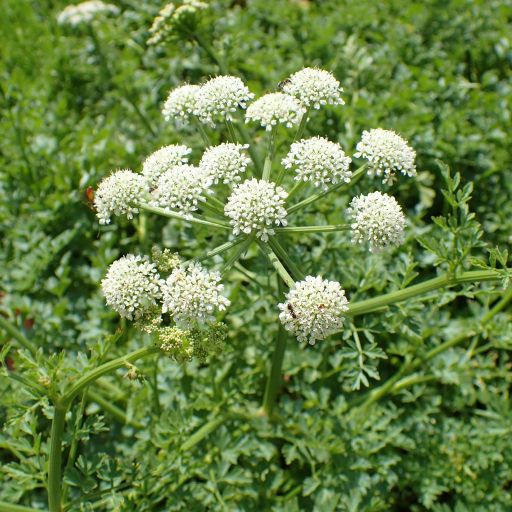
Plant Overview
Often called "Dead Man’s Fingers" due to its eerie, tuberous roots, the Hemlock Water Dropwort is one of the most deceptively beautiful yet dangerous plants in the botanical world. A member of the carrot family, it frequently grows near water, masquerading as harmless wild parsley or celery. This plant has a dark history in folklore and is notorious for its "sardonic" effect on those who mistake it for a snack.
🔍 How to Identify
- 🌿 The Foliage: The leaves are vibrant green, triangular, and deeply divided, bearing a striking resemblance to flat-leaf parsley or celery.
- 🌼 The Flowers: It produces large, rounded clusters (umbels) of tiny white flowers that look like delicate lace umbrellas blooming from mid to late summer.
- 🧪 The Stem: Stems are stout, grooved, and hollow. When broken, they often exude a yellowish, oily sap that turns orange upon contact with air.
- 🖐️ The Roots: Below the surface, the plant features clusters of pale, fleshy tubers that look remarkably like parsnips or human fingers.
💧 Habitat & Ecology
- 🌊 Water Lover: True to its name, this plant is almost always found in "wet feet" conditions. Look for it along riverbanks, marshes, canals, and damp ditches.
- 🌱 Spring Early-Bird: It is often one of the first lush green plants to emerge in late winter or early spring, which makes it particularly tempting to foraging animals or unwary hikers when other greenery is scarce.
⚠️ Safety & Toxicity
- 💀 Status: EXTREMELY DEADLY. This is widely considered the most poisonous plant in the UK and much of Europe. Every part of the plant contains oenanthotoxin, a powerful neurotoxin.
- 🚫 Zero Tolerance: Ingestion of even a small amount can be fatal to humans, livestock, and pets. Death usually occurs via respiratory failure or violent seizures.
- 🧤 Skin Contact: While the primary danger is ingestion, the sap can cause skin sensitivity or irritation in some individuals. Always wear gloves if you must handle or remove it.
✨ Fun Fact
The term "Sardonic Grin" (risus sardonicus) originates from this plant. In ancient Sardinia, it was used in ritual killings of the elderly; the toxin causes the facial muscles to contract into a rigid, eerie smile, making the victim appear to be laughing in the face of death.

Detailed Care Instructions
| Humidity | High |
| Lighting | Part Sun |
| Toxicity | Poisonous |
| Difficulty | Easy |
| Hibernation | Cold Period |
| Hardiness Zones | 5 - 9 |
To grow Oenanthe crocata, also known as Hemlock Water Dropwort or Dead Man's Fingers, you can follow these steps:
- Choose the right location: Oenanthe crocata prefers wet or moist soil conditions, so select a location with sufficient water access, such as near a stream, pond, or in a boggy area of your garden. Ensure the soil is rich, fertile, and well-draining.
- Prepare the soil: Before planting, remove any weeds or debris from the chosen area. Dig the soil to loosen it and amend it with organic matter, such as compost, to improve its nutrient content and water retention capabilities.
- Planting: You can either plant Oenanthe crocata from seeds or by dividing existing plants. If using seeds, sow them in early spring or late summer, lightly covering them with soil. If dividing, do this in early spring or early autumn by carefully separating the rhizomes and replanting them.
- Watering: Since it is a water-loving plant, ensure that the soil remains moist at all times. Water it regularly, especially during dry periods, and avoid letting the soil completely dry out.
- Sunlight: Oenanthe crocata prefers partial shade or full sun. Provide it with at least 4-6 hours of direct sunlight daily, but be mindful of too much intense afternoon sun, as it may scorch the plant.
- Mulching: Apply a layer of organic mulch, such as wood chips or straw, around the base of the plant to retain moisture, suppress weed growth, and maintain a cool root zone temperature.
- Maintenance: Remove any weeds that may compete with the plant for nutrients and water. Additionally, consider thinning out overcrowded plants to foster better airflow and prevent diseases.
- Pruning: Oenanthe crocata can grow aggressively, so pruning may be necessary to keep its growth in check. Cut back any dead or damaged foliage, and shape the plant if it becomes unruly.
- Fertilization: Oenanthe crocata typically doesn't require frequent fertilization, especially if you've amended the soil before planting. However, if you notice signs of nutrient deficiency, you can provide a balanced slow-release fertilizer in early spring.
- Winter care: Oenanthe crocata is generally hardy in USDA zones 5-9 but can be vulnerable to frost. If you live in a colder region, consider covering the plant with a layer of mulch or bringing it indoors for protection during winter.
Remember that Oenanthe crocata is toxic if ingested, so take precautions if you have children or pets. It's always a good idea to wear gloves when handling the plant and wash your hands thoroughly afterward.

Place in a bright room that is sun drenched almost all day. Or directly in a south-facing window.

To provide adequate water for this particular plant, you should ensure that the soil is consistently moist. This means that it should never be allowed to dry out completely, but should also not be waterlogged. To achieve this, you can water it regularly, but be sure to allow the water to fully drain out before replacing it in its pot or container. You should also avoid any sudden changes in watering habits, as this can cause stress to the plant. Finally, it's important to note that this plant prefers to be grown in areas with high humidity, so it's a good idea to mist it regularly as well.
To fertilize this plant, use an organic fertilizer with balanced amounts of nitrogen, phosphorus, and potassium. Fertilize once a month during the growing season (spring and summer) and reduce frequency during the dormant season (fall and winter). Avoid over-fertilization as it can lead to excessive growth and diminish plant health. Water the plant thoroughly before and after fertilization to prevent burning and ensure proper nutrient absorption.
The ideal soil for this plant should be a rich, moist, and fertile soil that is well-draining and high in organic matter. A pH range of 6.5 to 7.5 is recommended for optimal growth. Avoid using heavy clay soils or soils that are prone to waterlogging, as they can lead to root rot and other plant diseases. It is also important to ensure that the soil is kept consistently moist throughout the growing season, but not waterlogged. Adding a layer of mulch around the base of the plant can help to retain moisture and prevent soil erosion. It is recommended to fertilize the plant with a balanced, slow-release fertilizer throughout the growing season to ensure healthy growth and optimum production.
To propagate this plant, you will need to take stem cuttings. Begin by selecting a healthy stem from the parent plant that is approximately 4-6 inches long. Make sure the stem has several leaves attached. Using sharp, clean pruning shears, cut the stem at a slight angle just below a node (where a leaf is attached).
Remove the leaves from the bottom 2 inches of the stem, leaving only a few leaves at the top. Dip the cut end of the stem into rooting hormone powder and gently tap off any excess.
Fill a small container with moist potting soil, and make a hole in the soil with a pencil or your finger. Insert the stem cutting into the hole and press the soil around it to hold it in place.
Cover the container with a clear plastic bag or dome to create a humid environment for the cutting. Place the container in a bright location, but out of direct sunlight.
Check the soil frequently and water as needed to keep it moist, but not saturated.
After about 2-4 weeks, roots should begin to form on the stem cutting. Once the roots have formed, remove the plastic covering and transplant the new plant into a larger container or the garden.








