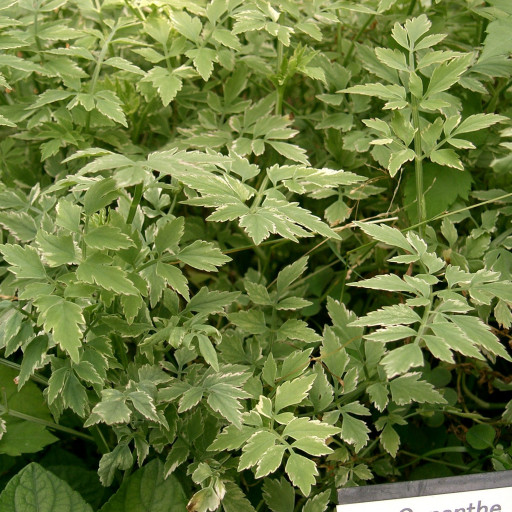
Plant Overview
Often called "Water Celery" or "Seri," Oenanthe javanica is a vibrant, sprawling perennial that thrives where most plants drown. Native to the wetlands of Asia and Australia, it is cherished both as a crunchy culinary herb and a striking pond-side groundcover. Whether you are growing the green wild type or the pink-splashed "Flamingo" variety, this plant brings a lush, meadow-like feel to the edges of any water feature.
🔍 How to Identify
- 🌿 The Foliage: The leaves look remarkably like flat-leaf parsley or celery, featuring serrated edges and a deep green hue. In ornamental varieties, these leaves may be edged in creamy white and bright pink.
- 🎋 The Stems: Its stems are notably hollow and succulent, allowing the plant to float or creep along the surface of mud and shallow water.
- ☁️ The Blooms: During the summer, it produces delicate, flat-topped clusters (umbels) of tiny white flowers that resemble "Baby’s Breath," hovering just above the foliage.
🏡 In Your Garden
- 💧 A Thirst for Wetlands: This isn't your average garden plant; it is a "marginal" aquatic. It loves to have its "feet" wet and can even grow in a few inches of standing water, making it perfect for softening the rocky edges of a backyard pond.
- 🏃 A Fast Traveler: Because it spreads via runners (stolons), it can be quite aggressive. If you have a small space, it is best to plant it in a submerged container to prevent it from taking over the entire shoreline.
- 🌈 Color Shifts: If you are growing the "Rainbow" or "Flamingo" cultivars, the pink coloration is most intense during the cooler months of spring and autumn; it may fade to a simple green-and-white during the heat of summer.
⚠️ Safety & Toxicity
- ✅ Status: Generally safe and widely used as an edible vegetable in Asian cuisine (often found in soups or stir-fries).
- 🚨 The Deadly Lookalike: CRITICAL WARNING. Never forage for this plant in the wild unless you are an expert. It looks almost identical to its cousin, Oenanthe crocata (Hemlock Water Dropwort), which is one of the most violently toxic plants in the Northern Hemisphere.
- 🐾 Pets: While the plant is edible for humans, it is best to keep curious cats and dogs from grazing on it in large quantities, as sudden changes in diet can cause digestive upset.
✨ Fun Fact
In Japan, Oenanthe javanica is celebrated as one of the "Seven Herbs of Spring" (Nanakusa-no-sekku). It is traditionally eaten in a symbolic rice porridge on January 7th to bring good health and longevity for the coming year!

Detailed Care Instructions
| Humidity | Dry |
| Difficulty | Medium |
| Hibernation | Cold Period |
| Temperature | 21°C - 30°C |
| Hardiness Zones | 5 - 11 |
To grow Oenanthe Javanica, also known as water celery or water dropwort, you can follow these steps:
- Choose the right location: Water celery grows best in wet soil or partially submerged in water. Therefore, select a location in your garden with good drainage or near a body of water, such as a pond or stream.
- Prepare the soil or container: If you are planting in a garden bed, make sure the soil is rich and well-draining. If planting in a container, use a pot with drainage holes and fill it with a mixture of potting soil and compost.
- Obtain the plant: Purchase water celery plants from a reputable nursery or online. Alternatively, you can propagate it from cuttings.
- Planting from a nursery purchase: Dig a hole in your garden bed or container slightly larger than the root ball of the plant. Gently place the plant in the hole and cover the roots with soil, making sure to not bury the crown of the plant.
- Planting from cuttings: Cut a stem from a mature plant, ensuring it has several leaves and is about 4-6 inches in length. Place the cutting in a container of water, making sure the leaves are above the waterline. Change the water every few days until roots develop. Once roots have formed, plant the cutting in your garden bed or container.
- Watering: Regular watering is crucial for water celery, as the soil or water should remain consistently moist. Check the moisture level frequently, especially during hotter months, and water accordingly.
- Fertilization: Water celery benefits from regular fertilization. Use a balanced, slow-release fertilizer or add liquid fertilizer to the water if growing in containers. Follow the instructions on the fertilizer packaging for proper application.
- Maintenance: Trim back any dead or yellowing leaves and stems to maintain the overall health and appearance of the plant. Divide overcrowded clumps every few years to encourage new growth.
- Protection: Monitor the plant for pests such as aphids or slugs and take appropriate measures to control them. Protect the plant from frost by covering it with a frost cloth or moving it indoors during colder months, if necessary.
By following these steps, you should be able to successfully grow Oenanthe Javanica, enjoying its lush green foliage and delicate white flowers.

Place in a window with dappled sun or a spot in the middle of a room. Or directly in a window facing west or east.

To water this plant, you should place it in a container with drainage holes. Fill the container with water until it reaches the roots of the plant, ensuring that the water does not overflow. Ensure that the soil remains moist but not water-logged, and avoid letting the soil dry out completely between watering sessions. Depending on the temperature and humidity, water may need to be added twice per week. To ensure the best growth and health of the plant, monitor the moisture level in the soil frequently and adjust watering as necessary.
To fertilize this plant, you should use a balanced fertilizer with equal parts nitrogen, phosphorus, and potassium. Apply the fertilizer every two weeks during the growing season, from spring to fall. It is important to dilute the fertilizer to half strength to avoid burning the roots of the plant. Remember to water your plant before fertilizing it to reduce the risk of damaging the roots.
The ideal soil type for the Oenanthe Javanica plant is a well-draining loamy soil that is rich in nutrients. It should have a pH between 6.5 and 7.5. The soil should be slightly acidic to neutral and should have good water retention capacity to prevent drying out of roots. A mixture of organic matter such as compost, peat or rotted manure should be added to the soil to improve its fertility. The soil should also be kept moist, but not overwatered as a waterlogged soil can lead to root rot. The Oenanthe Javanica plant prefers full sun to partial shade and should be planted in an ideal location with good drainage and good sunlight.
Propagation of this plant can be achieved through stem cuttings or division of the plant's rhizomes. For stem cuttings, select healthy stems with several leaves and cut them with clean, sharp scissors. Remove the lower leaves and insert the stem into a well-draining potting mix. Water it thoroughly and place it in a warm, bright location with indirect sunlight.
For division, first uproot the plant and carefully separate its rhizomes. Trim off any damaged or rotten parts of the rhizome and then replant the healthy sections into a well-draining soil. Water it thoroughly and place it in a warm location with indirect sunlight to promote growth.








