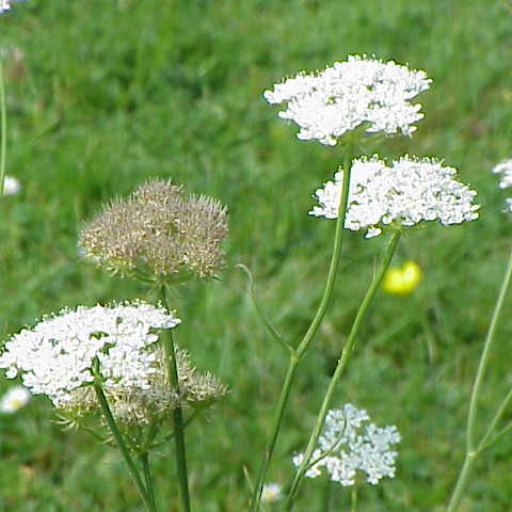
Plant Overview
Known as the Corky-fruited Water-dropwort, this plant is a charming but deceptive member of the carrot family. Often found swaying in traditional hay meadows and old pastures, it carries an air of rustic elegance with its lacy white blooms. While it looks remarkably like wild parsley or chervil, it belongs to the Oenanthe genus—a group that includes some of the most notoriously toxic plants in the Northern Hemisphere.
🔍 How to Identify
- 🌿 The Foliage: It features two types of leaves; the lower ones are broad and parsley-like, while the upper leaves on the flowering stems are much narrower and pin-like.
- 🌸 The Umbels: Like most of its relatives, it produces "umbels"—flat-topped clusters of tiny white flowers that resemble delicate lace doilies.
- ☁️ Corky Seeds: The most defining feature is the fruit. After the flowers fade, the seeds develop a thickened, "corky" base that helps them stay buoyant or survive in specific soil conditions.
🏡 In Your Garden
- 🌾 Meadow Specialist: This isn't your typical flowerbed plant; it thrives in "unimproved" grasslands. It is a favorite for Rewilding projects, especially in areas with heavy clay soil that remains damp in winter but dries out completely in the summer.
- ⚓ Deep Tubers: The plant survives via small, egg-shaped tubers hidden underground. These storage organs make it incredibly resilient to drought, but they also mean the plant hates being moved once it has settled in.
⚠️ Safety & Toxicity
- 🚫 High Risk: While Oenanthe pimpinelloides is considered less toxic than its deadly cousin, the Hemlock Water-dropwort, it should still be treated with extreme caution.
- 🐕 Do Not Ingest: All parts of the plant are potentially toxic if eaten. Because it so closely resembles edible herbs like Parsley or Wild Carrot, it is a high-risk plant for foragers. Keep curious pets and children away from the foliage and roots.
✨ Fun Fact
The name "Water-dropwort" comes from the shape of the tubers, which ancient herbalists thought looked like drops of liquid. Despite its toxic reputation today, the tubers were historically referred to as "Earthnuts" and were occasionally eaten in times of famine—though this is a "Russian Roulette" of foraging that modern botanists strongly advise against!

Detailed Care Instructions
To grow Oenanthe pimpinelloides, also known as water celery, follow these steps:
- Growing conditions: This plant thrives in full sun to partial shade and prefers to be submerged in shallow water, such as a water feature or pond. Ensure that the water is not stagnant and has good circulation. The ideal temperature range is between 60°F to 85°F (15°C to 30°C).
- Propagation: Oenanthe pimpinelloides can be propagated through seeds or cuttings. Seeds can be collected from mature plants and sown in wet soil or directly in water. Cuttings can be taken from established plants by selecting healthy stems and planting them in damp soil or placing them directly in water. Keep them moist until roots develop.
- Planting: Plant the seeds or cuttings in well-draining, rich soil or directly in the water. If planting in soil, ensure that it remains constantly moist but not waterlogged. If planting in water, make sure the plant is fully submerged but not too deep.
- Watering: If planting in soil, water the plant consistently to keep the soil moist. If planting in water, ensure that the water level remains adequate to keep the plant submerged. Regularly change the water to avoid stagnation.
- Fertilization: Fertilize the plant with a balanced aquatic plant fertilizer according to package instructions. This will provide essential nutrients necessary for healthy growth.
- Pruning: Trim and remove any yellow or dead leaves to maintain the plant's health and appearance. Regular pruning will also help to control its growth and prevent overcrowding.
- Winter care: Oenanthe pimpinelloides is hardy to USDA zones 4-9 and can survive freezing temperatures. If you live in an area with harsh winters, you can overwinter the plant by cutting it back and moving it to a frost-free area indoors. Alternatively, you can cover the plant with floating row covers to protect it from extreme cold.
Remember to research your local regulations before growing Oenanthe pimpinelloides, as it may be considered an invasive species in some areas.

Place in a bright room that is sun drenched almost all day. Or directly in a south-facing window.

To water this plant, you should first check the soil moisture level by sticking your finger about an inch into the soil. If the soil feels dry, it is time to water. Use room temperature water and pour it slowly at the base of the plant until it starts to drain out from the bottom of the pot. Avoid getting water on the foliage as it may lead to fungal diseases. Water the plant once or twice a week depending on the weather and humidity levels. Maintain consistent soil moisture, but avoid overwatering as this plant is prone to root rot. Adjust watering frequency in winter when the plant tends to grow slower and requires less water.
To fertilize this plant, use a balanced fertilizer with equal amounts of nitrogen, phosphorus, and potassium. Apply the fertilizer once a month during the growing season, or as directed on the fertilizer packaging. Make sure to water the plant thoroughly before and after fertilizing. Avoid applying fertilizer to dry soil, as this can damage the roots.
The most suitable type of soil for the plant is a rich, well-draining soil that is moist and nutrient-rich. The soil pH should be slightly acidic to neutral pH (5.5 to 7). The plant prefers soils that are high in organic matter and moisture retention capacity. It requires a moderately fertile, loamy soil with a good pH. Heavy clay soils can impede root development and reduce plant growth and performance. For ideal plant growth and development, soil should be supplemented with organic matter such as compost or manure to maintain a constantly moist soil. Additionally, the soil temperature should not be too low or high, and should be maintained between 15°C to 27°C to provide optimal growing conditions for the plant.
To propagate this plant, you will need the following materials:
- Sharp pruning shears or scissors
- Small pots
- Potting soil or a mixture of soil and compost
- Water
Steps:
- Identify a healthy stem of the plant that is at least six inches long.
- Using sharp pruning shears or scissors, remove the stem from the parent plant just below a node (a small bump where a leaf was attached).
- Remove any leaves from the bottom two inches of the stem.
- Place the stem in a small pot filled with potting soil or a mixture of soil and compost.
- Firmly press the soil around the stem to ensure it is in place and water thoroughly.
- Place the pot in a bright, warm location, but not in direct sunlight.
- Keep the soil moist by watering as needed.
- After a few weeks, check to see if the stem has taken root by gently tugging on it. If there is resistance, it has developed roots.
- Once the stem has rooted, it can be transplanted into a larger pot or planted outdoors in a suitable location.








