Plant Overview
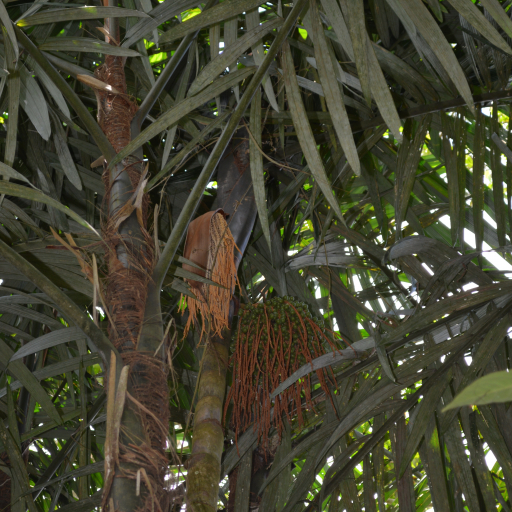
Deep in the heart of the Amazon rainforest stands the Bacaba palm, often called the "Bacaba-de-azeite" due to the rich, golden oil found in its fruits. While its cousin, the Açaí, has taken the world by storm, the Bacaba remains a treasured local secret, known for producing a creamy, chocolate-colored "milk" that is even richer in flavor. In indigenous folklore, it is a tree of life, providing food, shelter, and oil for the forest's inhabitants.
🔍 How to Identify
- 🌿 The Crown: Unlike some messy palms, the Bacaba has a very organized, feather-like (pinnate) leaf structure. The leaflets are dark green and arranged in different planes, giving the fronds a slightly "shaggy" but elegant look.
- 🍇 The Fruit Clusters: It produces heavy, drooping branches loaded with small, round fruits. These turn a deep, glossy purple-black when ripe, resembling oversized blueberries or dark grapes.
- 📏 The Trunk: The stem is solitary, smooth, and greyish, often reaching heights of 20 meters or more. It lacks the "clumping" habit seen in many other tropical palms.
🏡 In Your Garden
- 💧 The Humidity Requirement: This isn't a "set and forget" houseplant; it thrives on high humidity and consistent warmth. If you are growing it outside its native tropics, it demands a greenhouse-like environment to prevent its leaf tips from browning.
- 🌱 Slow and Steady: The Bacaba is famously slow to mature. It invests a lot of energy into its deep root system before shooting upward, so patience is a requirement for any gardener hoping to see its first fruit harvest.
⚠️ Safety & Toxicity
- ✅ Status: Generally non-toxic and highly valued for its edible fruit.
- 🐾 Details: The fruit pulp is safe for humans and most animals. However, the large, hard seeds can be a choking hazard for curious dogs. Like many palms, the discarded fronds can be surprisingly heavy and sharp, so care should be taken when pruning.
✨ Fun Fact
The name "Bacaba" comes from the Tupi indigenous language, and the juice made from its fruit is so nutritious that it was historically used as a substitute for mother's milk in remote Amazonian communities when necessary!

Detailed Care Instructions
To grow an Oenocarpus bacaba plant, also known as the bacaba palm or Jauari palm, you can follow these steps:
- Obtain seeds or seedlings: You can purchase Oenocarpus bacaba seeds or seedlings from a reputable nursery or online supplier.
- Choose a suitable location: Oenocarpus bacaba plants require a warm and tropical climate. Select a well-drained location with partial shade to protect the plant from direct sunlight, particularly in hot summer months.
- Prepare the soil: The soil should be rich, slightly acidic, and well-drained. Mix organic matter, such as compost or well-rotted manure, into the soil to improve its fertility and drainage.
- Planting: If you have seeds, soak them in warm water for 24 hours beforehand to help with germination. Plant the seeds or seedlings in a hole that is slightly larger than the root ball. Ensure that the crown of the plant is level with the soil surface.
- Watering: In the early stages, keep the soil consistently moist but not waterlogged. Once the plant establishes, reduce the frequency of watering, allowing the soil to dry out slightly between watering sessions.
- Fertilization: Apply a balanced, slow-release fertilizer according to the manufacturer's instructions. Performing this once or twice a year during the growing season can enhance the plant's growth and development.
- Pruning: Pruning is generally not required for Oenocarpus bacaba plants. However, you can remove any dead leaves or prune any damaged or overcrowded growth.
- Protection: Protect the young plant from extreme temperatures, strong winds, and frost. If necessary, use stakes or other protective measures to shield the plant.
- Patience: Oenocarpus bacaba plants grow slowly, so be patient while waiting for growth and significant development.
- Maintenance: Regularly monitor the plant for pests and diseases. Use organic or horticultural treatments as necessary to keep the plant healthy.
Remember to research specific care requirements for the Oenocarpus bacaba plant to cater to your specific climate and growing conditions.

Place in a window with dappled sun or a spot in the middle of a room. Or directly in a window facing west or east.

To ensure proper hydration for the Oenocarpus Bacaba plant, follow these guidelines:
1. Observe the soil moisture: Before watering, check the soil moisture level. Insert your finger about one inch into the soil near the plant's base. If the soil feels dry at this depth, it's an indication that watering is required.
2. Water quantity: When watering the Oenocarpus Bacaba plant, provide a sufficient amount to thoroughly moisten the soil. Add water until you notice it starting to drain from the bottom of the pot or seeping into the surrounding soil.
3. Watering frequency: The frequency of watering depends on various factors such as climate, temperature, humidity, and soil drainage. As a general guideline, water the Oenocarpus Bacaba plant when the top inch of soil feels dry. Avoid overwatering, as it can lead to root rot and other issues.
4. Watering method: Instead of pouring water directly onto the plant's leaves, focus on watering the soil around the base of the plant. This allows the roots to absorb moisture efficiently. You can use a watering can or a hose with a gentle spray attachment to water the plant evenly.
5. Time of watering: It's recommended to water your Oenocarpus Bacaba plant early in the morning or late in the evening. This helps prevent excessive evaporation and allows the plant to absorb moisture effectively.
6. Environmental considerations: Pay attention to environmental conditions that may affect watering needs. For example, during hot and dry periods, your Oenocarpus Bacaba plant may require more frequent watering. Similarly, if the plant is exposed to direct sunlight or placed near heat sources, it may demand more water.
7. Water quality: It is preferable to use filtered or distilled water for watering the Oenocarpus Bacaba plant. This helps to avoid the accumulation of harmful minerals and chemicals found in tap water that could potentially harm the plant's roots.
Remember, understanding the specific needs of your Oenocarpus Bacaba plant is crucial. Regularly monitor the plant's response to watering and adjust the frequency and quantity accordingly.
To fertilize the Oenocarpus Bacaba plant, begin by preparing a balanced fertilizer with equal parts of nitrogen, phosphorus, and potassium. Follow these instructions:
- Dilute the fertilizer according to the manufacturer's instructions, usually mixing one tablespoon of fertilizer in one gallon of water.
- Ensure that the plant is well-watered before applying fertilizer to avoid root burn.
- Use a watering can or sprayer to apply the fertilizer mixture evenly to the soil around the base of the plant.
- Avoid direct contact of the fertilizer with the plant's leaves, as it may cause burning or damage.
- Repeat the fertilization every four to six weeks during the growing season, typically spring through fall. Adjust the frequency and dosage based on the product's instructions and the plant's specific needs.
- Monitor the plant's nutrient requirements by observing its growth, foliage color, and overall health. Adjust the fertilizer application accordingly.
- During winter or dormancy, reduce or completely halt fertilization as the plant's growth slows down.
- Always read and follow the instructions on the fertilizer packaging for specific guidelines.
The ideal soil for the Oenocarpus Bacaba plant should be well-draining and moderately fertile. It is important to create a soil mix that mimics the natural habitat of the plant for optimal growth and development.
The recommended soil type for Oenocarpus Bacaba should have a pH level ranging from slightly acidic to neutral. It should contain a good amount of organic matter, such as compost or well-rotted manure, to provide essential nutrients and improve the soil structure.
The texture of the soil should be loamy or sandy, allowing for good drainage while retaining enough moisture for the plant's roots. This will prevent waterlogged conditions and reduce the risk of root rot.
Adding perlite or coarse sand to the soil mix can improve drainage further, especially if your region experiences heavy rainfall or if you tend to overwater your plants. This will help prevent water from sitting around the roots and potentially causing damage.
It is important to note that Oenocarpus Bacaba plants thrive in tropical regions where they receive high rainfall and humidity. Therefore, the soil should have good water-holding capacity to ensure the plant has access to adequate moisture during dry periods.
Regularly checking the moisture levels of the soil and watering accordingly is recommended. This will help maintain consistent moisture levels without oversaturation.
Overall, providing a well-draining, moderately fertile soil with organic matter and good moisture retention will create an ideal growing environment for the Oenocarpus Bacaba plant.
Propagation of Oenocarpus Bacaba plant can be achieved through several methods, including seed propagation, vegetative propagation using stem cuttings, and air layering.
- Seed Propagation:
- Obtain fresh, viable seeds from a reputable source.
- Soak the seeds in lukewarm water for 24 hours to soften the seed coat and improve germination.
- Prepare a well-draining seed-starting mix, consisting of a combination of peat moss, perlite, and sand.
- Fill small seed trays or pots with the pre-moistened seed-starting mix.
- Sow the seeds at a depth of approximately 1 inch (2.5 cm) in the potting mix.
- Place the trays or pots in a warm location with indirect sunlight.
- Keep the soil consistently moist but not waterlogged.
- Germination may take several weeks to a few months. Once the seedlings have developed strong roots and true leaves, they can be transplanted into individual pots or directly into the ground.
- Vegetative Propagation using Stem Cuttings:
- Take stem cuttings from a healthy, mature Oenocarpus Bacaba plant.
- Choose a stem that is firm and semi-hardwood, neither too soft nor too woody.
- Make a clean, diagonal cut just below a leaf node using a sterile, sharp knife or pruning shears.
- Remove any leaves from the lower portion of the cutting, leaving only a few at the top.
- Dip the cut end of the stem cutting into a rooting hormone powder to encourage root development.
- Insert the cutting into a pot filled with a well-draining rooting medium, such as a mix of vermiculite and perlite in equal proportions.
- Place the pot in a warm, humid area with indirect sunlight.
- Mist the cutting regularly to maintain humidity and prevent it from drying out.
- After a few weeks, roots should start to develop. Once the cutting has a well-established root system, it can be transplanted into a larger pot or planted directly in the ground.
- Air Layering:
- Select a healthy, low-hanging branch on the Oenocarpus Bacaba plant.
- Make a small upward cut on the branch, approximately 3-4 inches (7.5-10 cm) long.
- Apply a rooting hormone to the exposed area to stimulate root development.
- Surround the cut area with moist sphagnum moss or a suitable rooting medium.
- Enclose the moss or rooting medium with a plastic wrap or bag, securing it tightly above and below the cut area.
- Check the wrapping regularly to ensure the moss or rooting medium remains moist.
- Roots should start forming within a few weeks to a few months.
- Once a sufficient root system has developed, carefully cut the branch below the rooted area and remove the plastic wrap.
- Transplant the rooted section into a separate pot or directly into the ground, ensuring it is kept well-watered.
Remember that successful propagation may vary depending on the specific conditions and techniques used, so it is important to adapt the methods according to the plant's needs and characteristics.








