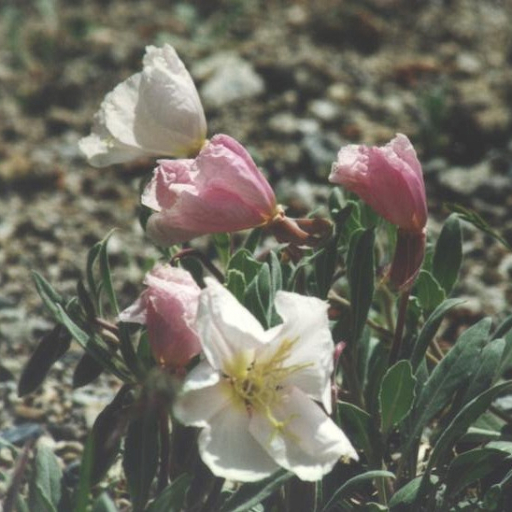
Plant Overview
Known as the California Evening Primrose, this delicate desert native is a master of the "magic hour." As the sun dips below the horizon, its blossoms unfurl like pale silk lanterns, releasing a sweet fragrance to invite nocturnal travelers. While it looks fragile, it is a resilient survivor of the arid, sandy landscapes of the American Southwest, often seen blanketing dunes in a sea of white and pink.
🔍 How to Identify
- 🌸 The Color Shift: The large, four-petaled flowers begin as a brilliant, snowy white but "blush" into a soft, bruised pink as they mature and prepare to wilt the following day.
- 🌿 Silver Foliage: The leaves are grayish-green and covered in a fine coating of downy hairs (pubescence), which gives the plant a velvety texture and helps it reflect harsh sunlight.
- 🌱 Low Profile: It typically stays close to the earth, growing about 6 to 12 inches tall, but spreads wide via underground runners to form a dense, flowery mat.
🏡 In Your Garden
- 🏜️ The Need for Grit: This plant is a "sand-lover." In a garden setting, it will struggle in heavy, damp clay; it requires gritty, exceptionally fast-draining soil to mimic its desert home and prevent root rot.
- 🏃 A Social Wanderer: Because it spreads through rhizomes (underground stems), it is an excellent choice for stabilizing slopes or filling "wild" gaps. However, give it space, as it may overwhelm smaller, less vigorous neighbors.
- ☀️ Sun Seeker: To get those iconic evening blooms, it needs a position in full sun. While it is drought-tolerant once established, a little supplemental water during its blooming peak will keep the flowers coming.
⚠️ Safety & Toxicity
- ✅ Safe Status: Oenothera californica is generally considered non-toxic to humans and common household pets like cats and dogs.
- 👶 Gentle Texture: Unlike many desert plants, it lacks thorns or irritating saps, making it a safe and tactile addition to sensory gardens frequented by children.
✨ Fun Fact
[The Night Shift:] The flowers are specifically designed for "moth pollination." Large Sphinx moths, which are often mistaken for hummingbirds due to their size and hovering flight, are the plant's primary visitors. They are drawn in by the white petals that "glow" under the moonlight and the plant's intoxicating evening perfume.

Detailed Care Instructions
To grow Oenothera Californica, also known as California Evening Primrose, you can follow these steps:
- Choose the right location: Oenothera Californica thrives in full sun or partial shade. Pick a location with well-draining soil, as soggy conditions can cause root rot.
- Prepare the soil: Amend the soil with organic matter, such as compost, to improve its fertility and drainage. Remove any weeds or grass from the area.
- Sow the seeds: Oenothera Californica can be grown from seeds. Sow the seeds directly in the garden bed during spring or early fall. Scatter the seeds over the soil and lightly press them into the surface. Aim for a spacing of around 6-12 inches between plants.
- Watering: Keep the soil consistently moist but not waterlogged. Water the seeds or young plants regularly until they establish strong roots. Afterward, they are fairly drought-tolerant and need less frequent watering. Deep watering once a week should be sufficient.
- Mulching: Apply a layer of organic mulch, such as straw or bark chips, around the plants to conserve moisture, suppress weed growth, and regulate soil temperature.
- Pruning: Prune Oenothera Californica regularly to promote bushier growth and prevent it from becoming leggy. Pruning can be done after the flowering period or as needed to maintain an attractive shape.
- Fertilization: Oenothera Californica generally does not require heavy fertilization. However, you can apply a balanced slow-release fertilizer in early spring to provide necessary nutrients.
- Pests and diseases: Oenothera Californica is relatively pest and disease-resistant. However, keep an eye out for common garden pests like aphids or snails. In case of infestations, use organic pest control methods or consult with a local garden center for appropriate treatments.
By following these steps, you should be able to successfully grow Oenothera Californica in your garden.

Place in a bright room that is sun drenched almost all day. Or directly in a south-facing window.

To water this particular plant species, it is important to consider the soil conditions and the climate of the area where it is grown. The plant prefers well-draining soil that is not too wet or too dry. When watering, it is best to give a deep, infrequent watering rather than frequent shallow watering. This encourages the roots to grow deeper into the soil and helps the plant become more drought-tolerant. However, the plant should not be allowed to completely dry out. In hot and dry climates, more frequent watering may be necessary. It is also important to avoid getting the leaves and flowers wet when watering, as this can increase the risk of fungal diseases.
To fertilize the Oenothera Californica plant, use a balanced fertilizer with equal parts of nitrogen, phosphorus, and potassium. Apply the fertilizer once every two weeks during the growing season, which typically occurs in spring and summer. Water the plant thoroughly before and after fertilizing to avoid burning the roots. Avoid over-fertilizing, as it can lead to excessive foliage growth and inhibit flower production.
The best type of soil for Oenothera Californica plant is a well-draining soil with a pH level between 6.5 and 7.5. It should contain a blend of sand, loam, and organic matter, such as compost or aged manure, to promote healthy root development while preventing waterlogged conditions that can kill the plant. Avoid using heavy clay soils that hold too much moisture or acidic soils that can damage the plant's delicate root system. It is also best to provide full sunlight and regular water to the plant to ensure proper growth and blooming of its flowers.
To propagate this plant, you can use stem cuttings. Start by selecting a healthy stem from the parent plant that is at least six inches long and has a few leaves on it. Cut the stem off using a sharp, clean pair of pruning shears. Make the cut just below a node, which is where a leaf meets the stem.
Next, remove all but the top two or three leaves from the stem. This will help the cutting conserve energy as it begins to grow roots. Dip the bottom of the stem in rooting hormone powder, which will encourage root growth.
Prepare a pot for the cutting by filling it with potting soil. Make a hole in the soil with your finger and insert the cutting. Press the soil gently around the stem to hold it in place. Water the cutting well and keep it in a warm, bright location. The cutting should root within a few weeks.
Once the cutting has rooted, you can transplant it to a larger pot or directly into the garden. Be sure to water it regularly and keep it protected from harsh weather conditions until it has established itself.








