Plant Overview
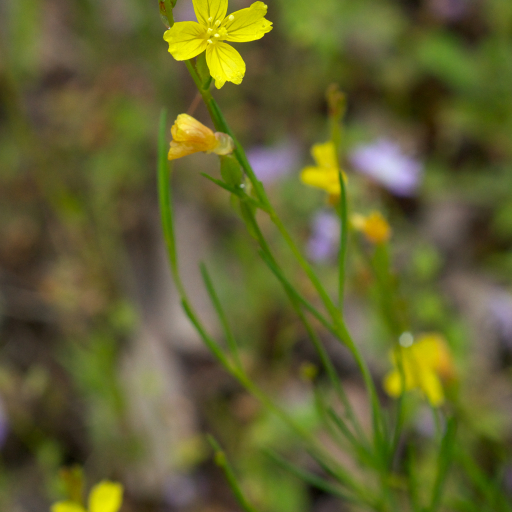
Often called the Thread-leaf Evening Primrose or Sundrops, this delicate wildflower looks like a dusting of gold stars dropped into a patch of fine grass. Unlike many of its larger, boisterous primrose cousins, Oenothera linifolia is a subtle beauty, known for its incredibly fine, hair-like foliage that almost disappears until the bright yellow blooms pop. It is a favorite for those looking to add a "wild" and airy aesthetic to a native garden.
🔍 How to Identify
- 🌿 The Foliage: True to its name, the leaves are exceptionally narrow and thread-like, resembling blades of flax. They are often so thin they are overlooked until the plant flowers.
- ☀️ The Blooms: Small, four-petaled flowers in a brilliant lemon-yellow. Each petal often has a tiny notch at the tip, giving it a soft, heart-shaped appearance.
- 📏 The Silhouette: It stays relatively low to the ground, usually under 12 inches. The stems are wiry and slender, sometimes taking on a reddish tint in full sun.
🏡 In Your Garden
- 🏜️ The Leaner, The Better: This plant thrives in "poor" soil. If your garden soil is too rich or heavily fertilized, it may become leggy. It is the perfect candidate for sandy or gravelly spots where other plants struggle.
- 🦋 A Pollinator Party: Because it often begins opening its blooms in the late afternoon and stays open through the morning, it serves as a crucial bridge for both daytime bees and nighttime pollinators like hawk moths.
- 🌱 Self-Seeding Nature: It is a short-lived perennial or annual, but it is excellent at "planting itself" for the next year. Let the seed heads dry on the stalk if you want a repeat performance next spring.
⚠️ Safety & Toxicity
- ✅ Non-Toxic Status: Oenothera linifolia is generally considered non-toxic to humans and is not listed on major toxicity databases for cats or dogs.
- 🐾 Garden Grazing: While safe, it is always best to prevent pets from consuming large amounts of any garden plant, as the high fiber content can lead to minor digestive upset.
✨ Fun Fact
- 📜 Linen Lookalike: The species name linifolia literally translates to "flax-leaved." Before it blooms, the plant is so thin and wiry that it is frequently mistaken for Linum (Flax), the plant used to produce linen fabric!

Detailed Care Instructions
To grow Oenothera Linifolia, also known as evening primrose, follow these steps:
- Choose a sunny location: Evening primroses prefer full sun to partial shade. Make sure the spot receives at least 6 hours of sunlight a day.
- Prepare the soil: Evening primroses thrive in well-draining soil with a pH level of 6.0 to 7.0. Amend the soil with organic matter such as compost to improve drainage and fertility.
- Plant the seeds or seedlings: You can sow the seeds directly into the garden in the early spring or start them indoors in peat pots and transplant them after the last frost. Space the plants about 12 inches apart.
- Water regularly: Evening primroses prefer consistently moist soil. Water the plants regularly, especially during hot and dry periods. Avoid overwatering as it can lead to root rot.
- Mulch: Mulch around the plants to help retain moisture in the soil and suppress weeds. Organic mulch such as bark chips or straw works well for this purpose.
- Fertilize: Use a balanced fertilizer in the spring to promote healthy growth and flowering. Follow the instructions on the product label for application rates.
- Prune: Deadhead faded flowers to encourage continuous blooming and prevent self-seeding.
- Protect from pests and diseases: Keep an eye out for common pests such as aphids and caterpillars, and treat them promptly. Evening primroses are generally resistant to diseases, but fungal infections can occur in humid conditions.
By following these steps, you can successfully grow Oenothera Linifolia plants in your garden and enjoy their bright yellow flowers all summer long.

Place in a bright room that is sun drenched almost all day. Or directly in a south-facing window.
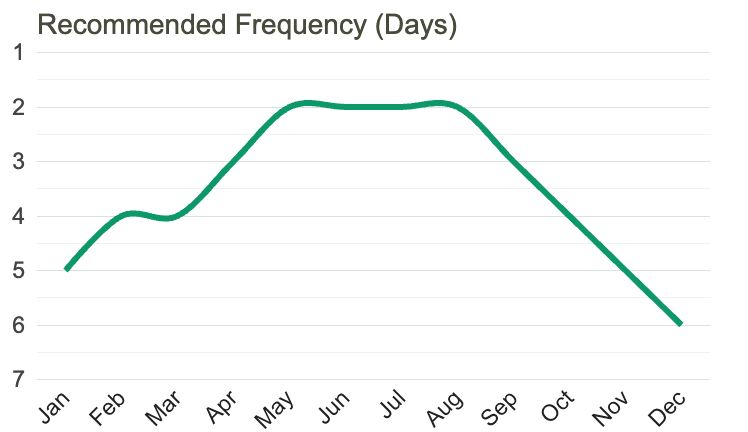
To water Oenothera Linifolia plant, thoroughly soak the soil around the base of the plant without letting water pool or accumulate on the surface. Water deeply and allow the soil to dry out slightly between waterings to prevent root rot. Avoid watering the foliage directly to prevent disease. Monitor the plant regularly during periods of extreme heat or drought, as it may require more frequent watering. Additionally, consider using a drip irrigation system or soaker hose to ensure even and consistent moisture levels for optimal growth.
Fertilize Oenothera Linifolia plant in early spring with a balanced, slow-release fertilizer or a fertilizer specifically formulated for flowering plants. Apply the fertilizer according to the manufacturer's instructions, taking care not to over-fertilize as this can harm the plant. Water the plant thoroughly after applying the fertilizer to help it absorb the nutrients. Repeat the fertilization process every 4-6 weeks during the growing season to support healthy growth and blooming.
Oenothera linifolia plants thrive in well-draining soil that is loamy and slightly acidic. It is recommended to use a mixture of sandy soil, peat moss, and perlite to provide the necessary drainage and aeration for the plant's roots. Avoid heavy clay soils, as they can retain too much water and cause root rot. Additionally, adding organic matter, such as compost, can help improve soil fertility and support healthy growth of the Oenothera linifolia plant. Overall, choosing a soil mix that is nutrient-rich, well-draining, and slightly acidic will help promote the health and vigour of this plant species.
Propagation of Oenothera linifolia plants can be done through several methods, including seed propagation, division, and stem cuttings.
One common method is seed propagation, which involves collecting mature seeds from the plant and sowing them in well-draining soil. The seeds should be placed at a depth of about 1/4 inch and kept consistently moist until germination occurs.
Another method is division, which involves separating the plant into smaller sections and replanting them in new locations. This can be done by carefully digging up the plant and dividing the root ball into smaller sections, each with their own stems and root systems.
Stem cuttings can also be taken to propagate Oenothera linifolia plants. This involves cutting a section of stem from the plant and placing it in a rooting hormone before planting it in a pot with well-draining soil. The cutting should be kept consistently moist until roots develop and the plant can be transplanted into a larger pot or garden bed.
Overall, propagating Oenothera linifolia plants can be a rewarding process that allows gardeners to expand their collection of these beautiful plants.








