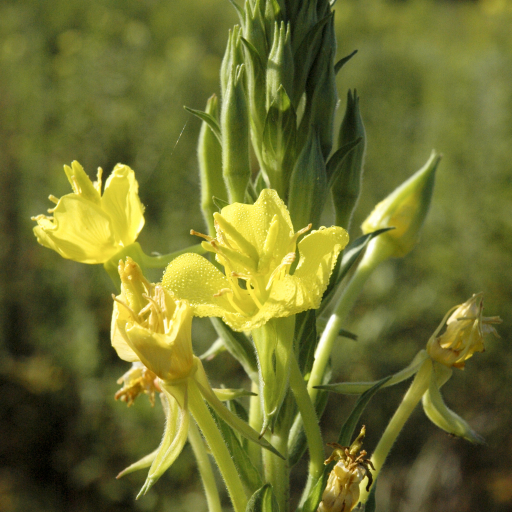
Plant Overview
Often referred to as the Northern Evening-primrose, this hardy wildflower is a "night owl" of the plant world. While most garden favorites open their petals to greet the morning sun, Oenothera parviflora waits for the golden hour, unfolding its pale yellow blooms as the day fades to entice nocturnal pollinators. It is a resilient traveler, frequently found colonizing sandy shores and disturbed roadsides across Eastern North America.
🔍 How to Identify
- 🌼 The Blooms: Features four-petaled, pale yellow flowers that are notably smaller than its famous cousin, the Common Evening-primrose. The petals often have a slightly notched or heart-shaped tip.
- 🍃 The Foliage: Leaves are narrow, lance-shaped, and arranged alternately along the stem. They often have a dusty green hue and slightly wavy or "toothed" edges.
- 🌱 The Stem: Look for a sturdy, upright stem that is often tinged with reddish-purple or covered in fine, stiff hairs. It can grow quite tall, sometimes reaching up to 3 feet in ideal conditions.
🏡 In Your Garden
- 🏖️ Soil Preferences: This plant is a specialist in "poor" conditions. It thrives in sandy, gravelly, or well-drained soils where other plants might struggle. If your garden soil is too rich or moist, it may become "floppy" or short-lived.
- 🦋 Nighttime Visitors: Because it blooms in the evening, it serves as a vital pit stop for Sphinx moths and other nocturnal insects. Planting it creates a "moonlight garden" effect, attracting unique wildlife you won't see during the day.
⚠️ Safety & Toxicity
- ✅ Status: Generally considered non-toxic and safe.
- 🐾 Details: There are no known major toxicity reports for cats, dogs, or horses. However, as with any wild plant, it is best to discourage pets from grazing on it to avoid minor digestive upset, and it should not be confused with other yellow-flowering wild plants that may be irritants.
✨ Fun Fact
The flowers of the Evening-primrose family are famous for their "fast-motion" blooming. If you sit quietly by the plant at dusk, you can actually watch the buds unfurl into full flowers in a matter of minutes—a rare treat of visible movement in the plant kingdom!

Detailed Care Instructions
To grow Oenothera Parviflora plant (commonly known as small-flowered evening primrose), follow these steps:
- Choose the right location: Oenothera Parviflora prefers full sun to partial shade. Select a well-draining area in your garden that receives at least 6 hours of direct sunlight per day.
- Prepare the soil: Evening primroses prefer sandy or loamy soils with a pH range of 6.0 to 7.5. If your soil is heavy clay or compacted, consider improving it with organic matter like compost or well-rotted manure to enhance drainage.
- Sow the seeds: Oenothera Parviflora can be grown from seeds. Sow the seeds directly into the prepared soil in early spring or fall. Lightly press the seeds into the soil and cover them with a thin layer of soil or mulch.
- Watering: Water the soil after sowing the seeds and keep it consistently moist until germination occurs. Once the plants are established, the evening primroses are somewhat drought tolerant and require watering only during extended dry periods.
- Thin the seedlings: Once the seedlings emerge, thin them to maintain a spacing of around 12-18 inches between the plants. This will allow enough room for their growth.
- Maintenance: Oenothera Parviflora is a low-maintenance plant. You may need to weed around the plants initially until they establish themselves. Mulching can help suppress weed growth and retain moisture.
- Deadheading: Deadhead the spent flowers to encourage continuous blooming and prevent self-seeding. Removing the faded blooms will divert energy into creating new flowers.
- Fertilizer: Evening primroses do not usually require heavy fertilization. Applying a balanced slow-release fertilizer once during early spring can be beneficial, but be cautious not to over-fertilize, as this can result in excessive foliage growth with fewer flowers.
- Division: Oenothera Parviflora can be divided every few years to maintain plant health and vigor. Dig up the clumps, separate them into smaller sections, and replant them in well-prepared soil.
By following these guidelines, you can successfully grow Oenothera Parviflora plant in your garden. Remember to check for any specific regional or climate requirements for your area.

Place in a bright room that is sun drenched almost all day. Or directly in a south-facing window.

Oenothera Parviflora plant should be watered deeply but infrequently, allowing the soil to partially dry out between waterings. The amount of water the plant needs varies depending on the weather conditions and season. It is important not to over-water the plant as it can lead to root rot. When watering, ensure that water reaches the entire root ball. Watering the soil around the plant is preferable over watering from the top as it can cause damage to the foliage. Adequate drainage is essential for the plant's health, as it helps to prevent waterlogging. If the soil is heavy or poorly draining, it may be advisable to amend it with organic matter or perlite to improve drainage. Additionally, it is recommended to avoid watering during the hottest parts of the day as it can lead to water loss due to evaporation.
To fertilize this plant, use a balanced fertilizer with equal parts nitrogen, phosphorus, and potassium. Apply the fertilizer once a month during the growing season, avoiding application during periods of drought or extreme heat. Apply the fertilizer evenly around the base of the plant, and be sure to water it thoroughly after application to help the nutrients penetrate the soil. Monitor the plant's growth and adjust the fertilization as needed.
To grow the plant commonly known as Oenothera Parviflora, it is best to use well-draining soil that is rich in organic matter. The soil should have a slightly acidic to neutral pH level, ranging from 6.0 to 7.0. It is important to make sure that the soil is not compacted or heavy, as this can lead to root rot and poor growth. A sandy loam soil or a mix of sand, peat moss, and compost is ideal. This will provide good drainage and allow for air circulation around the roots. It is important to keep the soil consistently moist but not waterlogged. Mulching around the base of the plant will help to retain moisture and suppress weeds.
To propagate this plant, you can collect seeds from the head of the flower after it has finished blooming. Allow the seeds to dry out for a few days before planting them in soil. You can also take stem cuttings from the plant in the spring or early summer. Cut a portion of the stem that is 3-4 inches long and strip off the lower leaves. Plant the cutting in soil and keep the soil moist until roots develop. Another method is to divide the plant in the fall or early spring by digging up the plant and separating the root ball into smaller segments with a sharp knife. Replant the segments in soil, making sure each section has sufficient roots and leaves.








