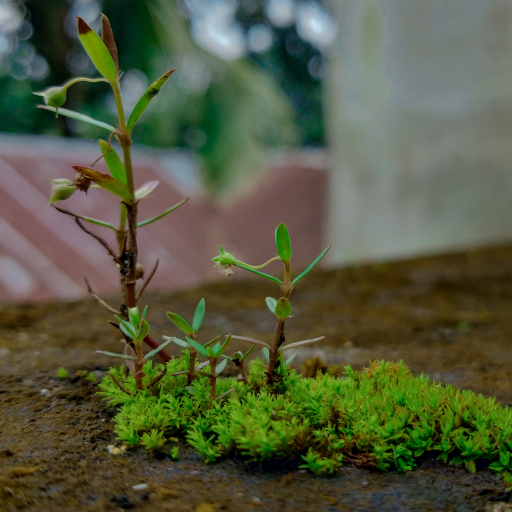
Plant Overview
Often called the Diamond Flower or Flat-top Mille Graines, Oldenlandia corymbosa is a delicate, low-growing herb that tells a story of resilience. Native to tropical regions of Africa and Asia, it has traveled the globe, often appearing as a silent guest in lawns and garden beds. While many dismiss it as a simple weed, it is revered in traditional Ayurvedic medicine for its cooling properties.
🔍 How to Identify
- 🌿 Slender Leaves: The leaves are narrow, linear, and grow in opposite pairs along the stem, giving the plant a fine, airy texture.
- 🌸 Tiny "Diamond" Blooms: It produces miniature, four-petaled flowers that are usually white or a very pale mauve, typically appearing in pairs or small clusters (corymbs) on thin stalks.
- 🌱 Prostrate Habit: The plant stays low to the ground, often forming a green mat, though it can grow upwards to about 15-30 cm if it has support from neighboring plants.
🏡 In Your Garden
- 🧱 The Crack Traveler: You will often find this plant thriving in the "impossible" spots—cracks in pavement, gravel paths, or at the edges of garden beds—because it loves the high drainage and heat found in these micro-climates.
- 💧 Moisture Indicator: While it is quite hardy, it flourishes best in moist, disturbed soil. If you see it spreading rapidly, it’s often a sign that your garden soil is staying consistently damp or has been recently tilled.
- 🦋 Micro-Habitat Role: In a wilder garden setting, it acts as a tiny ground cover that protects the soil surface from erosion and provides a foraging ground for very small beneficial insects.
⚠️ Safety & Toxicity
- ✅ Generally Safe: There are no widespread reports of Oldenlandia corymbosa being toxic to touch or causing severe reactions in humans or pets.
- 💊 Medicinal Caution: Although it is used in traditional herbal teas (especially in India and China), you should never ingest it without professional guidance, as wild-harvested plants can absorb heavy metals or pesticides from the soil.
✨ Fun Fact
In Sanskrit, this plant is known as Parpata. It is a key ingredient in "Shadangapaniya," a traditional herbal water used for centuries in India to help regulate body temperature and treat fevers!

Detailed Care Instructions
To grow Oldenlandia Corymbosa (also known as star of Bethlehem or Indian chervil), you can follow these steps:
- Climate and Soil Requirements: Oldenlandia Corymbosa thrives in tropical and subtropical climates. It prefers well-draining soil with a pH range of 6 to 7.
- Seed Collection and Storage: Collect mature seeds from healthy plants. Allow the seeds to dry completely before storage. Store them in a cool, dry place until you are ready to sow them.
- Seed Sowing: Sow the seeds in seed trays or small pots filled with seed-starting medium. Place the seeds on the surface and lightly press them into the soil. Do not cover them with soil, as they require light for germination.
- Germination: Keep the seeds consistently moist, but not waterlogged. Maintain a temperature of around 70 to 75°F (21 to 24°C) for successful germination. Germination usually occurs within 2 to 4 weeks.
- Transplanting: Once the seedlings have developed a few true leaves and are sturdy enough, transplant them into larger pots or directly into the ground. If transplanting outdoors, choose a sunny or partially shaded location.
- Watering: Water the plants regularly to keep the soil moist, but avoid overwatering, which can lead to root rot. Check the soil moisture with your finger before watering.
- Fertilization: Apply a balanced, water-soluble fertilizer every 4 to 6 weeks during the growing season to provide the necessary nutrients for healthy growth.
- Pruning: Prune Oldenlandia Corymbosa plants regularly to promote bushier growth and remove any dead or diseased plant parts. This will also help maintain a more compact shape.
- Pests and Diseases: Monitor the plants for any signs of pests such as aphids, mealybugs, or spider mites. Treat any infestations promptly to prevent damage. Also, watch out for common diseases like root rot, powdery mildew, or leaf spots. Ensure good air circulation and avoid overwatering to prevent these issues.
- Harvesting: Oldenlandia Corymbosa produces small white flowers with a pleasing fragrance. You can harvest the flowers as they bloom and use them for decorative purposes or in dried flower arrangements.
Remember to research the specific growing requirements of Oldenlandia Corymbosa in your region for optimal results.

Place in a bright room that is sun drenched almost all day. Or directly in a south-facing window.

The watering requirements of this plant depend on various factors such as the environmental conditions, size of the pot, type of soil, and the season. However, some general guidelines for watering this plant can be followed.
Firstly, the soil should be allowed to slightly dry out between watering. Overwatering can cause root rot, while underwatering can cause the leaves to wilt and affect the growth of the plant.
The plant should be watered deeply, allowing the water to penetrate to the bottom of the pot. However, the excess water should be drained out from the pot, and the soil should not be left soggy. This can be achieved by making drainage holes in the pot and using well-draining soil.
The frequency of watering can vary from once a week during the growing season to once every two weeks during the dormant season. The plant should be watered during the early morning or late afternoon to avoid the harsh sunlight and prevent evaporation of moisture.
In summary, the watering of this plant should be done with care, and the soil should be allowed to dry out between watering to prevent overwatering or underwatering. Adequate drainage and well-draining soil should be provided to avoid waterlogging of the roots.
To fertilize this plant, begin by choosing a balanced fertilizer with equal parts of nitrogen, phosphorus, and potassium. Dissolve the fertilizer in water according to package instructions. Apply the fertilizer to the plant's soil once every two weeks during the growing season. Avoid over-fertilizing, as this can lead to root burn or other damage to the plant. Additionally, make sure the plant is adequately watered and receives sufficient sunlight to promote healthy growth.
Oldenlandia Corymbosa plant thrives best in well-draining soil with moderate to high levels of fertility. The soil should be acidic to slightly alkaline, with a pH range of 5.5 to 7.5. It is recommended to use lightweight, porous soil mixes that provide good aeration and moisture retention. Adding organic matter or compost to the soil can help improve its fertility and structure. The soil should also be kept moist but not waterlogged, as excessive water can lead to root rot and other plant issues. Additionally, the plant prefers bright, indirect sunlight and temperatures between 60 to 75 degrees Fahrenheit.
To propagate this plant, you will need to take a stem cutting from a healthy plant. Choose a non-flowering stem that has at least 2-3 nodes. Cut the stem at an angle just below a node using a clean, sharp pair of scissors or pruning shears.
Remove the leaves from the lower part of the stem, leaving only the top 2-3 leaves intact. Dip the cut end of the stem into rooting hormone powder to promote root growth.
Prepare a pot with well-draining soil, and create a hole in the center for the cutting. Insert the stem cutting into the soil, burying it up to the first set of leaves.
Water the soil thoroughly, and place the pot in a warm, bright location with indirect sunlight. Keep the soil consistently moist, but not waterlogged.
After a few weeks, check for root growth by gently tugging on the stem. Once you feel resistance, it means roots have formed and the plant is ready to be potted into its own container or transplanted into the garden.








