Plant Overview
Known affectionately as the Bois d’Olive Blanc or Ironwood, Olea lancea is a slender, sophisticated evergreen native to the Mascarene Islands and Madagascar. While it is a true member of the olive family, it trades the gnarled, rustic look of the Mediterranean olive for a more refined, lance-like elegance. In its island home, it is celebrated for its incredibly dense wood and its ability to withstand the salty breath of the Indian Ocean.
🔍 How to Identify
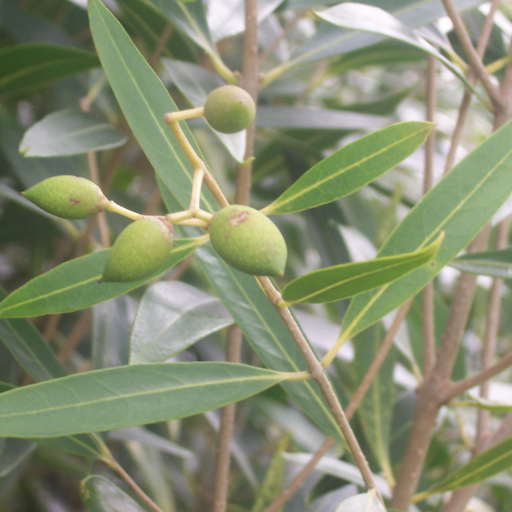
- 🍃 Lance-Shaped Leaves: The foliage is the star—narrow, elongated, and pointed at the tip like a miniature spear. They are glossy, deep green on top, and slightly paler underneath.
- ⚪ Dainty Blooms: It produces clusters of tiny, star-shaped white flowers that emerge from the leaf axils. While small, they emit a delicate, sweet fragrance that can drift through a garden on warm evenings.
- 🫐 Miniature Olives: Following the flowers, small oval fruits appear. They transition from green to a dark purple-black, looking exactly like tiny, wild olives.
- 🪵 Smooth Silver Bark: In its youth, the bark is remarkably smooth and grey, eventually developing a rugged, fissured texture as the tree matures and hardens.
🏡 In Your Garden
- 🌊 Coastal Resilience: Because it evolved on islands, this plant is exceptionally tough against salt spray and wind. It’s an ideal choice for coastal gardeners looking for a screen that won't wither in the sea breeze.
- 🪴 Bonsai Potential: Due to its slow growth rate, small leaves, and naturally elegant branching, Olea lancea is a favorite for bonsai enthusiasts. It responds well to pruning but requires patience, as it focuses its energy on building dense, "iron-like" wood rather than rapid height.
- ☀️ Sun & Drainage: It thrives in full sun and requires very well-draining soil. It hates "wet feet," so mimicking its rocky, volcanic island origins with a gritty soil mix is key to its happiness.
⚠️ Safety & Toxicity
- 🟢 Generally Safe: Olea lancea is not considered toxic to humans or common household pets.
- 🫐 Non-Edible Fruit: While the fruits look like the olives we eat, they are extremely bitter and lack the fleshy oil content of the commercial Olea europaea. They are best left for the birds, and the pits could pose a minor choking hazard for very small children or curious dogs.
✨ Fun Fact
The name "Ironwood" isn't an exaggeration—the wood of Olea lancea is so dense and heavy that it will actually sink in water rather than float! Historically, this made it a prized material for creating durable tool handles and maritime equipment.

Detailed Care Instructions
| Humidity | Normal |
| Difficulty | Medium |
To grow an Olea lancea plant, also known as wild olive or umnquma, follow these steps:
- Climate: Olea lancea is native to southern Africa, specifically the Cape Province. It prefers a Mediterranean climate with hot, dry summers and cool, wet winters. Ensure that your climate is suitable for this plant.
- Soil: The plant prefers well-draining soil with a pH of 6.5 to 7.5. Sandy or loamy soil is ideal. If your soil is heavy clay, mix in organic matter or sand to improve drainage.
- Watering: While Olea lancea is drought-tolerant, it still needs regular watering during its active growing season. Water deeply once or twice a week and let the soil dry out between waterings, but make sure not to overwater.
- Sunlight: These plants thrive in full sun, so place them in a spot where they can receive at least 6-8 hours of direct sunlight each day.
- Planting: Choose a location where the plant will have enough space to grow. Dig a hole twice as wide and deep as the root ball of the plant. Gently lower the plant into the hole, making sure it is level with the surrounding soil. Backfill with soil, firm it gently, and water thoroughly.
- Pruning: Regular pruning can help shape the plant and stimulate growth. Prune in late winter or early spring by removing dead or diseased branches and shaping the plant as desired. Avoid heavy pruning as it can weaken the plant.
- Fertilizing: Olea lancea generally does not require heavy fertilization. Apply a balanced fertilizer, such as a 10-10-10 or 14-14-14 slow-release granular fertilizer, in early spring and late summer. Follow the packaging instructions for proper application rate.
- Mulching: Apply a layer of organic mulch around the base of the plant to conserve moisture, suppress weed growth, and protect the roots from extreme temperatures.
- Pests and diseases: Olea lancea is generally pest and disease-resistant. However, keep an eye out for aphids, scale insects, or fungal diseases. Treat any issues promptly if they arise.
- Propagation: You can propagate Olea lancea from seeds or semi-hardwood cuttings. Collect seeds from mature fruit, remove the pulp, and sow them in well-draining soil. For cuttings, take 6-8 inch long semi-hardwood cuttings in early summer. Dip the cut end in rooting hormone and plant them in a container with well-draining soil. Keep the soil moist and provide bottom heat to encourage root development.
Note: It is essential to check local regulations before growing Olea lancea, as it may be considered an invasive species in some areas.
To water this plant, ensure that the soil is evenly moist, but not waterlogged. Water thoroughly, allowing excess moisture to drain away from the roots. Watering frequency will depend on the environmental conditions, but it is important to avoid letting the soil completely dry out between watering sessions. During the growing season, you may need to water more frequently than during the dormant period. Be sure to monitor the plant closely for any signs of overwatering or underwatering, such as yellowing or drooping leaves.
To fertilize this plant, use a balanced fertilizer that contains equal parts nitrogen, phosphorus, and potassium. Apply the fertilizer every two to three months during the growing season, which is typically in the spring and summer months. Make sure to dilute the fertilizer with water according to the instructions on the package, as over-fertilizing can damage the plant. When applying the fertilizer, spread it evenly around the base of the plant and water thoroughly afterward to help the nutrients penetrate the soil.
Olea Lancea thrives well in well-draining soil that is rich in organic matter. It is recommended to use a soil mixture that is balanced in terms of pH levels, and that has good water retention capacity without becoming waterlogged. The soil should be well-aerated, ensuring that roots have the appropriate airflow they require. Avoid using heavy soils such as clay, as they tend to hold onto moisture for too long, increasing the likelihood of root rot. Soil that is rich in sand content or perlite can be added to improve the drainage of the soil, preventing the plant from being overwatered. It is also important to ensure that the soil used is free from pests and diseases that may harm the plant.
To propagate this plant, you will need to take some stem cuttings. Select a healthy stem with a length of around 10cm. Remove the lower leaves to expose 2-3 cm of the stem. Dip the cut end into rooting hormone powder. Plant the cutting in moist, well-draining soil and water well. Keep the soil evenly moist and place the cutting in a warm, brightly lit area, avoiding direct sunlight. After around 4-6 weeks, a root system should start to develop. Once the plant has a healthy root system, it can be transplanted into a larger container or directly into the ground.








