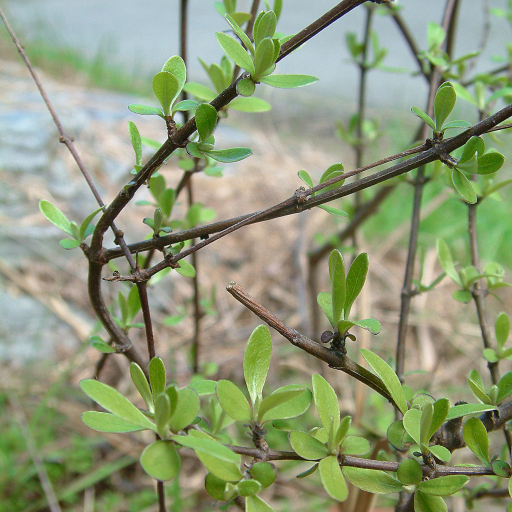
Plant Overview
Known as the Fragrant Tree Daisy or Scented Daisy Bush, this New Zealand native is a master of disguise. At first glance, it appears as a rugged, tangled thicket of wiry silver-grey stems, perfectly adapted to withstand harsh winds and dry conditions. However, its true charm is revealed in mid-summer when it erupts with a scent so sweet and heavy it can be smelled from several meters away.
🔍 How to Identify
- 🌿 The "Divaricating" Habit: It grows in a unique, interlaced pattern where branches zig-zag and tangle together to form a dense, architectural mound.
- 🍃 Small Leaves: The leaves are tiny, narrow, and spoon-shaped, typically a dusty olive-green on top with a fuzzy, silver underside.
- 🌼 Hidden Blooms: The flowers are small, creamy-white, and lack the large petals of a typical daisy; they hide among the branches in clusters.
🏡 In Your Garden
- 🪨 Tough as Nails: This plant thrives on "tough love." It prefers well-drained, rocky, or even poor soil and is incredibly drought-tolerant once established.
- 🌬️ Natural Shield: Because of its dense, interlaced branching, it makes an excellent windbreak or "filigree" hedge that adds a silvery, smoky texture to your landscape.
- ✂️ Pruning Nuance: While it naturally maintains a wild, scrubby look, it responds well to light clipping if you want to maintain a more formal, rounded shape.
⚠️ Safety & Toxicity
- ✅ General Safety: Olearia odorata is generally considered non-toxic to humans and common household pets.
- 🧤 Mechanical Protection: While not chemically toxic, the stiff, twiggy branches can be quite "pokey." It is wise to wear gloves when pruning to avoid scratches from the dense interior wood.
✨ Fun Fact
The strange, tangled growth habit of this plant is an evolutionary echo of the past. Scientists believe many New Zealand plants evolved these wiry, "divaricating" branches specifically to make it difficult for the now-extinct, giant Moa birds to browse their inner leaves!

Detailed Care Instructions

Place in a bright room that is sun drenched almost all day. Or directly in a south-facing window.

Some plants require more regular watering than others, which should be done every few days. It's critical to maintain the soil moist all of the time. The water requirements of the same plant placed in pots with varying sizes will differ. Because the water in the smaller pot evaporates faster than the water in the larger pot, it will require more watering. Regardless of pot size, the surface should constantly be maintained moist.








