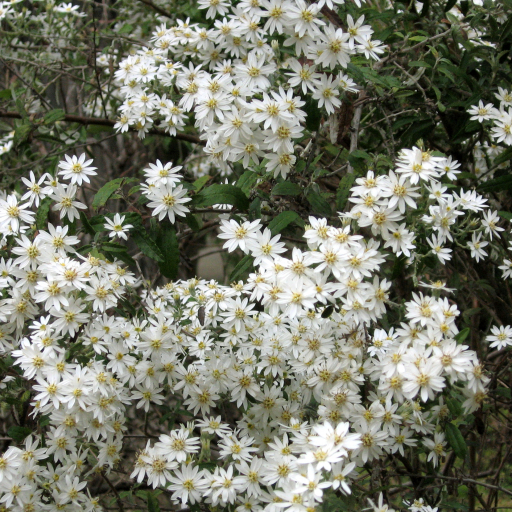
Plant Overview
Often called the Dusty Daisy-bush, this Australian native looks as if it has been lightly dusted with a fine layer of silver powder. During the spring, it undergoes a dramatic transformation, becoming so smothered in blossoms that the foliage completely disappears beneath a cloud of white, pink, or purple. It is a rugged survivor that brings a romantic, "wildflower meadow" aesthetic to any landscape.
🔍 How to Identify
- 🌿 Silvery Foliage: The small, narrow leaves are a muted grey-green on top, but the undersides are covered in tiny white hairs, giving the entire shrub a soft, "dusty" appearance.
- 🌼 Daisy-like Blooms: It produces clusters of small flowers featuring bright yellow centers surrounded by delicate ray petals (usually white, but garden cultivars offer striking mauves and pinks).
- 🪵 Growth Habit: This is an upright, woody shrub that typically grows between 1 and 2 meters tall, often developing a naturally rounded and bushy shape.
🏡 In Your Garden
- ✂️ The "Haircut" Rule: This plant has a tendency to become "leggy" or woody at the base over time. To keep it looking lush and youthful, give it a firm prune immediately after the flowers finish blooming.
- 💧 Drainage is Key: While it is quite hardy and can tolerate frost, it absolutely hates "wet feet." It thrives in well-draining soil and is an excellent candidate for coastal gardens or rocky slopes.
- 🦋 Wildlife Support: In the spring, it acts as a high-traffic hub for pollinators. You’ll find it frequently visited by butterflies and hoverflies looking for an early-season nectar snack.
⚠️ Safety & Toxicity
- ✅ Safe for Pets & Kids: Olearia phlogopappa is generally considered non-toxic and is safe to plant in areas frequented by curious dogs, cats, or children.
- 🧤 Allergy Note: Because it is a member of the Asteraceae (Daisy) family, individuals with specific pollen allergies or sensitive skin might experience mild irritation when pruning. Wearing gardening gloves is recommended.
✨ Fun Fact
The tongue-twister species name phlogopappa is derived from the Greek words phlogous (flame) and pappos (old man/fluff). This refers to the fluffy, hair-like bristles on the seeds that help them catch the wind and "fly" to new locations, much like a dandelion!

Detailed Care Instructions

Place in a bright room that is sun drenched almost all day. Or directly in a south-facing window.

The presence of a dry surface layer of soil does not indicate that the plant requires water. Instead, stick your finger 1-2" (3-5 cm) deep in the soil to feel dampness or moisture content. If the soil seems dry, it's time to water your greens. If the soil is still moist, however, it is better not to water your plant and instead wait a day or two. Overwatering or waterlogging raises the risk of root rot. So if the soil takes longer than a week to dry, check the light conditions because it's likely that the plant isn't getting enough light. It's fine if the upper layer of soil is dry between waterings, but the deeper soil layer should always have some moisture.








