Plant Overview
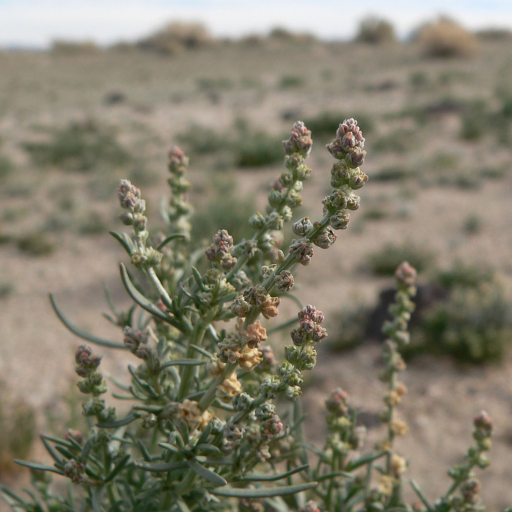
Often called the Lineleaf Whitepuff, this modest annual is a true botanical nomad. It is a desert specialist with a fascinating "disjunct" distribution, meaning it is found natively in the American Southwest and also thousands of miles away in the Mediterranean and Middle East. While it doesn't boast large, flashy flowers, its delicate, airy structure makes it a favorite for those who appreciate the subtle beauty of xeric (dry) landscapes.
🔍 How to Identify
- 🍃 Slender Foliage: The leaves are exceptionally narrow and "linear" (hence the name linifolia), looking almost like soft green needles that cluster along the stems.
- ☁️ Puffy Spikes: The flowers are tiny, greenish-white, and lack traditional petals. They grow in dense, upright spikes that give the plant a fuzzy, "puffy" appearance from a distance.
- 📏 Upright Habit: It typically grows in a tidy, erect fashion, reaching about 8 to 14 inches in height, often branching from the base to create a small, brushy mound.
🏡 In Your Garden
- 🏜️ The Ultimate Survivor: This plant is a "halophyte," meaning it is remarkably tolerant of salty soils. It is the perfect candidate for coastal gardens or desert areas where the soil quality is poor and alkaline.
- 💧 Drainage is Key: Because it has evolved to survive in sandy washes and rocky slopes, it hates "wet feet." If you are keeping it in a pot or garden bed, ensure the soil is gritty; a standard potting mix will likely be too rich and damp for its liking.
⚠️ Safety & Toxicity
- ✅ Low Risk: Oligomeris linifolia is not known to be toxic to humans or common household pets. It lacks the thorns or irritating saps found in many other desert dwellers.
- 🐾 Grazer Caution: While not poisonous, it is not a culinary herb. If a pet or child eats a significant amount, they might experience mild stomach upset simply because the plant is fibrous and difficult to digest.
✨ Fun Fact
Oligomeris linifolia is the only member of the Mignonette (Resedaceae) family native to the Western Hemisphere! All of its cousins live in the Old World, leaving scientists to wonder if its seeds once hitched a ride across the ocean on the feathers of a prehistoric migrating bird.

Detailed Care Instructions
To grow Oligomeris linifolia (also known as flax-leaf sandwort), follow these steps:
- Start by selecting a suitable growing location. Oligomeris linifolia prefers full sun but can tolerate partial shade. It grows well in well-drained soil, preferably sandy or loamy soil.
- Prepare the soil by loosening it with a garden fork or tiller. Remove any weeds or grass. Ensure good drainage by amending the soil with organic matter like compost or peat moss.
- Water the soil thoroughly before planting. This will help the plant establish its roots more easily.
- Gently place the Oligomeris linifolia seedlings or seeds on the soil surface. If you are using seeds, scatter them evenly over the soil.
- Cover the seeds or seedlings with a thin layer of soil or compost. Press lightly to ensure good contact with the soil.
- Water the newly planted seeds or seedlings immediately after planting. Keep the soil consistently moist but not waterlogged. Water whenever the top inch of soil feels dry to the touch.
- If growing from seed, germination typically takes 1-2 weeks. Once the seedlings appear, thin them out if they are overcrowded, leaving the healthiest and strongest plants.
- Fertilize the plants with a balanced, slow-release fertilizer according to the package instructions. Apply the fertilizer every 4-6 weeks during the growing season.
- Weed the area regularly to prevent competition for nutrients and moisture. Hand-pull any weeds that appear around the Oligomeris linifolia plant.
- Prune the plant lightly to maintain its shape and remove any dead or damaged foliage.
- Protect the plant from extreme temperatures, such as frost in colder climates or excessive heat in warmer climates. Consider covering the plant with a cloth or plastic sheet during extreme weather.
- Monitor for pests and diseases and take appropriate measures to control them. Common pests for Oligomeris linifolia include aphids and mealybugs, which can be treated with insecticidal soap or neem oil.
By following these steps, you can successfully grow Oligomeris linifolia in your garden. Remember to provide regular care, including watering, fertilizing, and pruning, to promote healthy growth and beautiful blooms.

Place in a bright room that is sun drenched almost all day. Or directly in a south-facing window.

Oligomeris Linifolia plants prefer a moderate amount of watering, neither too dry nor too wet. The best approach is to water the plant thoroughly from the base until the topsoil is moist but not waterlogged, then allow it to dry out slightly before the next watering. It's also recommended to avoid getting the foliage wet, as this may lead to fungal diseases. When watering, it's important to use room temperature water and avoid extreme temperature fluctuations, as this can stress the plant. Additionally, the watering frequency may vary based on the season, with more frequent watering needed during the growing season and less during the winter months when the plant is dormant.
To fertilize this plant, use a balanced fertilizer with equal parts nitrogen, phosphorus, and potassium. Apply the fertilizer every four weeks during the growing season (spring and summer) and reduce applications to every eight weeks during the dormant season (fall and winter). Dilute the fertilizer according to the instructions on the package and apply to moist soil. Avoid over-fertilization as this can lead to leaf yellowing and burned roots.
It is recommended to use a well-draining soil that is rich in organic matter for this plant. The soil should have a pH range of 6.0-7.5 and should not be allowed to dry out completely between waterings. Adding perlite or sand to the soil mixture may improve drainage and prevent waterlogging. Fertilizing every 2-3 months with a balanced, slow-release fertilizer can also promote healthy growth. It is important to avoid overwatering and to protect the plant from extreme temperatures, as it may be sensitive to both heat and cold.
Propagation of Oligomeris Linifolia plant can be done through stem cuttings. Select a healthy stem with a few leaves and cut it from the parent plant. Remove the lower leaves from the stem and dip the cut end in rooting hormone. Place the stem cutting in a pot containing moist potting soil and cover it with a plastic bag to create a humid environment. Keep the pot in a warm, bright location but away from direct sunlight. Water the cutting regularly to keep the soil moist. After a few weeks, new roots will start to grow, and once they have developed, the plastic bag can be removed. The plant can be transplanted into a bigger pot or planted in the ground.








