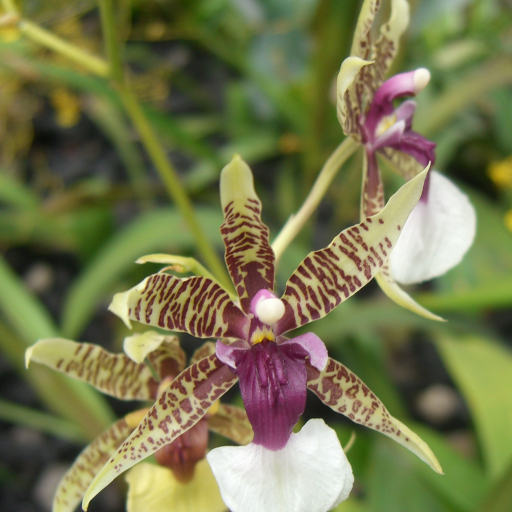
Plant Overview
Often called the Spear-lipped Oncidium, this orchid is a true aristocrat of the Andean cloud forests. Native to the high altitudes of Colombia and Venezuela, it is celebrated for its towering flower spikes that can reach over five feet in length, draped in dozens of star-shaped, fragrant blossoms. In the Victorian era, it was a "must-have" for orchid hunters who braved treacherous mountain paths to bring its spear-shaped beauty back to European conservatories.
🔍 How to Identify
- 🏹 The Spear Lip: Its most striking feature is the white or pale pink labellum (lip), which is shaped distinctly like a spearhead or a medieval halberd, pointed and elegant.
- 🎨 Tiger-Striped Petals: The sepals and petals are narrow and pointed, usually featuring a pale green or yellow base color heavily marked with chocolate-brown or maroon bars.
- 📏 Stately Stature: It produces large, flattened pseudobulbs and long, strap-like leaves. When in bloom, the flower spike is exceptionally long and often branches out into a cloud of blossoms.
🏡 In Your Garden
- 🌬️ Mountain Breezes: Because it originates from high-altitude forests, this orchid craves excellent air circulation. It dislikes "stagnant" heat and prefers a spot where the air is fresh and moving, mimicking its breezy mountain home.
- 💧 The Humidity Balance: While it loves high humidity, it is prone to root rot if left in soggy potting mix. It thrives best in a coarse "orchid bark" mix that allows water to flush through quickly while keeping the roots slightly damp but never soaked.
⚠️ Safety & Toxicity
- ✅ Pet Friendly: Like most members of the Oncidium family, this plant is considered non-toxic to cats, dogs, and horses.
- ✋ Gentle Handling: While safe to touch, the long flower spikes are surprisingly brittle. Avoid placing it in high-traffic areas where people or pets might accidentally snap the developing "spear" of flowers.
✨ Fun Fact
The Oncidium hastilabium is famous among collectors for its complex fragrance. Depending on the time of day and the temperature, its scent is said to shift between the smell of sweet honey and the spicy, exotic aroma of black pepper!

Detailed Care Instructions
To grow Oncidium Hastilabium plants, also known as the cockleshell orchid, you can follow these steps:
- Light: Provide bright but indirect light for your Oncidium Hastilabium plants. Place them near a window with filtered sunlight, or use a grow light if needed. Avoid direct sun exposure, as it can scorch the leaves.
- Temperature: Keep the plants in a temperature range of 55-85°F (13-29°C) during the day with a slight drop at night. This temperature fluctuation mimics their natural habitat.
- Humidity: Oncidium Hastilabium plants prefer moderate to high humidity levels. You can increase humidity by placing a tray of water near the plant or using a humidifier. Misting the plant occasionally also helps.
- Watering: Water your Oncidium Hastilabium plants thoroughly, allowing the potting mix to dry out slightly before watering again. They prefer to slightly dry out between waterings, but avoid prolonged dryness or overwatering. Use room temperature water and avoid letting water sit in the crown of the plant to prevent rot.
- Potting mix: Use a well-draining orchid mix, such as a bark-based or sphagnum moss mix. Avoid heavy potting soils that retain too much moisture. Repot your plants every 1-2 years when necessary to provide fresh growing media.
- Fertilizer: Feed your Oncidium Hastilabium plants regularly during the growing season (spring and summer) with a balanced orchid fertilizer. Follow the instructions on the fertilizer label and apply at a diluted strength.
- Air circulation: Good air circulation is essential for these plants. Place them in a well-ventilated area to prevent the growth of mold or fungal diseases.
- Dormancy: Oncidium Hastilabium plants may experience a period of dormancy, typically in the winter months. During this time, reduce watering and provide cooler temperatures to encourage blooming in the next growing season.
- Blooming: Oncidium Hastilabium plants produce beautiful flowers that resemble cockleshells. With the right conditions and care, they will produce blooms once a year or more. The blooming period varies, but it generally falls between spring and summer.
Remember that each plant may have unique requirements, so observe your plant closely and adjust care accordingly.

To water the Oncidium Hastilabium plant effectively, it is important to consider a few factors. First, you must determine the frequency of watering based on the specific needs of the plant. This can be determined by observing the moisture level in the soil and the overall health of the plant.
When watering, it is crucial to use room temperature water to avoid shocking the plant's roots. Fill a watering can or a container with water and allow it to sit for at least 24 hours to let any chlorine or impurities evaporate.
Next, gently pour water onto the soil until it is evenly moistened. Avoid overwatering as this can lead to root rot and other related diseases. It is advisable to water the plant thoroughly, allowing the water to drain freely from the bottom of the pot. Ensure that the pot has drainage holes to prevent water from pooling at the roots.
During the growing season, which is typically spring and summer, the plant may require more frequent watering. However, in the dormant period, which is usually fall and winter, you should reduce the amount of waterings. This is because the plant's growth slows down during this time, and overwatering can cause the roots to rot.
It is also beneficial to mist the plant's leaves occasionally, especially in dry or low-humidity environments. This mimics the natural conditions of its native habitat and helps to maintain adequate moisture levels for the plant.
Regularly monitor the plant for signs of dehydration, such as drooping or wrinkling leaves, and adjust the watering schedule accordingly. Remember, each plant has unique needs, so understanding and responding to the specific requirements of your Oncidium Hastilabium plant will ensure its optimal health and growth.
To fertilize an Oncidium Hastilabium plant, follow these instructions:
- Choose a high-quality orchid fertilizer that is specifically formulated for epiphytic orchids like Oncidiums.
- Dilute the fertilizer according to the instructions provided on the package. Most orchid fertilizers recommend a dilution ratio of 1/4 to 1/2 strength.
- Water the plant thoroughly to ensure the potting medium is evenly moist before applying the fertilizer.
- Apply the diluted fertilizer solution to the orchid's potting medium, taking care not to splash or spill it on the leaves or pseudobulbs.
- Fertilize the orchid once every 2-4 weeks during the active growing season, typically spring through summer.
- During the plant's dormant period (usually fall and winter), reduce fertilization to once every 6-8 weeks or even suspend fertilization entirely.
- If the orchid is also grown in water culture, dilute the fertilizer even further and apply it to the water according to the product instructions.
- Always follow the manufacturer's recommendations for the specific orchid fertilizer you choose, as different brands may have slightly different instructions.
Note: It is crucial not to exceed the recommended dilution strength or frequency of fertilization, as orchids are sensitive to fertilizer burn. Additionally, it's helpful to flush the potting medium with plain water periodically to prevent salt buildup from fertilization.
When it comes to selecting the appropriate soil for your Oncidium Hastilabium plant, it is important to keep in mind its specific requirements for optimal growth. The ideal soil composition should strike a balance between providing adequate drainage and moisture retention, as well as offering essential nutrients to support the plant's health.
A suitable soil for Oncidium Hastilabium should possess the following characteristics:
- Well-Draining: The soil should not retain excess moisture for extended periods, as this can lead to root rot and other fungal diseases. It is crucial to maintain a suitable level of moisture while ensuring excess water can freely drain away from the plant's roots.
- Moisture Retention: While proper drainage is important, it is equally crucial to select soil that retains some moisture to meet the plant's hydration needs. Good water-holding capacity will help ensure the roots have access to water without becoming waterlogged.
- Aerated and Loose: Loose soil that allows for proper air circulation is essential for healthy root development and preventing the accumulation of excess moisture. Light and well-aerated soil will also promote better absorption of nutrients and prevent the onset of root rot.
- Nutrient-Rich: The chosen soil should contain essential nutrients required by Oncidium Hastilabium. These include macronutrients such as nitrogen, phosphorus, and potassium, as well as micronutrients like iron, magnesium, and calcium. These nutrients are vital for the plant's overall growth, flowering, and overall health.
- pH Level: Ideally, the soil pH should be slightly acidic to slightly alkaline, ranging from around 6 to 7.5. This pH range enables optimal nutrient uptake and avoids nutrient deficiencies or toxicities that may occur due to extreme pH levels.
Common soil mixes used for Oncidium Hastilabium include a blend of orchid bark or coconut coir, perlite, and sphagnum moss. These components provide a balanced mix of drainage, moisture retention, and nutrient availability for the plant.
Remember to regularly monitor the moisture level of the soil and adjust watering frequency accordingly. Additionally, providing proper light exposure, temperature, and humidity conditions complemented with appropriate soil choice will help ensure the successful growth and blooming of your Oncidium Hastilabium plant.
In order to propagate the Oncidium Hastilabium plant, follow the steps outlined below:
- Select a healthy and mature Oncidium Hastilabium plant for propagation. Ensure that the plant has at least one pseudobulb and several healthy roots.
- Prepare a clean and sterile workspace. Use clean tools such as a sharp knife or pruning shears, and sterilize them with rubbing alcohol or bleach solution to prevent the spread of diseases.
- Carefully remove the Oncidium Hastilabium plant from its pot or growing container. Gently loosen the roots from the potting medium to avoid damaging them.
- Examine the plant and locate a pseudobulb that has matured fully. This pseudobulb should be larger and healthier compared to the others. It is important to select a strong and vigorous pseudobulb for successful propagation.
- Once you have identified a suitable pseudobulb, inspect it for any signs of rot, pests, or diseases. Ensure that the chosen pseudobulb is clean, firm, and free from any damage or blemishes.
- Using a sharp, sterile knife or pruning shears, carefully separate the selected pseudobulb from the main plant. Make the cut close to the base of the pseudobulb, ensuring that you leave some healthy roots attached.
- Once the pseudobulb is detached, prepare a small pot or container with a well-draining potting mix. Use a mixture of orchid bark, perlite, and sphagnum moss to provide proper aeration and moisture retention.
- Plant the Oncidium Hastilabium pseudobulb in the potting mix, making sure that the base of the pseudobulb is slightly below the surface. Gently press the potting mix around the roots to secure the plant.
- Water the newly propagated plant thoroughly but avoid overwatering. Ensure that excess water drains out of the pot to prevent rotting. Place the pot in a warm and humid location with bright, indirect light.
- Maintain a consistent level of humidity by misting the plant regularly or using a humidity tray. This will help in the successful establishment of the propagated Oncidium Hastilabium plant.
- Monitor the plant closely, checking for any signs of stress or disease. Avoid direct sunlight, extreme temperatures, or any sudden changes in the environment.
- Over time, the propagated pseudobulb should develop new shoots and eventually grow into a new Oncidium Hastilabium plant. Continue to provide appropriate care, including regular watering, fertilization, and repotting when necessary.
Remember that the propagation process may take some time, and success rates may vary. Patience and attentive care are key factors for successfully propagating the Oncidium Hastilabium plant.








