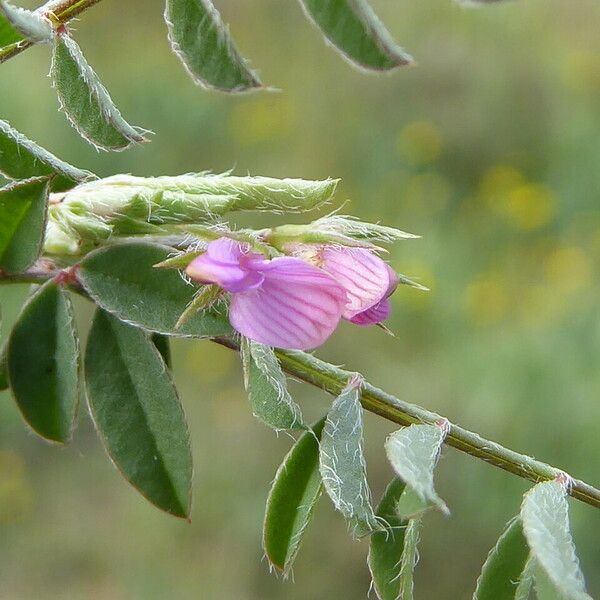
Plant Overview
Commonly known as the Cock’s Head Sainfoin, this Mediterranean native earns its name from its strikingly unusual seed pods that resemble a rooster's comb. A resilient member of the legume family, it is often found clinging to rocky hillsides and sun-drenched coastal paths, painting the landscape with delicate pink streaks during the spring.
🔍 How to Identify
- 🪶 Leaf Structure: The foliage is pinnate, meaning small, oval leaflets are arranged in pairs along a central stem, giving it a soft, feathery appearance similar to vetch or clover.
- 🌸 Pea-like Blooms: It produces small, vibrant pink to purplish flowers with delicate darker veins. These grow in clusters (racemes) and have the classic "keel and wing" shape of the pea family.
- 🐓 The "Cock's Head" Pods: The most distinctive feature is the seed pod. It is flat, curved, and covered in soft spines or "teeth," looking remarkably like a miniature, fuzzy rooster's crest.
🏡 In Your Garden
- ☀️ Sun Seeker: Originating from dry, Mediterranean climates, this plant is an expert at handling drought. It requires exceptionally well-draining soil and will struggle in heavy, "wet feet" clay.
- 🌱 Soil Improver: Like many of its cousins, it is a nitrogen-fixer. It works behind the scenes to pull nitrogen from the air and store it in its roots, naturally enriching the soil for neighboring plants.
- 🦋 Pollinator Magnet: The nectar-rich flowers are a favorite for bees and butterflies, making it a wonderful addition to a "wildlife corner" or a rock garden.
⚠️ Safety & Toxicity
- ✅ Status: Generally Non-Toxic.
- 🐾 Details: There are no known reports of major toxicity for humans or common household pets. In fact, many species in the Onobrychis genus are used as high-quality forage for livestock because they don't cause the bloating often associated with clover.
✨ Fun Fact
The name "Sainfoin" comes from the Old French words sain foin, which literally translates to "healthy hay." Ancient farmers believed that animals feeding on these plants would stay exceptionally strong and vibrant!

Detailed Care Instructions
The best way to water this particular plant is to first check the soil moisture level. Stick your index finger about an inch into the soil, and if it feels dry, it's time to water. When watering, use a watering can or a hose that allows for a gentle stream of water. Water the soil around the base of the plant and avoid getting water on the leaves as this can lead to fungal diseases. Water the plant thoroughly until the soil is moist, but not waterlogged. It's important not to let the soil dry out completely between watering, as this can stress the plant and affect its growth. However, overwatering can also lead to root rot and other issues, so make sure to strike a balance and adjust watering frequency as needed based on the environment and weather conditions.
When growing Onobrychis Caput-galli plants, it is important to use a well-draining soil that is rich in nutrients. The soil should have a pH between 6.0 and 7.5, and should be able to retain moisture without becoming waterlogged. Sandy loam soils are ideal for these plants, as they provide good drainage and allow for air circulation around the roots. It is also important to ensure that the soil is free of any toxins or contaminants that could harm the plants. Organic compost or manure can be added to the soil to improve its fertility and nutrient content. When planting the Onobrychis Caput-galli, it is important to ensure that the soil is thoroughly moistened beforehand and that the plants are set at the correct depth. Regular watering and fertilization can help to keep the soil healthy and ensure that the plants grow strong and healthy.








