Plant Overview
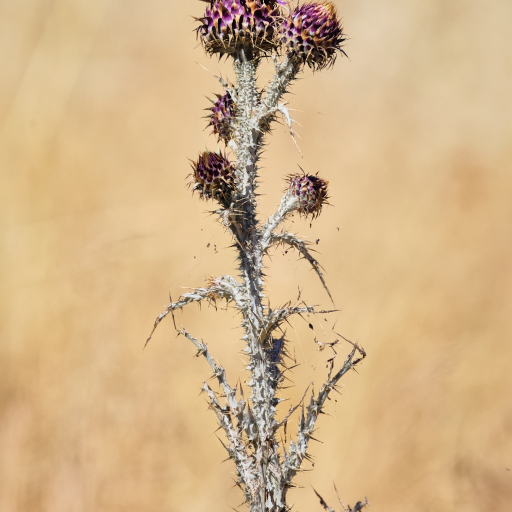
The Illyrian Thistle is a silver-armored titan of the plant world. Often called the "Giant Cotton Thistle," this Mediterranean native looks like a living sculpture designed for a medieval fortress. With its towering height and ghost-white foliage, it brings a dramatic, high-contrast aesthetic to sun-drenched landscapes and wild meadows.
🔍 How to Identify
- 🏛️ Statuesque Stature: This plant is a true giant, often soaring between 6 to 8 feet tall in its second year of growth.
- 🛡️ Spiny Wings: The stems are uniquely "winged," meaning the leaf tissue continues down the stalk, creating sharp, vertical ridges that look like serrated blades.
- 🧤 Silver Wool: The entire plant is draped in a fine, cobweb-like fuzz that gives it a distinct metallic or silvery-grey appearance, reflecting harsh sunlight.
- 🟣 Royal Blooms: Large, spherical flower heads erupt at the tips, boasting vibrant purple-to-magenta florets protected by a base of prickly, needle-like scales.
🏡 In Your Garden
- ☀️ Sun Worshipper: This thistle thrives in the toughest conditions—think blistering sun and poor, rocky soil. It actually prefers "lean" dirt over rich garden beds, which keep its structure sturdy.
- 🦋 Pollinator Magnet: While it may look defensive, it is a feast for the neighborhood. Bees, butterflies, and hoverflies find the nectar-rich purple crowns irresistible.
- ✂️ Self-Seeding Power: Be mindful that this plant is a prolific seed-maker. If you don't "deadhead" the flowers after they fade, you might find a small forest of silver thistles appearing next spring.
- 🏗️ Architectural Impact: Because of its height and texture, it is best placed at the very back of a border or as a standalone focal point where its silhouette can be admired from a distance.
⚠️ Safety & Toxicity
- 🌵 Physical Hazard: The primary danger is mechanical. The spines are incredibly sharp and can easily pierce garden gloves or thin clothing.
- 🐾 Pet & Child Safety: While not considered toxic if nibbled, the physical "ouch" factor makes it a plant to keep away from high-traffic areas or playgrounds.
- 🌾 Invasive Potential: In some regions outside its native Europe, it is considered a noxious weed because it outcompetes local flora. Always check your local environmental guidelines before planting.
✨ Fun Fact
The genus name Onopordum translates from Greek to "donkey flatulence." Legend has it that donkeys who grazed on these prickly plants suffered from significant digestive "noises" afterward—a humorous contrast to the plant's majestic and regal appearance!

Detailed Care Instructions
| Toxicity | Poisonous |
To grow Onopordum Illyricum, also known as Illyrian thistle, follow these steps:
- Choose the planting location: Onopordum Illyricum prefers a sunny location with well-draining soil. Make sure the area is free from other competing plants.
- Prepare the soil: Before planting, loosen the soil and remove any weeds or debris. If the soil is heavy clay, incorporate some organic matter such as compost or well-rotted manure to improve drainage.
- Soak the seeds: Place the seeds in a bowl of water to soak overnight. This will help improve germination.
- Sow the seeds: Sow the seeds directly into the prepared soil, either in spring or fall. Scatter the seeds over the soil and lightly press them down, ensuring they make good soil contact.
- Watering: Keep the soil evenly moist until the seeds germinate, usually within 2-3 weeks. After germination, water the plants deeply once a week or as necessary to maintain soil moisture.
- Thin the seedlings: Once the seedlings are about 2-3 inches tall, thin them to allow enough space for mature plants to grow. Space them about 12-18 inches apart.
- Mulching: Apply a layer of organic mulch around the plants to suppress weed growth and retain moisture in the soil.
- Maintenance: Onopordum Illyricum is generally drought-tolerant, but it may benefit from occasional watering during prolonged dry spells. Remove any weeds that compete with the plant for nutrients, and protect the plants from pests, if necessary.
- Harvesting: The plant produces spiky flower heads that can be harvested when they turn brown and dry. Cut the flower heads and hang them upside down in a well-ventilated, dry area to dry completely. Once dry, the seeds can be separated from the flower heads and stored for future growing or other uses.
By following these steps, you should be able to successfully grow Onopordum Illyricum in your garden.

Place in a bright room that is sun drenched almost all day. Or directly in a south-facing window.

This plant requires moderate watering and should not be submerged in water. To water it, simply pour water gently over the soil until it is moist, but not soaked. Allow the soil to completely dry out before watering it again to avoid root rot. Watering frequency will depend on the plant's environment and the season, but generally, it should be watered once or twice a week during the growing season and less during the dormant period. To prevent water from collecting at the base, ensure the pot has drainage holes.
To fertilize the plant, apply a balanced fertilizer with equal amounts of nitrogen, phosphorus, and potassium. Apply the fertilizer in early spring before new growth appears and again in mid-summer. Water the plant thoroughly before and after fertilizing. Be careful not to apply too much fertilizer, as this can burn the roots and damage the plant. Follow the manufacturer's instructions for the amount of fertilizer to apply based on the size of the plant.
The ideal type of soil to use for this plant is well-draining, loamy soil that is rich in nutrients. It should be slightly alkaline with a pH level between 7.0 to 7.5. The soil should also be able to retain moisture, but not become waterlogged or soggy. It is best to add some organic matter, such as compost or aged manure, to the soil before planting to improve its structure and fertility. Additionally, this plant prefers a location that receives full sun exposure and is not planted in an area that is prone to waterlogging or flooding.
To propagate this plant, you will need to gather the seeds from mature flowers when they have turned brown. You can then prepare a seedbed by tilling the soil and removing any debris, weeds, or rocks. Scatter the seeds thinly over the soil, then cover them with a thin layer of soil and water them gently. Keep the soil moist but not soggy, and place the seedbed in a sunny spot.
Once the seeds have germinated and the plants have grown to about 2-3 inches tall, you can transplant them to a permanent location in your garden. Choose a sunny spot with well-draining soil, and space the plants about 2-3 feet apart. Water them well after transplanting and keep the soil moist until the plants have established themselves.
Onopordum Illyricum can also be propagated by division of the roots. To do this, dig up the plant in early spring or fall and carefully separate the roots into smaller sections. Replant each section in a new location, water well, and keep the soil moist until the plants have established themselves.








