Plant Overview
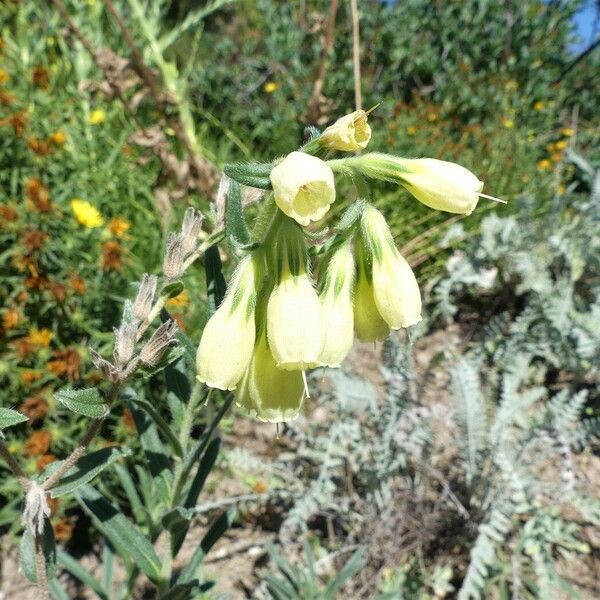
Known as the "Golden Bell of the Karst," Onosma tornensis is a rare and precious botanical treasure native to the rocky borderlands between Slovakia and Hungary. This "living relic" survives in tiny pockets of limestone terrain, appearing like a cluster of delicate, sun-colored trumpets emerging from harsh, stony ground. It is a member of the Borage family, though it looks more like a desert survivor than a garden flower.
🔍 How to Identify
- 🔔 The Flowers: Its most striking feature is the clusters of bright yellow, tubular (pendant) flowers that hang downward like tiny, elongated bells.
- 🌵 The Texture: The entire plant—stems and leaves—is covered in stiff, white bristly hairs (setae) that give it a silvery-grey sheen and a rough, sandpaper-like feel.
- 🌿 The Foliage: It features narrow, lance-shaped leaves that form a low-growing rosette near the base, helping the plant conserve moisture in its arid habitat.
🏡 In Your Garden
- 🪨 The Limestone Lover: In the wild, this plant is a "calciphile," meaning it strictly demands calcium-rich limestone soil. It thrives in crevices where most other plants would wither from heat and lack of nutrients.
- ☀️ Sun-Baked Survival: It is highly specialized for rocky slopes. If you are lucky enough to encounter one in a botanical collection, it requires "perfect neglect"—maximum sun exposure and drainage so sharp that the roots never sit in standing water, mimicking its cliffside home.
⚠️ Safety & Toxicity
- 🧤 Irritant Status: While not typically considered deadly, the stiff hairs covering the plant can cause significant mechanical skin irritation or "stinging" if handled without gloves.
- 🐾 Pet Safety: Like many members of the Boraginaceae family, it contains pyrrolizidine alkaloids. While rarely eaten due to its prickly texture, it should be kept away from curious pets as ingestion can lead to liver stress over time.
✨ Fun Fact
Onosma tornensis is a true "endemic" species, meaning it is found nowhere else on Earth except for the Slovak Karst and Aggtelek National Park. Because its range is so incredibly small, it is strictly protected by international law!

Detailed Care Instructions








