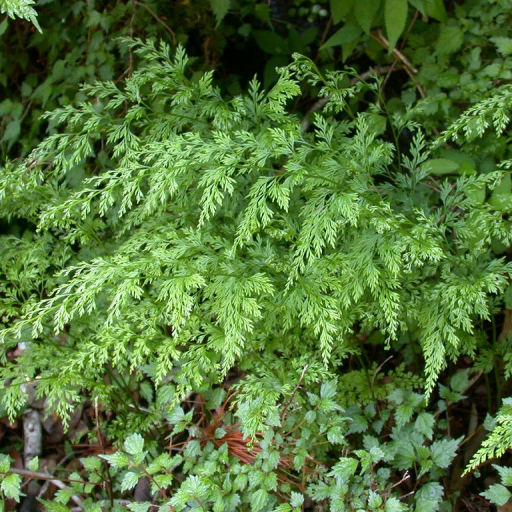
Plant Overview
Often called the "Carrot Fern" for its incredibly delicate, lacy foliage, Onychium japonicum is a hidden gem for shade-loving gardeners. While it looks like a fragile woodland sprite that might wither at a harsh glance, this Japanese native is surprisingly resilient once established. It brings a fine, airy texture to dark corners that few other plants can match, acting almost like a living mist of green.
🔍 How to Identify
- 🌿 Lacy Fronds: The leaves are incredibly finely divided (multi-pinnate), closely resembling the feathery tops of carrots or Queen Anne’s Lace.
- 🎨 Deep Green Luster: The foliage is a rich, dark green with a subtle, waxy sheen that helps it stand out against the matte leaves of typical forest floor plants.
- 📐 Arching Clumps: It grows in elegant, mounded clumps, with fronds that arch gracefully outward from a central rhizome.
🏡 In Your Garden
- 💧 The Drainage Secret: While this fern craves consistent moisture, its thin, "claw-like" roots are prone to rot in heavy, stagnant clay. It thrives best in "fluffy" soil enriched with leaf mold or compost that allows oxygen to reach the roots.
- ❄️ Winter Dormancy: In many climates, this fern is deciduous. If it turns brown and withers in late autumn, do not discard it! It is simply retreating underground to protect its energy, and it will push up fresh, vibrant fronds once the spring soil warms up.
⚠️ Safety & Toxicity
- 🛡️ Safe Assessment: Onychium japonicum is generally considered non-toxic to humans and common household pets like cats and dogs.
- 🐾 Textural Temptation: Because the fronds are so fine and "flowy," cats often find them irresistible to swat at or nibble. While not poisonous, ingesting large amounts of any fern can cause mild stomach upset in pets, so it’s best kept in a decorative urn or hanging basket.
✨ Fun Fact
The name Onychium is derived from the Greek word onyx, meaning "claw" or "fingernail." This refers to the way the edges of the fertile fronds curl over to protect the spores, looking like tiny, curved talons when viewed under a magnifying glass.

Detailed Care Instructions
To grow Onychium Japonicum, also known as the Japanese claw fern or Japanese wood fern, you can follow these steps:
- Choose a suitable location: Onychium Japonicum thrives in partial shade to full shade. Find a spot in your garden or house that receives filtered sunlight or indirect light. It also prefers moist, well-draining soil.
- Prepare the soil: Dig the soil to a depth of at least 8 inches and incorporate organic matter, such as compost or well-rotted manure, to improve soil fertility and moisture retention.
- Planting: Dig a hole slightly larger than the root ball of the plant. Place the Onychium Japonicum in the hole and backfill with soil, ensuring that the crown of the plant is at the soil level. Gently firm the soil around the plant.
- Watering: Keep the soil consistently moist but not waterlogged. Water thoroughly after planting and continue to water whenever the top inch of soil feels dry. Avoid letting the soil dry out completely.
- Mulching: Apply a layer of organic mulch, such as wood chips or shredded leaves, around the plant. This helps to retain moisture in the soil and suppresses weed growth.
- Fertilizing: Feed the plant with a balanced, slow-release fertilizer in spring and mid-summer. Follow the package instructions for dosage.
- Maintenance: Remove any dead fronds or damaged leaves regularly to maintain the plant's appearance. Onychium Japonicum doesn't require much pruning, but you can trim back any excess growth if needed.
- Overwintering: In areas with cold winters, provide some protection to the plant. Apply a layer of mulch or straw around the base of the plant to insulate the roots and protect them from freezing temperatures.
By following these steps, you should be able to successfully grow and care for Onychium Japonicum. It is a beautiful fern that adds a lush, tropical feel to gardens or indoor spaces.

Place in a window with dappled sun or a spot in the middle of a room. Or directly in a window facing west or east.

To water this plant, fill a watering can with room temperature water. Place the spout of the watering can at the base of the plant, near the soil. Slowly pour the water into the soil, taking care not to splash the leaves. Ensure that the water is being absorbed by the soil and not running off. Use your finger to touch the soil and check for moisture. If the soil feels dry, water the plant again. Water this plant once a week or as needed, depending on the humidity and temperature of the environment. Avoid letting the soil dry out completely or becoming waterlogged.
To fertilize this plant, it is recommended to use a balanced fertilizer with equal parts of nitrogen, phosphorus, and potassium. During the growing season, apply the fertilizer monthly, reducing the amount during the winter months. Be sure to water the plant before applying the fertilizer to avoid burning the roots. Avoid fertilizing too much as it can cause damage to the plant.
The recommended soil for the Onychium Japonicum plant should be well-draining and evenly moist. The soil should be slightly acidic with a pH range of 5.5 to 6.5. A suitable mix may include a combination of organic matter such as peat moss or compost, with coarse sand or perlite to increase drainage. The soil should be fertile with a good amount of nutrients such as nitrogen and potassium, but not too much as the plant can be sensitive to over-fertilization. Avoid using heavy clay soils or soils with poor drainage as this can lead to root rot and detrimental effects on the plant's growth.
To propagate this plant, take a healthy stem cutting from the parent plant. Cut the stem at a 45-degree angle and remove any leaves from the lower two-thirds of the stem. Dip the cut end of the stem in rooting hormone powder and plant it in a mixture of equal parts peat moss and perlite. Water the cutting well and cover it with a plastic bag to create a greenhouse effect. Place the cutting in a bright, indirect light location. After a few weeks, check to see if the cutting has rooted by gently tugging on it. If it resists, roots have formed. Once roots have formed, remove the plastic bag and begin to gradually expose the cutting to more light and less humidity, until it is acclimated to growing in the open air.
Common pests of the carrot fern include Aphids. Make a habit of checking your carrot fern frequently for pests so that any infestations can be caught and managed early.








