Plant Overview
Known as the "Indian Jalap" or "Turpeth," Operculina turpethum is a vigorous, perennial climber that belongs to the same family as the morning glory. This plant has been a staple in traditional Ayurvedic medicine for centuries, often referred to as "Trivrit." It is prized for its rapid growth and its ability to drape fences and trellises in a lush curtain of green and white.
🔍 How to Identify
- 🌿 The Winged Stems: One of its most unique features is its stems; they are quadrangular and often have "wings" or ridges running along them, making them feel angular rather than round.
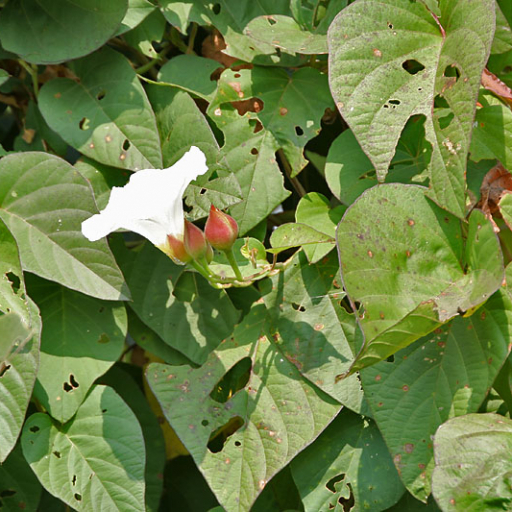
- 🤍 Trumpet Flowers: It produces large, bell-shaped white flowers that look strikingly similar to common morning glories, often appearing in small clusters.
- 🍃 Heart-Shaped Foliage: The leaves are typically broad and heart-shaped (cordate), sometimes reaching up to 15 cm in length, providing dense coverage.
🏡 In Your Garden
- 🧗 A Natural Climber: Because it is a sprawling vine, this plant requires a sturdy support system like a pergola or a tall fence. Without something to climb, it will quickly scramble over other garden plants and may smother them.
- ☀️ Sun and Space: It thrives in full sun but is surprisingly resilient to different soil types. However, because it grows so quickly in tropical and subtropical climates, it can become "weedy" if not pruned back regularly to keep its size in check.
⚠️ Safety & Toxicity
- 🚫 Status: Potentially Toxic / Powerful Purgative.
- 🤢 Details: The roots and bark of the Turpeth plant contain strong resins that act as a powerful laxative. While used medicinally by professionals, ingestion by curious pets or children can cause severe gastrointestinal distress, vomiting, and dehydration. It is best treated as an ornamental plant only and kept out of reach of nibbling animals.
✨ Fun Fact
The common name "St. Thomas Lidpod" comes from the plant's unique fruit. When the seed capsule matures, the top part falls off like a neat little lid, revealing the seeds inside as if it were a tiny natural jewelry box.

Detailed Care Instructions
To grow Operculina Turpethum (also known as Turpeth root), you can follow these steps:
- Seed selection: Obtain high-quality Turpeth root seeds from a reputable supplier or source. Check for freshness and viability.
- Soil preparation: Use well-draining soil rich in organic matter. Turpeth root prefers loamy soil that is slightly acidic.
- Container or bed preparation: Choose a container with drainage holes or prepare a garden bed with good drainage.
- Germination: Start the seeds indoors, or sow directly in the garden. If starting indoors, sow the seeds about 1/4 inch deep in seed starting mix. Water lightly and keep the soil consistently moist, but not waterlogged.
- Temperature and sunlight: Turpeth root prefers warm temperatures, ideally around 70-85°F (21-29°C). Place the container or bed in a sunny location where the plants will receive at least 6 hours of direct sunlight daily.
- Watering: Water regularly to keep the soil moist but not soaked. Avoid overwatering, as it can cause root rot.
- Fertilization: Apply a balanced, slow-release fertilizer according to manufacturer instructions once the seedlings are established, usually after a month or so.
- Transplantation: Once the seedlings have reached a size of 3-4 inches, transplant them to their final container or garden bed. Space them about 18 inches apart.
- Maintenance: Provide support or trellis as the plants grow, as they can become climbers. Regularly check for pests and diseases, and address any issues promptly.
- Harvesting: Harvest the roots after around 10-12 months, when they have reached maturity. Dig up the roots carefully, clean them, and store them in a cool, dry place.
Remember to research specifics about your specific region's climate and growing conditions, as well as any special care requirements for Operculina Turpethum in your area.

Place in a bright room that is sun drenched almost all day. Or directly in a south-facing window.

Operculina Turpethum is best watered by allowing the soil to dry out slightly before watering. This helps to prevent waterlogged soil, which can cause root rot and other problems. When watering, be sure to water deeply to encourage deep root growth. Avoid getting water on the leaves or foliage, as this can promote fungal growth. It's best to water early in the morning or late in the evening to avoid evaporation and allow the water to soak into the soil. Use room temperature or lukewarm water, as cold water can shock the roots. As a general rule, water the plant every 7-10 days, depending on the temperature, humidity, and other environmental factors.
To fertilize this plant, you can use a balanced liquid fertilizer diluted to half strength. Apply it once a month during the growing season, which is usually in the spring and summer. Be careful not to over-fertilize, as it can cause damage to the plant. Water the plant thoroughly after fertilizing.
The Operculina Turpethum plant prefers a well-draining and loose soil. Sandy loam soil is ideal for this plant, which has moderate fertility and is slightly acidic. It is important to avoid clayey, heavy or overly compacted soils that retain water for too long, as this can cause root rot. A soil mixture with added organic matter, such as compost or leaf mold, can improve drainage and promote healthy growth. The soil should also be able to retain enough moisture to keep the plant hydrated, but not too much water as this can lead to root rot. It is recommended to amend the soil with a slow-release fertilizer to provide necessary nutrients for the plant's growth.
The Operculina Turpethum plant can be propagated through seeds or stem cuttings. Here are the steps for each method:
Propagation through seeds:
- Collect the seeds from a mature plant and ensure they are clean and dry.
- Sow the seeds in a well-draining soil mix.
- Cover the seeds with a thin layer of soil, water lightly and keep the soil moist.
- Place the container in a warm, well-lit area, but not in direct sunlight.
- Germination can take 1-4 weeks, depending on the temperature and soil moisture levels.
- Once the seedlings have grown a few sets of leaves, they can be transplanted into individual pots or directly into the garden.
Propagation through stem cuttings: - Select a healthy stem from a mature plant and cut it just below a node where leaves attach.
- Remove the leaves from the bottom half of the stem, leaving only a few at the top.
- Dip the cut end of the stem in rooting hormone powder and tap off any excess powder.
- Plant the stem cutting in a well-draining soil mix, burying it about an inch deep.
- Water the cutting and place it in a warm, well-lit area, but not in direct sunlight.
- Keep the soil moist but not waterlogged, and mist the cutting regularly.
- Roots should develop within 4-6 weeks, at which point the plant can be transplanted into a larger pot or directly into the garden.
Note: It is important to wear gloves and protect your skin when handling Operculina Turpethum plant as it can cause skin irritation.








