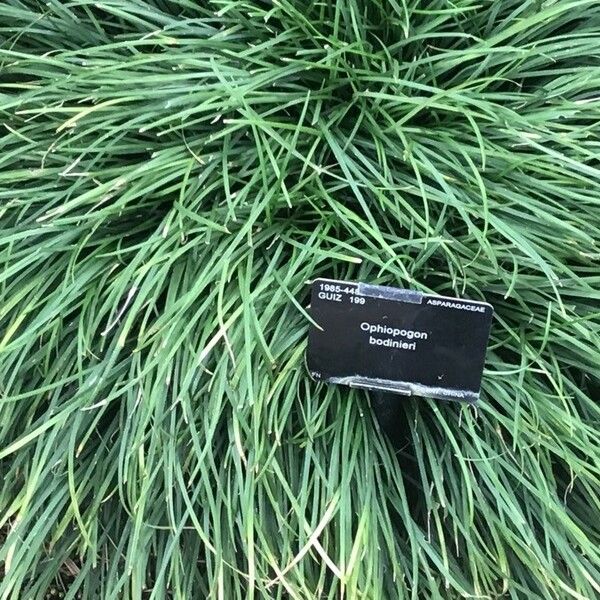
Plant Overview
Known as Bodinier’s Lilyturf, this elegant evergreen acts like a luxurious, deep-green carpet for the shaded corners of your garden. While it looks like a common grass, it is actually a resilient member of the asparagus family, originally found gracing the moist forest floors of East Asia. It is a favorite for those seeking a "no-mow" groundcover that maintains its lush color even in the depths of winter.
🔍 How to Identify
- 🍃 Ribbon-like Foliage: Features very narrow, arching leaves that grow in dense, fountain-like tufts, reaching about 8–12 inches in height.
- 🌸 Hidden Blooms: In mid-summer, small, nodding flower spikes appear in shades of pale lilac or white, often tucked slightly beneath the leaf canopy.
- 💎 Jewel-like Berries: After flowering, the plant produces striking, pea-sized berries that ripen into a brilliant metallic blue or deep purple.
🏡 In Your Garden
- 🐌 Sluggish Success: This plant is the definition of "slow and steady." It spreads via underground rhizomes, but it won't take over your garden overnight; it requires patience to form a solid, weed-suppressing mat.
- 🌑 The Shade Warrior: Unlike true turf grass, which thins out in the dark, this species thrives in "difficult" spots where the sun rarely reaches, making it the perfect solution for planting under large trees.
- 🪴 Low-Impact Living: It is remarkably tough once established. It rarely suffers from pests or diseases and can handle light foot traffic, making it a "set it and forget it" choice for garden borders.
⚠️ Safety & Toxicity
- 🐾 Pet Friendly: Ophiopogon bodinieri is generally considered non-toxic to cats and dogs, making it a much safer alternative to many other ornamental garden plants.
- 🚫 Berry Caution: While not considered deadly, the bright blue berries are not for snacking. They contain saponins which can cause mild stomach upset if ingested by curious children or pets.
✨ Fun Fact
Despite the name "Lilyturf," this plant is not a grass at all! In its native China, it is known as Maimendong, and its tuberous roots have been used for centuries in traditional medicine to treat dry coughs and provide "cooling" energy to the body.

Detailed Care Instructions
To grow Ophiopogon bodinieri (also known as Dwarf Mondo Grass), follow these steps:
- Choose the right location: Ophiopogon bodinieri prefers partial shade to full shade. It can tolerate some sunlight, but direct sunlight for extended periods might burn the leaves.
- Soil preparation: The plant prefers well-draining soil. Prepare the soil by incorporating organic matter like compost or well-rotted manure to improve fertility and drainage.
- Planting: Dig a hole large enough to accommodate the plant's root ball. Place the plant in the hole, ensuring that the soil level remains the same as it was in the container. Backfill the hole with soil and gently firm it around the plant.
- Watering: Keep the soil consistently moist but not waterlogged. Ensure that the plant receives enough water, especially during dry spells, but avoid overwatering, which can lead to root rot.
- Mulching: Apply a layer of mulch, such as bark chips or compost, around the plant. Mulching helps retain moisture and suppresses weed growth.
- Fertilizing: Ophiopogon bodinieri doesn't require regular fertilization to thrive. If desired, you can apply a slow-release, balanced fertilizer in spring to promote growth.
- Maintenance: Remove any dead or damaged leaves as needed. Ophiopogon bodinieri is a low-maintenance plant that doesn't require frequent pruning.
- Propagation: Ophiopogon bodinieri can be propagated by dividing the plant in early spring or autumn. Carefully divide the clumps using a sharp knife or spade, ensuring that each division has a healthy root system. Replant the divisions at the same depth in prepared soil.
- Winter protection: Ophiopogon bodinieri is generally hardy, but if you live in an area with severe winters, you can protect the plant by covering it with a layer of mulch or dry leaves to insulate the roots.
- Additional tips: Avoid overwatering in winter when the plant is dormant. Keep an eye out for pests such as slugs and snails, which may occasionally feed on the leaves.

Place in a window with dappled sun or a spot in the middle of a room. Or directly in a window facing west or east.

To properly water this plant, you should first check the soil moisture level by sticking your finger about an inch deep into the soil. If the soil feels dry, it's time to water the plant. The amount of water needed will depend on various factors such as the size of the pot, the amount of light the plant receives, and the humidity level in the surrounding environment.
When watering the plant, it's important to avoid getting water on the leaves as this can lead to fungal growth and disease. Instead, water the soil around the base of the plant slowly and evenly until you see water start to drain out of the bottom of the pot. Be sure to let the excess water drain away to avoid waterlogged roots, which can cause root rot.
In general, it's better to underwater Ophiopogon Bodinieri than to overwater it, as these plants prefer slightly dry soil to wet soil. It's a good idea to let the top inch or so of soil dry out fully before watering again. During the winter months, when the plant is dormant, it will need even less water.
To properly fertilize the Ophiopogon Bodinieri plant, follow these instructions:
- Choose a balanced, water-soluble fertilizer specifically formulated for ornamental plants.
- Dilute the fertilizer according to the package instructions. Generally, fertilizers are mixed with water at a ratio of 1 tablespoon per gallon of water.
- Apply the fertilizer solution to the soil around the base of the plant, avoiding direct contact with the foliage.
- Start fertilizing in early spring, as new growth emerges, and continue once every four to six weeks throughout the growing season.
- Ensure the soil is adequately moist before applying the fertilizer, as fertilizing dry soil may stress the plant.
- Be cautious not to exceed the recommended dosage, as over-fertilization can lead to nutrient burn or damage the plant.
- After applying the fertilizer, thoroughly water the soil to help the nutrients reach the plant's roots.
- Regularly monitor the plant's response to fertilizer. If there is excessive foliage growth but limited flowering, reduce the frequency of fertilization.
- During the autumn and winter months, reduce fertilization or stop entirely, as the plant goes into its dormant phase.
- If the plant is potted, ensure the pot has drainage holes to prevent waterlogging and regularly flush the soil to prevent salt buildup from excessive fertilizer applications.
Remember to always read and follow the instructions provided by the fertilizer manufacturer, as specific products may have different application rates or guidelines.
When planting Ophiopogon Bodinieri, it is recommended to use a well-draining and fertile soil mix. The soil should have a pH level between 6.0 and 7.5 and it should be rich in organic matter. It is also important to ensure that the soil is moist but not waterlogged, as Ophiopogon Bodinieri does not tolerate standing water. Some good soil additives to improve fertility and drainage include perlite, vermiculite, compost, and sand. Additionally, it is important to regularly monitor the soil moisture levels and adjust watering as needed to maintain proper growing conditions for the plant.
Ophiopogon bodinieri, commonly known as dwarf mondo grass, is a perennial plant that can be easily propagated through division or seeds. Here are the details on how to propagate this plant:
- Division:
- Choose a healthy and mature Ophiopogon bodinieri plant to divide. It is best to do this in early spring or fall.
- Dig around the plant, carefully lifting it from the ground to expose the root system.
- Gently separate the clumps of the plant by pulling them apart. You can use your hands or a sharp knife or garden spade to separate them into smaller sections. Ensure that each section has a good amount of roots and foliage.
- Replant the divided sections immediately in prepared soil or containers filled with well-draining potting mix. Ensure that the soil is evenly moist.
- Water the newly planted sections thoroughly and continue to keep the soil moist until they establish themselves.
- Choose a healthy and mature Ophiopogon bodinieri plant to divide. It is best to do this in early spring or fall.
- Seeds:
- Collect seeds from mature Ophiopogon bodinieri plants. You can do this by allowing the plant to produce flowers and subsequently seeds. The seeds are generally dark-colored and found inside small berries.
- Gently crush the berries and extract the seeds.
- Prepare seed trays or small pots with a well-draining potting mix.
- Sow the seeds on the surface, spacing them adequately apart.
- Cover the seeds lightly with a thin layer of soil or vermiculite.
- Water the seeds gently to ensure they are adequately moist, but avoid waterlogging.
- Place the trays or pots in a warm and bright location, but not direct sunlight.
- Maintain an even level of moisture throughout the germination period, which can take a few weeks.
- Once the seedlings have grown a few inches tall, they can be transplanted into individual pots or directly into the garden bed once the weather is suitable.
Remember to provide the newly propagated Ophiopogon bodinieri plants with proper care, including regular watering, appropriate lighting conditions, and suitable soil. With proper attention, they will establish and thrive, creating a beautiful addition to your garden.
- Collect seeds from mature Ophiopogon bodinieri plants. You can do this by allowing the plant to produce flowers and subsequently seeds. The seeds are generally dark-colored and found inside small berries.








