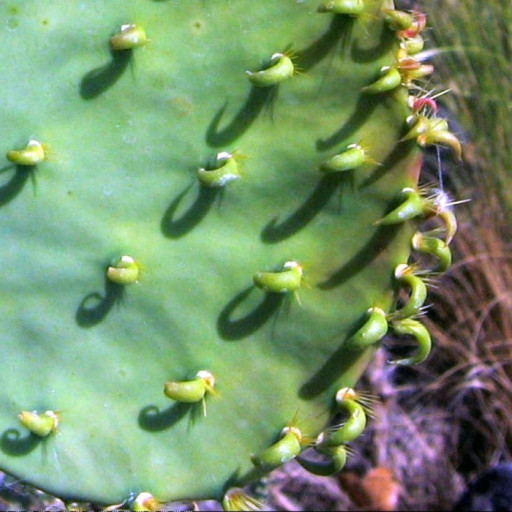
Plant Overview
Often called the Tiger-tongue Prickly Pear, Opuntia cacanapa is a sculptural marvel of the Chihuahuan Desert. Whether it’s the wild form or the popular "Ellisiana" cultivar, this cactus is prized for its architectural blue-green pads and its surprisingly friendly disposition compared to its thornier cousins. It is a staple of xeriscaping, offering a bold, prehistoric look with minimal maintenance.
🔍 How to Identify
- 🎨 Pad Color: Features striking glaucous (waxy) blue-green pads that provide a cool-toned contrast to the typical browns and greens of a desert garden.
- 📏 Growth Habit: Grows in an upright, multi-branching form that can eventually resemble a small tree, often reaching heights of 3 to 6 feet.
- 🌼 Flowers & Fruit: Produces brilliant, buttery-yellow blossoms in late spring. These are followed by small, egg-shaped fruits that ripen into a deep reddish-purple.
🏡 In Your Garden
- 🏜️ Drainage is Key: This cactus is a survivor, but it hates "wet feet." It is best to plant it in a raised bed or a sandy, rocky mix to ensure water moves away from the roots quickly, especially during dormant winter months.
- ❄️ Cold Warrior: The "Ellisiana" variety of this species is famous for its cold hardiness. It can withstand temperatures dipping toward 10°F (-12°C), making it one of the few large Opuntias suitable for temperate gardens that experience occasional hard frosts.
⚠️ Safety & Toxicity
- 🧤 The "Spineless" Trap: While often marketed as spineless, this plant still possesses glochids. These are tiny, hair-like barbed bristles found in the spots (areoles) on the pads. They are nearly invisible but can cause intense skin irritation if touched.
- 🐾 Pet & Child Safety: While the plant is non-toxic if accidentally ingested, the glochids can lodge in the mouth, tongue, or paws of curious pets. It is best planted away from walkways or areas where children play.
✨ Fun Fact
Historically, "spineless" prickly pears like Opuntia cacanapa were a dream for ranchers. Famous horticulturalist Luther Burbank once hoped these plants would become a "universal fodder," allowing cattle to survive off the moisture and nutrients in the pads during extreme droughts without the need for de-thorning!

Detailed Care Instructions
Here are some general tips on how to grow Opuntia cacanapa (also known as prickly pear cactus):
- Climate and Sunlight: Opuntia cacanapa thrives in warm, arid climates and requires plenty of sunlight. Ensure the plant receives at least 6-8 hours of direct sunlight each day.
- Soil: Well-draining soil is crucial for the healthy growth of Opuntia cacanapa. Use a mixture of sandy soil with some organic matter, such as compost or peat moss, to improve drainage.
- Planting: Dig a hole that is slightly wider and deeper than the root ball of the cactus. Gently place the plant in the hole, ensuring that the roots are covered with soil. Avoid planting it too deep to prevent waterlogging. Additionally, maintain a distance of at least 2-3 feet between each plant to allow for proper air circulation.
- Watering: Opuntia cacanapa is drought-tolerant and should be watered sparingly. During the growing season (spring and summer), water the plant once every 2-3 weeks. Reduce watering frequency during the dormant period (fall and winter).
- Fertilization: Apply a balanced, slow-release fertilizer specifically formulated for cacti and succulents during the growing season. Follow the recommended dosage on the label.
- Pruning: Prune Opuntia cacanapa as necessary to remove dead or diseased parts of the plant. Wear protective gloves as the cactus has spines or glochids that can cause irritation. Additionally, you can prune to shape the plant or control its growth, but be cautious not to remove too much of the cactus's pads.
- Pests and Diseases: Opuntia cacanapa is generally resistant to most pests and diseases. However, occasionally, it may be susceptible to pests like scale insects and mealybugs. Regularly inspect the plant for any signs of infestation, and if necessary, treat with a diluted insecticidal soap or neem oil.
It's worth noting that Opuntia cacanapa is a large, spreading cactus, so make sure you have ample space for its growth. Additionally, check your local regulations before growing it, as it may be considered invasive in some areas.

Place in a bright room that is sun drenched almost all day. Or directly in a south-facing window.

Opuntia Cacanapa is a succulent plant that grows in arid climates and is known for its prickly pads. Watering this plant can be a delicate process as it requires a balance of moisture and dryness.
When watering Opuntia Cacanapa, it is important to pay attention to the soil moisture level. The soil should be allowed to dry out completely between waterings to prevent root rot and overwatering. As a general rule, water the plant once every two weeks during the growing season and once a month during the dormant period.
Before watering, check the soil moisture level by sticking a finger or wooden stick 1-2 inches into the soil. If the soil feels dry, it's time to water. When watering, thoroughly saturate the soil until water comes out of the drainage holes at the bottom of the pot.
Avoid watering the plant from above as this can cause water to collect in the crevices of the pads and can lead to rot. Instead, water at the base of the plant and allow the soil to soak up the water.
In addition to regular watering, Opuntia Cacanapa benefits from occasional deep watering. This can be done by soaking the soil with a hose until water seeps out of the drainage holes. This helps to flush out any salts or minerals that have accumulated in the soil.
Finally, it is important to note that Opuntia Cacanapa is a drought-tolerant plant that can survive extended periods of dryness. In fact, overwatering can be more detrimental to its health than underwatering. So if you're unsure whether or not to water, it's always better to err on the side of less water.
To fertilize this plant, mix a balanced fertilizer with equal parts nitrogen, phosphorus, and potassium. Apply the fertilizer in a ring around the base of the plant, taking care not to get any on the leaves or stem. Water the plant thoroughly after fertilizing. Repeat every four to six weeks during the growing season.
Opuntia Cacanapa is a type of plant that requires well-draining soil to thrive. The soil must be slightly acidic and have a pH of around 6.0 to 7.0. The ideal mixture for this plant would be a combination of sand, perlite, and peat moss, which will provide enough drainage, moisture, and nutrients to the plant's roots. It is not recommended to use heavy soil as it can cause waterlogging and root rot in the plant. Furthermore, organic matter in the soil should be minimal. The plant prefers a dry soil environment with little to no moisture. Therefore, it is recommended to use sandy soil or a cactus-specific soil mixture that is best suited to meet the plant's needs.
To propagate this plant, you can take a segment of a mature stem and let it dry out for a few days. Then, plant the segment horizontally in a well-draining soil mix. Water sparingly until roots start to form, then gradually increase watering frequency. It is best to propagate this plant during the summer months when temperatures are warm. Once the plant has established roots, it can be cared for like a mature plant.
Common pests of the texas blue pricklypear include Scale insect, mealybugs, spider mites. Make a habit of checking your texas blue pricklypear frequently for pests so that any infestations can be caught and managed early.







