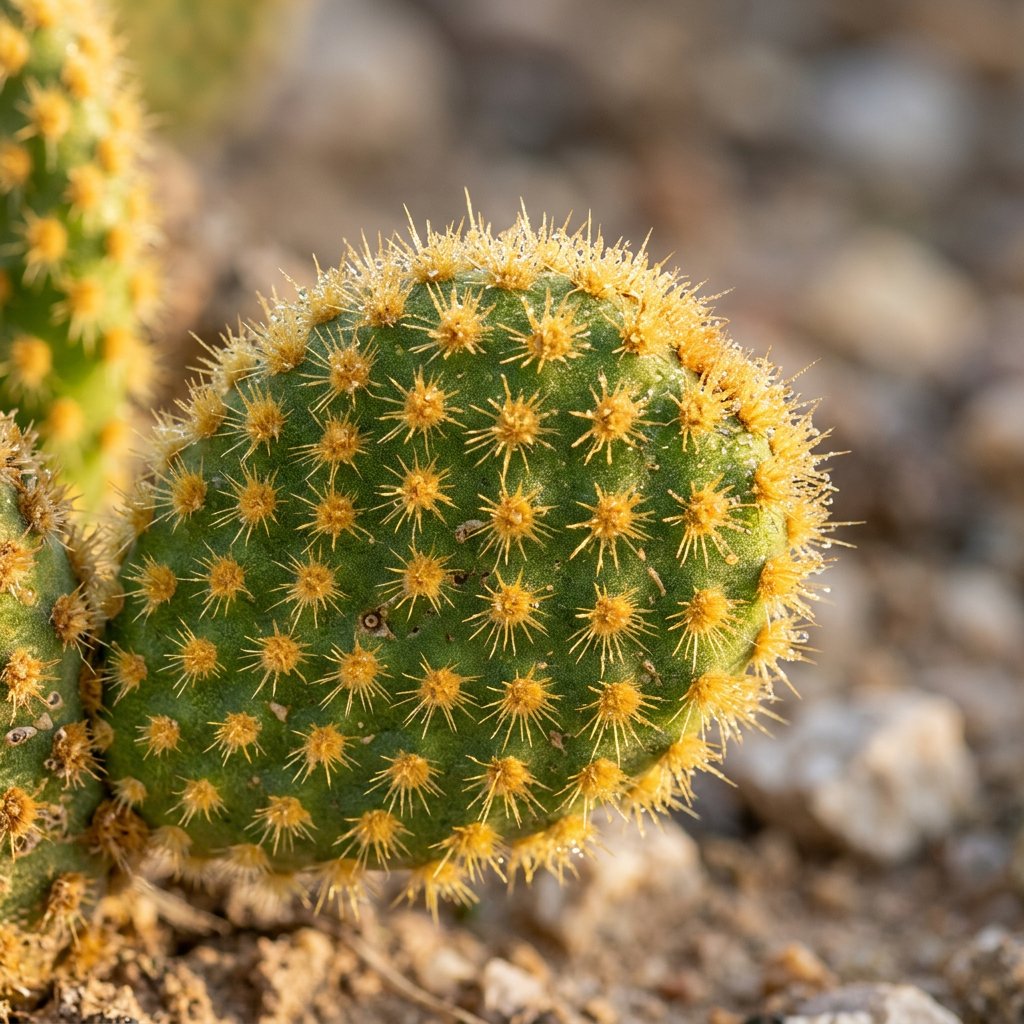
Plant Overview
Commonly known as the Bunny Ear Cactus or Polka-dot Cactus, this charming Mexican native is a favorite for windowsill gardeners worldwide. Its pairs of oval pads look remarkably like a rabbit’s head, earning it a reputation as one of the "cutest" members of the Cactaceae family. However, don't let its soft, fuzzy appearance fool you—this plant has a prickly defense mechanism that is much craftier than it looks.
🔍 How to Identify
- 🌵 The Pads: Fleshy, bright green, oval-shaped segments that grow in pairs. New growth typically emerges from the top of older pads, mimicking the shape of ears.
- 🟡 The Glochids: Unlike many cacti, it lacks long, sharp spines. Instead, it is covered in neat polka-dots called glochids—tiny, hair-like barbed bristles that can be white, yellow, or reddish-brown.
- 🌼 The Blooms: In ideal conditions, it produces creamy yellow, cup-shaped flowers during the summer, followed by small, round red fruits.
🏡 In Your Garden
- ☀️ Light Seeker: This cactus craves bright, direct sunlight. If it doesn't get enough "sun-bathing" time, the new "ears" will grow long, thin, and weak (a process called etiolation) as the plant stretches to find light.
- 💧 Drought Specialist: It stores a massive amount of water in its pads, making it incredibly resilient. It prefers a "soak and dry" method; wait for the soil to be bone-dry all the way through before watering, as its roots are very sensitive to rot in damp soil.
- 🏜️ Soil & Potting: Because it has a relatively shallow root system, it thrives in wide, shallow pots with extremely gritty, fast-draining cactus mix.
⚠️ Safety & Toxicity
- 🚫 The "Invisible" Trap: While not chemically toxic to humans or pets, the glochids are a significant irritant. They detach at the slightest touch and are so small they can become embedded in the skin or even travel through the air if the plant is bumped.
- 🐾 Pet Warning: Keep this plant out of reach of curious cats and dogs. If a pet tries to nibble a pad, the tiny bristles can cause severe irritation to the mouth, tongue, and throat.
✨ Fun Fact
The Bunny Ear Cactus doesn't just use its bristles for defense; the glochids actually help the plant collect moisture from the air in its native desert habitat, funneling microscopic droplets of dew down to the pad's surface!

Detailed Care Instructions
| Color | Blossoms Are Yellow, Yellow-Orange, Or A Peach-Color |
| Soil Ph | 6-7.5 |
| Humidity | Dry |
| Lighting | Full Sun |
| Toxicity | Poisonous |
| Soil Type | Cactus Mix, Or A Well-Draining Loamy Or Sandy Soil |
| Bloom Time | Late Spring To Early Summer |
| Difficulty | Easy |
| Plant Type | Perennial |
| Hibernation | Cold Period |
| Mature Size | 3-4 Feet Tall, 4-6 Feet Wide |
| Native Area | The Deserts Of Northern Mexico And Arizona |
| Temperature | 15°C - 30°C |
| Sun Exposure | Full Sunlight In The Summer And Partial Sunlight In The Winter |
| Hardiness Zones | 9 |
To grow Opuntia microdasys, also known as bunny ears cactus or angel's wings, follow these steps:
- Choose a location: Opuntia microdasys thrives in full sun to partial shade. Choose a spot that receives at least 6 hours of direct sunlight.
- Soil requirements: These cacti prefer well-draining soil, so mix regular potting soil with sand or perlite to improve drainage. Use a container with drainage holes to prevent waterlogging.
- Propagation: You can grow Opuntia microdasys from seeds, cuttings, or offsets (baby plants that grow from the base of the parent plant). Cuttings and offsets are the easiest methods. Carefully separate the offset from the parent plant or cut a section from the stem using a sharp, sterilized knife. Allow the cutting or offset to dry for a few days, forming a callus at the cut end.
- Planting: Once the cutting or offset has calloused, plant it in the prepared soil. Bury the base of the cutting or offset about an inch into the soil. Pat the soil gently to ensure good contact.
- Watering: Opuntia microdasys is a desert plant and prefers dry conditions. Water the plant sparingly, allowing the soil to dry out completely between waterings. Overwatering can lead to root rot. During winter, reduce watering as the plant goes into dormancy.
- Fertilization: Fertilize Opuntia microdasys during the growing season (spring and summer) with a balanced cactus fertilizer. Follow the instructions on the fertilizer package for application rates.
- Pruning: Pruning is not necessary for Opuntia microdasys, but you can remove any dead or damaged pads if desired. Be careful when handling the plant as the pads have tiny spines called glochids, which may cause irritation.
- Pests and diseases: Opuntia microdasys is relatively pest and disease resistant. However, watch out for mealybugs, which can infest the plant. If you notice signs of pests, treat the plants with an appropriate insecticide or use a cotton swab dipped in rubbing alcohol to remove them manually.
By following these steps, you can successfully grow and care for Opuntia microdasys plants.

Place in a bright room that is sun drenched almost all day. Or directly in a south-facing window.

When caring for a certain plant species, it is important to understand its specific watering requirements. In the case of this plant, it is recommended to water it approximately once a week during the growing season, which typically runs from spring to fall. During the winter months, it is best to reduce watering to once every two to three weeks.
When watering, it is important to give the plant a thorough soaking, allowing the water to reach the root zone. This can be achieved by watering until the soil is visibly moist, or by allowing the plant to sit in a tray of water until the soil is saturated. It is important to ensure that excess water is allowed to drain away, as waterlogged soil can cause damage to the plant's root system.
It is worth noting that this plant is fairly drought-tolerant, meaning that it can survive for short periods of time without water. However, prolonged periods of dryness can cause the plant to become stressed, which can lead to wilting or other issues. Therefore, it is best to err on the side of caution and water regularly, rather than allowing the plant to dry out.
To fertilize this plant, first ensure that it is placed in a pot with well-draining soil. Use a balanced, slow-release fertilizer that contains equal amounts of nitrogen, phosphorous, and potassium. Apply the fertilizer in the spring and summer, following the manufacturer's instructions. Do not fertilize during the winter or fall months as the plant enters a dormant state. Additionally, avoid over-fertilizing, as excess nutrients can harm the plant's growth.
When potting an Opuntia Microdasys plant, it is best to use a well-draining soil mix with a pH level between 6 and 7.5. The soil should be a mix of organic and inorganic materials, such as sand, perlite, and peat moss. It is also recommended to add crushed limestone to the soil mix to increase drainage and provide calcium to the plant. Additionally, the soil should be kept slightly dry, as the Opuntia Microdasys is a drought-tolerant plant that can easily rot if overwatered.
To propagate this plant, you will need to first select a healthy mature plant that is free from any signs of disease or damage. The next step is to carefully remove a small section of the plant, making sure to include at least one node or segment.
Once you have the cutting, you will need to let it dry out for a few days. This will help prevent rotting and prepare the cutting for rooting. Once the cutting has dried, you can dip the base in rooting hormone and place it in a well-draining soil mix.
Use a pot with drainage holes and keep the soil slightly moist, but not overly wet. Place the pot in a bright, indirect light location and maintain a temperature above 70°F.
Within a few weeks, you should notice new growth emerging from the base of the cutting. At this point, you can make sure the soil is consistently moist, but be careful not to overwater. As the plant grows, you can gradually decrease the frequency of watering and fertilize it every few months.
With proper care, your new Opuntia Microdasys plant should grow into a healthy mature plant that you can enjoy for years to come.
Common pests of the bunny-ears prickly-pear include Scale insect, mealybugs, spider mites. Make a habit of checking your bunny-ears prickly-pear frequently for pests so that any infestations can be caught and managed early.








