Plant Overview
Known in its native Argentina as the "Quimilo," this isn't your average windowsill cactus. Growing with a bold, architectural presence, it often takes the form of a small tree, commanding attention in any xeric landscape. It is a rugged survivor of the harsh, dry Gran Chaco region, specifically designed to thrive in punishing heat where other plants would wither.
🔍 How to Identify
- 📏 Growth Habit: Unlike sprawling prickly pears, this species develops a thick, woody trunk and can reach heights of over 13 feet (4 meters).
- ⚔️ Epic Spines: It is famous for its formidable, chalky-white spines that can grow up to 6 inches long, often appearing in pairs or triplets.
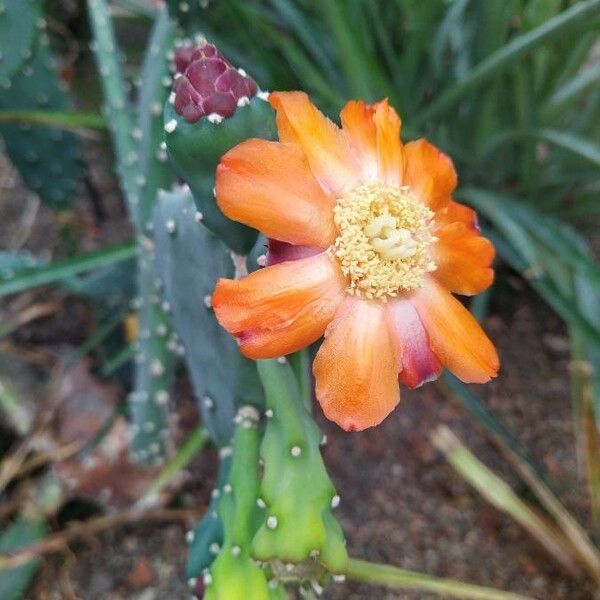
- 🌺 Fiery Blooms: During the flowering season, it produces stunning, waxy blossoms in shades of brilliant red or deep burnt orange that sit atop the pads.
🏡 In Your Garden
- 🏜️ Space Requirements: Due to its potential size and defensive spines, the Quimilo is best treated as a specimen plant in large outdoor rock gardens rather than a container plant.
- 🪨 Drainage is Key: It has evolved to survive in sandy, well-draining soils. If planted in heavy clay or overwatered, the root system will quickly succumb to rot. It prefers a "soak and dry" approach.
- ☀️ Sun Worship: To maintain its blue-green hue and encourage those red flowers, it needs the brightest light possible; shaded conditions will cause the pads to stretch and weaken.
⚠️ Safety & Toxicity
- 🌵 Physical Hazard: While the plant is not chemically toxic to humans or pets, it is physically dangerous. The long spines provide an obvious warning, but the base of the spines contains "glochids"—tiny, hair-like barbs that are difficult to see and even harder to remove from skin.
- 🐾 Pet Safety: Keep this plant away from high-traffic areas where pets or children play, as the spines can cause significant puncture wounds or eye injuries.
✨ Fun Fact
In Argentina, the Quimilo is more than just a prickly neighbor; its large, greenish-yellow fruit is edible and frequently harvested by locals to create traditional jellies, syrups, and fermented beverages.

Detailed Care Instructions
To grow an Opuntia Quimilo plant, also known as the Cardon Grande or Quimil, you can follow these steps:
- Climate and Location: Opuntia Quimilo thrives in warm and dry climates, so it is ideal to grow it in regions with mild to hot temperatures. Ensure that the plant gets sufficient sunlight for at least 6-8 hours per day.
- Soil: Opuntia Quimilo prefers well-draining soil with a slightly acidic to neutral pH level. Sandy or loamy soil works best for this plant. Make sure the soil is not too compacted or retains excessive moisture.
- Planting: Start by preparing the planting area by removing any weeds or grass. Dig a hole that is wide and deep enough to accommodate the plant's roots. Gently place the Opuntia Quimilo plant in the hole, ensuring that the roots are spread out. Backfill the hole with soil, firming it lightly around the base of the plant.
- Watering: Initially, water the plant thoroughly after planting to help establish its roots. Afterward, Opuntia Quimilo requires minimal watering. Water the plant only when the soil is completely dry, approximately once every 2-3 weeks.
- Fertilizing: Apply a balanced, slow-release fertilizer during the plant's growing season, which is usually in spring and summer. Follow the instructions on the fertilizer packaging for the appropriate amount and frequency.
- Pruning: Opuntia Quimilo rarely requires pruning. However, you may trim off any damaged or dead branches to maintain the plant's health and appearance. Pruning should be done carefully, wearing gloves, as this plant has spines that can cause skin irritation.
- Pests and Diseases: Opuntia Quimilo is generally resistant to most pests and diseases. However, keep an eye out for common issues such as scale insects or mealybugs. If you notice any infestation, gently wipe the affected areas with a cotton swab dipped in a mild insecticidal soap solution.
Remember to research any local regulations or restrictions on planting Opuntia Quimilo, as it can be considered an invasive species in some areas.

Place in a bright room that is sun drenched almost all day. Or directly in a south-facing window.

Opuntia Quimilo is a type of cactus plant that requires watering during the growing season. It is important to ensure that the soil is completely dry before watering. Overwatering can lead to root rot and other plant diseases.
To water the Opuntia Quimilo plant, use a watering can with a narrow spout to direct the water to the base of the plant. Avoid getting water on the leaves or stem as this can lead to fungal infections. Water the soil until it is moist but not saturated.
During the winter months, reduce watering frequency as the plant goes into dormancy. The frequency of watering the plant depends on the climate and the type of soil. In arid regions, the Opuntia Quimilo plant may require watering every two weeks, while in areas with high humidity, it may require watering once a month.
It is important to note that the Opuntia Quimilo plant is drought-tolerant and can survive long periods without water. However, to ensure it thrives and produces healthy fruits, regular watering is necessary.
To fertilize this plant, use a balanced fertilizer with equal amounts of nitrogen, phosphorus, and potassium. Apply the fertilizer once a year in early spring before new growth begins. Be careful not to over-fertilize as this plant is sensitive to excessive amounts of nutrients. Water the plant thoroughly before and after fertilizing to help distribute the fertilizer evenly throughout the soil. Monitor the plant for any signs of nutrient deficiency or toxicity and adjust the fertilization accordingly.
For cultivating Opuntia quimilo, it's important to choose a soil that replicates its natural desert habitat to promote optimal growth. Here are the detailed soil requirements:
- Well-Draining Soil: Ensuring fast drainage is crucial to prevent root rot and other moisture-related issues. A cactus or succulent mix is ideal. You can either purchase a pre-made mix or create your own by combining potting soil with coarse sand or perlite to enhance drainage.
- Sandy to Gravelly Texture: This kind of texture allows water to pass through quickly. If creating your own mix, aim for about 1 part potting soil, 1 part coarse sand, and 1 part perlite or pumice.
- Low Nutrient Content: The plant thrives in nutrient-poor soil. Excessive organic matter can hold too much moisture and provide too many nutrients, which is not beneficial for its growth.
- pH Level: Preferably, the soil should be slightly acidic to neutral, with a pH range of about 6.0 to 7.5. Test your soil pH and amend if necessary using pH adjusters.
- Additional Elements: Incorporating small amounts of gritty materials like small pebbles or gravel can further enhance drainage at the bottom of the pot, ensuring water does not sit and cause root issues.
Remember to place the plant in a container with drainage holes if you're growing it indoors or in an area where water can swiftly escape, mimicking the natural arid environment.
The process of propagating Opuntia Quimilo involves taking a cutting from the mother plant and allowing it to callus over before planting it in well-draining soil. The cutting should be at least six inches long and should be taken from a healthy, mature stem. Once the cutting has callused over, it can be planted in a pot with well-draining soil and kept in a partially shaded area until it has established roots. After the plant has rooted, it can be gradually exposed to more sunlight and watered sparingly. With proper care, the propagated plant should grow into a mature Opuntia Quimilo.
Common pests of the quimilo include Scale insect, mealybugs, spider mites. Make a habit of checking your quimilo frequently for pests so that any infestations can be caught and managed early.








