Plant Overview
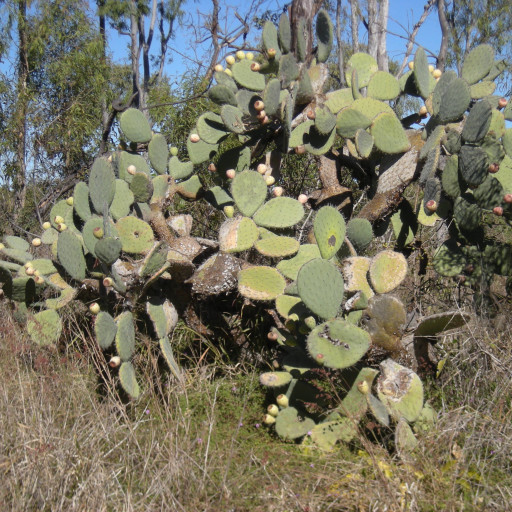
Known as the "Wheel Cactus" or "Silver Dollar Cactus," this Mexican native is a true titan of the desert. Its massive, perfectly round pads look like prehistoric dinner plates stacked together in a stunning architectural display. While it’s a breathtaking focal point for any water-wise garden, its impressive size and "defenses" mean it demands respect and plenty of elbow room.
🔍 How to Identify
- 🛞 Giant Pads: Unlike typical prickly pears, these pads are exceptionally large, thick, and almost perfectly circular. They can grow over a foot in diameter, giving the plant its "wheel" nickname.
- ❄️ Silvery Hue: The skin has a beautiful glaucous coating, giving it a distinct blue-grey or silvery-green color that helps it reflect intense desert sunlight.
- 🌵 Stout Spines: Each pad is armed with clusters of long, sharp, yellowish-white spines. Look closely and you'll also see "glochids"—tiny, hair-like barbs that are much harder to see but very irritating.
- 🌼 Vibrant Blooms: In late spring, bright lemon-yellow flowers emerge along the top edges of the pads, eventually turning into deep purple, egg-shaped fruits.
🏡 In Your Garden
- 🏜️ Drainage is Key: This cactus is a survivor of rocky, arid slopes. In a home garden, it hates "wet feet." If the soil remains damp for too long, the heavy pads can cause the base to rot and collapse under its own weight.
- 🏗️ Architectural Space: Because it can grow into a massive shrub up to 6 feet tall and wide, it should never be planted near narrow walkways. It’s best used as a "living fence" or a background specimen where its silhouette can be admired from a distance.
⚠️ Safety & Toxicity
- 🩹 Physical Hazard: Opuntia robusta is not chemically toxic, but it is physically formidable. The large spines cause immediate puncture wounds, while the nearly invisible glochids can embed in the skin and cause lasting irritation or dermatitis.
- 🐾 Pets & Kids: This is a "look but don't touch" plant. It is best kept away from curious pets and children. If a pet gets glochids in their paws or mouth, a vet visit is often necessary to remove the microscopic barbs.
✨ Fun Fact
In Mexico, this plant is much more than a decoration—it's a snack! The large purple fruits, known as "tunas," are incredibly sweet and are used to make juices, jams, and even a fermented alcoholic drink called colonche.

Detailed Care Instructions
Here are some steps to help you grow Opuntia Robusta plants:
- Select a suitable location: Opuntia Robusta plants need plenty of sunlight, so choose a spot in your garden that receives at least 6-8 hours of direct sunlight each day. The soil should be well-draining, as these plants do not like to sit in water.
- Prepare the soil: Amend the soil with organic matter such as compost or aged manure. This will improve the soil's fertility and drainage.
- Planting: Dig a hole that is wide and deep enough to accommodate the plant's root ball. Gently place the Opuntia Robusta plant in the hole and backfill with soil, ensuring that the plant is stable and upright.
- Watering: Initially, water the newly planted Opuntia Robusta deeply to help establish its roots. Once established, these plants are quite drought-tolerant and do not require frequent watering. Water sparingly, allowing the soil to dry out between waterings to prevent root rot.
- Mulching: Apply a layer of organic mulch around the base of the plant to help conserve soil moisture, suppress weed growth, and regulate soil temperature.
- Pruning: Opuntia Robusta is a fast-growing plant that can become quite large if not pruned regularly. As the plant matures, trim back any dead or damaged pads to maintain a tidy and healthy appearance.
- Fertilization: Opuntia Robusta plants typically do not require heavy fertilization. However, you can apply a balanced, slow-release fertilizer in the spring to promote healthy growth. Follow the instructions on the fertilizer packaging for the correct application rate.
- Protection: Opuntia Robusta plants have spiny pads, so it's advisable to wear gloves and handle them with caution. Additionally, protect the plants from extreme cold temperatures by covering them with a blanket or bringing potted plants indoors during winter.
By following these steps, you can successfully grow Opuntia Robusta plants and enjoy their unique beauty in your garden.

Place in a bright room that is sun drenched almost all day. Or directly in a south-facing window.

When watering this plant, it is important to take into consideration its specific water requirements. This particular plant prefers to be watered infrequently, but deeply. It is important to allow the soil to dry out completely in between watering sessions. Watering too often can lead to root rot and other issues. When watering, it is best to water at the base of the plant rather than from above, as this can lead to water sitting in the crevices of the plant and causing damage. Additionally, it is important to avoid getting water on the leaves or spines of the plant, as this can lead to damage or disease. Overall, when watering this plant, it is crucial to be mindful of its specific needs and to water accordingly to promote healthy growth.
To fertilize this plant, use a balanced fertilizer with equal amounts of nitrogen, phosphorus, and potassium. Apply the fertilizer once a month during the growing season, which is typically in spring and summer. Dilute the fertilizer according to package instructions, and apply it to the soil around the base of the plant. Avoid getting fertilizer on the leaves or stem, as it may cause burning. Water the plant after fertilizing to help distribute the nutrients evenly.
Opuntia Robusta plant prefers soil that is well-drained and sandy. The soil should be slightly acidic with a pH level between 6.0 and 7.5. The plant does not tolerate heavy clay soils or soils that retain too much moisture. The ideal soil for Opuntia Robusta should also be nutrient-rich with a good amount of organic matter. It is recommended to mix in some coarse sand and gravel with the soil to increase drainage and prevent waterlogged soil. Additionally, the plant should not be over-fertilized or over-watered as it can lead to root rot and other issues.
Opuntia Robusta is a type of cactus that can be propagated easily by stem cuttings. Here are the steps to propagate it:
- Choose a healthy mature stem (also called a pad) of the Opuntia Robusta plant. You can easily identify it by its thick green stem that is covered in spines.
- Use a sharp, clean knife or gardening shears to cut the stem about 4-6 inches from the tip.
- Allow the cut end to dry out for a few days, until a callus forms over the cut.
- Once the callus has formed, plant the stem cutting in well-drained soil. Make sure that the soil is moist, but not waterlogged. You can also add sand or perlite to improve drainage.
- Place the pot in a warm, sunny location but avoid direct sunlight. The cutting will form roots within a few weeks.
- After the roots have formed, you can transplant the Opuntia Robusta into a larger pot or directly into the ground.
- Water the new plant sparingly and allow the soil to dry out between waterings. Overwatering can cause the roots to rot.
By following these steps, you can easily propagate Opuntia Robusta and grow new healthy plants.
Common pests of the wheel cactus include Scale insect, mealybugs, spider mites. Make a habit of checking your wheel cactus frequently for pests so that any infestations can be caught and managed early.








