Plant Overview
Often called the Sulphur Prickly Pear or "Penca," Opuntia sulphurea is a rugged South American native that paints the arid landscapes of Argentina and Chile with bursts of buttery yellow. Unlike its upright cactus cousins, this species prefers to stay low to the ground, forming dense, defensive mats that hug the rocky terrain. It is a favorite among "dry-garden" enthusiasts who want a plant that balances fierce, architectural beauty with delicate, paper-thin blooms.
🔍 How to Identify
- 🌵 The Pads: Thick, fleshy, oval segments that often take on a pale, yellowish-green or glaucous-blue hue, especially when stressed by the sun.
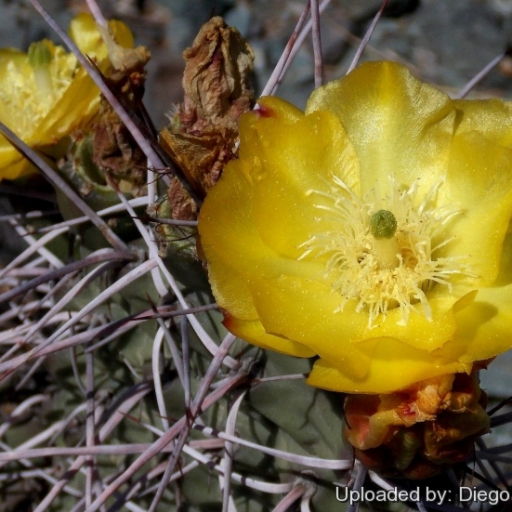
- 🪡 The Spines: Long, sturdy, and slightly twisted needles (up to 2 inches long) that emerge from white, wooly cushions called areoles.
- 🟡 The Flowers: Stunning, bowl-shaped blossoms with vivid sulfur-yellow petals that appear to glow against the plant's rugged exterior.
🏡 In Your Garden
- 🏜️ Sun & Stress: This cactus thrives on "tough love." To keep its pads compact and its spine color vibrant, it requires as much direct sunlight as possible; in shade, it will stretch and become weak.
- 🪨 Mineral Substrate: Hailing from mountain slopes, it hates "wet feet." It performs best in a gritty, inorganic soil mix (think pumice, gravel, and coarse sand) to prevent root rot during dormant winter months.
⚠️ Safety & Toxicity
- 🛑 Physical Hazard: While not chemically toxic, it is considered dangerous due to its dual-weaponry: long, visible spines and "glochids" (microscopic barbed hairs).
- 🐾 Pets & Kids: Should be placed in low-traffic areas. The glochids are notoriously difficult to remove from skin or fur and can cause painful inflammation or eye irritation if touched.
✨ Fun Fact
The Opuntia sulphurea is a master of survival; its thick pads are actually modified stems that act as water reservoirs, allowing the plant to survive for months without a single drop of rain in the harsh Andean foothills.

Detailed Care Instructions
To grow Opuntia sulphurea, also known as the sulphur prickly pear cactus, you can follow these steps:
- Obtain a cutting or seed: You can start by obtaining a cutting or seed of Opuntia sulphurea. It is recommended to get a cutting from a mature plant or purchase seeds from a reputable nursery.
- Prepare the planting location: Opuntia sulphurea requires a sunny location with well-draining soil. Dig a hole in the ground or prepare a pot with a mixture of cactus potting mix and perlite to improve drainage.
- Plant the cutting or seed: If using a cutting, let it dry for a few days to allow the cut to callous over. If using seeds, sow them directly into the soil or pot according to the seed packet instructions. Plant the cutting about an inch deep into the soil or sow the seeds at the recommended depth.
- Watering: Initially, water the cutting or seeds lightly to settle them in. Afterward, water sparingly as Opuntia sulphurea is a desert plant and can withstand drought. Water only when the soil is completely dry, usually every 2-4 weeks.
- Maintenance: Opuntia sulphurea is a low-maintenance plant. However, you can fertilize it once a year with a balanced cactus fertilizer during the growing season (spring to summer). Prune any damaged or diseased parts of the plant with sterilized pruners.
- Protect from frost: Opuntia sulphurea can be damaged by frost. If you live in a cold climate, consider protecting the plant during winter by covering it with a frost cloth or moving it indoors.
- Propagation: Opuntia sulphurea can be propagated by taking cuttings from the main plant. Repeat the process of letting the cutting dry and callous over before planting it in well-draining soil.
Remember to research and follow any specific instructions particular to your region or the specific Opuntia sulphurea variety you have, as these instructions provide general guidance.
Opuntia sulphurea is a type of leafless cactus that grows in arid regions. When watering this plant, it is important to remember that it is adapted to survive in dry environments with infrequent rainfall. Therefore, overwatering can easily lead to root rot and other problems.
The best way to water Opuntia sulphurea is to wait until the soil is completely dry before giving it a thorough watering. This allows the plant to use up the moisture stored in its tissues and prevents the soil from becoming waterlogged. When watering, make sure to direct the water at the base of the plant, aiming for the soil rather than the leaves or stem. Avoid getting water on the spiny pads, as this can cause damage to the plant.
During periods of drought, Opuntia sulphurea can survive for long periods without water. However, it is important to monitor the soil moisture levels and water the plant if necessary. In hot weather or if the plant is in a container, it may require more frequent watering.
Overall, the key to watering Opuntia sulphurea is to be patient and avoid overwatering. It is better to underwater than to water too frequently, as this can cause serious damage to the plant. With proper care, these plants can thrive in even the driest environments.
To fertilize this plant, you should use a balanced fertilizer with equal parts nitrogen, phosphorus, and potassium. Apply the fertilizer in the spring, just before the growing season begins. You can also apply a smaller amount of fertilizer again in the summer. Be careful not to apply too much fertilizer, as this can damage the plant.
The ideal soil for the Opuntia Sulphurea plant should be well-draining and sandy with a pH ranging between 6.5 to 7.5. The soil should not be too compact or heavy as it may restrict the root growth and cause root rot. A mix of sand and peat moss is recommended for the soil, with additional amendments such as perlite or vermiculite for improving aeration and drainage. The plant prefers a nutrient-rich soil, which can be achieved by adding organic matter such as compost or leaf mold. It is important to avoid overwatering the plant as it can lead to root rot. Instead, watering should be done sparingly and only when the soil is completely dry.
Opuntia Sulphurea is a type of cactus that can be propagated through cuttings. To propagate this plant, you will need to select a healthy, mature stem on the parent plant. Using a clean, sharp knife, cut a piece of stem that is at least 4 inches long. Allow the cutting to dry out for a few days until the cut end has calloused over.
Prepare a pot with well-draining soil that has been moistened. Using a pencil or stick, create a hole in the soil and insert the cutting into the hole. Make sure the cutting is standing upright and the soil is in contact with the calloused end.
Water the cutting lightly and place it in a bright, warm location. Avoid direct sunlight as this can scorch the plant. Keep the soil lightly moist, but do not overwater as this can cause the cutting to rot.
After a few weeks, the cutting should begin to produce new growth. Once the roots have established themselves in the soil, you can transplant the new plant into a larger pot or into the ground. With proper care, the Opuntia Sulphurea plant will grow and thrive.








