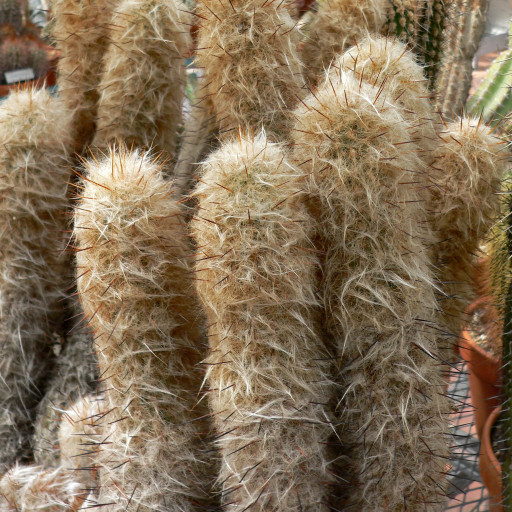
Plant Overview
Known affectionately as the "Old Man of the Andes," this quirky cactus looks more like a misplaced piece of a white cloud than a desert inhabitant. Hailing from the high-altitude mountains of Argentina and Bolivia, its iconic shaggy "beard" is actually a clever survival mechanism against the harsh elements of the peaks. It is a slow-growing favorite for collectors who love plants with a bit of personality and a lot of texture.
🔍 How to Identify
- 🧔 The "Wool": The most striking feature is a dense coat of fine, white, hair-like bristles that wrap around the stem, giving it a soft, fuzzy appearance.
- 🌵 Hidden Spines: Peeking through the white wool are stiff, sharp central spines that range in color from yellow and orange to deep reddish-brown.
- 📏 Growth Habit: It typically grows in thick columns. While it stays relatively short in containers, it can eventually branch out from the base as it matures over many years.
🏡 In Your Garden
- ☀️ Sunscreen Hair: That famous white wool acts as a natural sunscreen. In your home, it craves the brightest light possible; without enough sun, its "hair" will become thin and lose its snowy luster.
- 🏔️ Mountain Roots: Because it lives at high altitudes where the air is thin and dry, it is more frost-tolerant than many tropical cacti. However, it absolutely demands gritty, fast-draining soil—its roots are prone to "suffocating" if left in damp, heavy potting mix.
- 💧 Winter Rest: During the colder months, this cactus goes into a deep sleep. Stop watering almost entirely during winter to mimic the dry mountain seasons and prevent rot.
⚠️ Safety & Toxicity
- 🌵 Physical Hazard: While the wool looks soft and touchable, the sharp spines underneath are very real and can easily pierce the skin.
- 🐾 Pet & Child Safety: Oreocereus trollii is considered non-toxic if accidentally nibbled, but the spines pose a significant risk of injury to curious noses or hands. Keep it on a high shelf or in a protected spot.
✨ Fun Fact
The "hair" on the Old Man of the Andes serves a dual purpose: it acts as a thermal blanket to keep the cactus warm during freezing mountain nights and reflects intense UV radiation during the day to prevent the plant's skin from burning!

Detailed Care Instructions
| Lighting | Full Sun |
| Hardiness Zones | Min 7A |
To grow Oreocereus Trollii plants, follow these steps:
- Choose a suitable growing spot: Oreocereus Trollii plants prefer bright, indirect light, so find a spot near a window with good natural light but avoid direct sunlight, as it can scorch the plant.
- Select the right container: Use a well-draining pot that is slightly larger than the current size of the plant. Ensure it has drainage holes at the bottom to prevent waterlogging, which can lead to root rot.
- Potting mix: Prepare a well-draining cactus potting mix by combining equal parts of regular potting soil, sand, and perlite or pumice. This creates a loose, well-draining medium that is ideal for cacti.
- Planting: Gently remove the Oreocereus Trollii plant from its nursery pot and place it in the new container. Adjust the depth so the plant sits at the same level as it was previously. Fill the remaining space with the prepared potting mix, ensuring the plant is stable and centered.
- Watering: Water the plant sparingly, allowing the soil to dry out completely between waterings. Overwatering is a common mistake people make, so it's crucial to err on the side of underwatering. Reduce watering during winter when the plant is in dormancy.
- Temperature and humidity: Oreocereus Trollii plants prefer warm temperatures between 65-80°F (18-27°C) during the growing season. They can tolerate slightly cooler temperatures during the winter dormancy period. Average humidity levels are suitable for these plants.
- Fertilization: Feed your Oreocereus Trollii plant with a balanced cactus fertilizer during the growing season (spring and summer) according to the manufacturer's instructions. Be cautious not to over-fertilize, as it can harm the plant.
- Pruning: Prune any dead or damaged stems using clean, sharp scissors or pruning shears. Be careful not to remove more than one-third of the plant's growth at once.
- Propagation: Oreocereus Trollii plants can be propagated from stem cuttings. Allow the cut ends to dry for a few days before sticking them into a well-draining cactus mix. Wait for the cuttings to root before watering.
- Repotting: As your Oreocereus Trollii plant grows, you may need to repot it every few years into a slightly larger container to accommodate its root system. This is best done in spring before the growing season begins.
By following these care guidelines, you can successfully grow and nurture your Oreocereus Trollii plant.

Place in a bright room that is sun drenched almost all day. Or directly in a south-facing window.

To ensure proper watering for this plant, it is important to understand its natural habitat and water requirements. This plant is native to arid regions and is adapted to survive long periods of drought. Therefore, it should be watered sparingly and only when the soil is completely dry.
When watering, it is important to use a well-draining soil mix and a pot with drainage holes to prevent water from sitting in the soil and causing root rot. Water should be applied slowly at the base of the plant until it begins to drain out of the bottom of the pot. Any excess water should be discarded immediately.
During the winter months, the plant should be watered even less frequently, as it goes into a dormant state and requires less moisture. The frequency of watering will also depend on the temperature and humidity levels in the plant's environment.
It is crucial to avoid overwatering this plant, as it is susceptible to root rot. Signs of overwatering include yellowing or wilting of leaves, mushy or blackened roots, and a foul odor from the soil. In these cases, the plant should be allowed to dry out completely before being watered again.
To properly fertilize this plant, it is recommended to use a balanced fertilizer with a NPK ratio of 10-10-10. During the growing season, which is typically spring and summer, fertilize once a month. It is important to dilute the fertilizer to half the recommended strength. During the fall and winter months, reduce fertilization to once every two months. Avoid fertilizing the plant when it is experiencing stress or during hot summer days.
The ideal type of soil to use for the Oreocereus Trollii plant is a well-draining, porous soil mix that is specifically formulated for cacti and succulents. It should be low in organic matter and high in mineral content to promote healthy root development and prevent waterlogging.
A good soil mix for this desert plant should consist of a combination of coarse sand, perlite, and pumice for optimal drainage, aeration, and water retention. It should also contain a small amount of peat moss or coconut coir for moisture retention and added nutrients.
The pH level of the soil should be mildly acidic, preferably between 6.0 and 7.0, as this allows the plant to absorb essential nutrients more easily.
It is recommended to add a slow-release fertilizer to the soil every few months to provide necessary nutrients for the plant's optimal growth. Additionally, it is important to avoid overwatering and to allow the soil to dry out completely before watering again, as this plant is susceptible to root rot.
To propagate this plant, you will need to take a stem cutting from a healthy and mature plant. The stem cutting should be at least 4 inches long, and should be cut just below a node on the stem. Leave the cutting aside for a few days to allow the cut to scab over and prevent it from rotting.
Once the stem cutting has developed a scab, you can then plant it in a well-draining soil mix. Use a pot that is slightly larger than the cutting, and fill it with soil up to the halfway point. Make a hole in the center of the soil, and place the stem cutting in it. Backfill the hole with soil, and gently press down around the cutting to secure it in place.
Water the soil until it is evenly damp, but not soaking wet. Place the pot in a bright, but indirect light. Over the next few weeks, keep the soil evenly moist by watering it when the top inch of soil feels dry. Be careful not to overwater the cutting, as it may rot.
Within a few months, the cutting should develop roots and start to grow. Once the cutting has grown to a size where it can be handled easily, you can transplant it to a larger pot or into your garden, depending on your preference.
Common pests of the old man of the andes include Scale insect, mealybugs, spider mites. Make a habit of checking your old man of the andes frequently for pests so that any infestations can be caught and managed early.








